 efistu.com Home Decor
 At the core of contemporary home life is the seamless blend of culinary delights and social moments, where the aroma of fresh meals intertwines with lively conversations, and morning coffee effortlessly transitions into evening gatherings. Designing open-concept areas today involves more than just removing barriers—it requires a thoughtful balance between practicality and aesthetic flow.
Whether you’re navigating the challenges of a cozy studio or enjoying the luxury of expansive square footage, merging your kitchen and living room unlocks creative opportunities you might not have considered. The key is to establish clear functional zones while preserving an airy, open atmosphere.
Harmonize Soft Neutrals with Warm Wood Accents in Open-Plan Designs
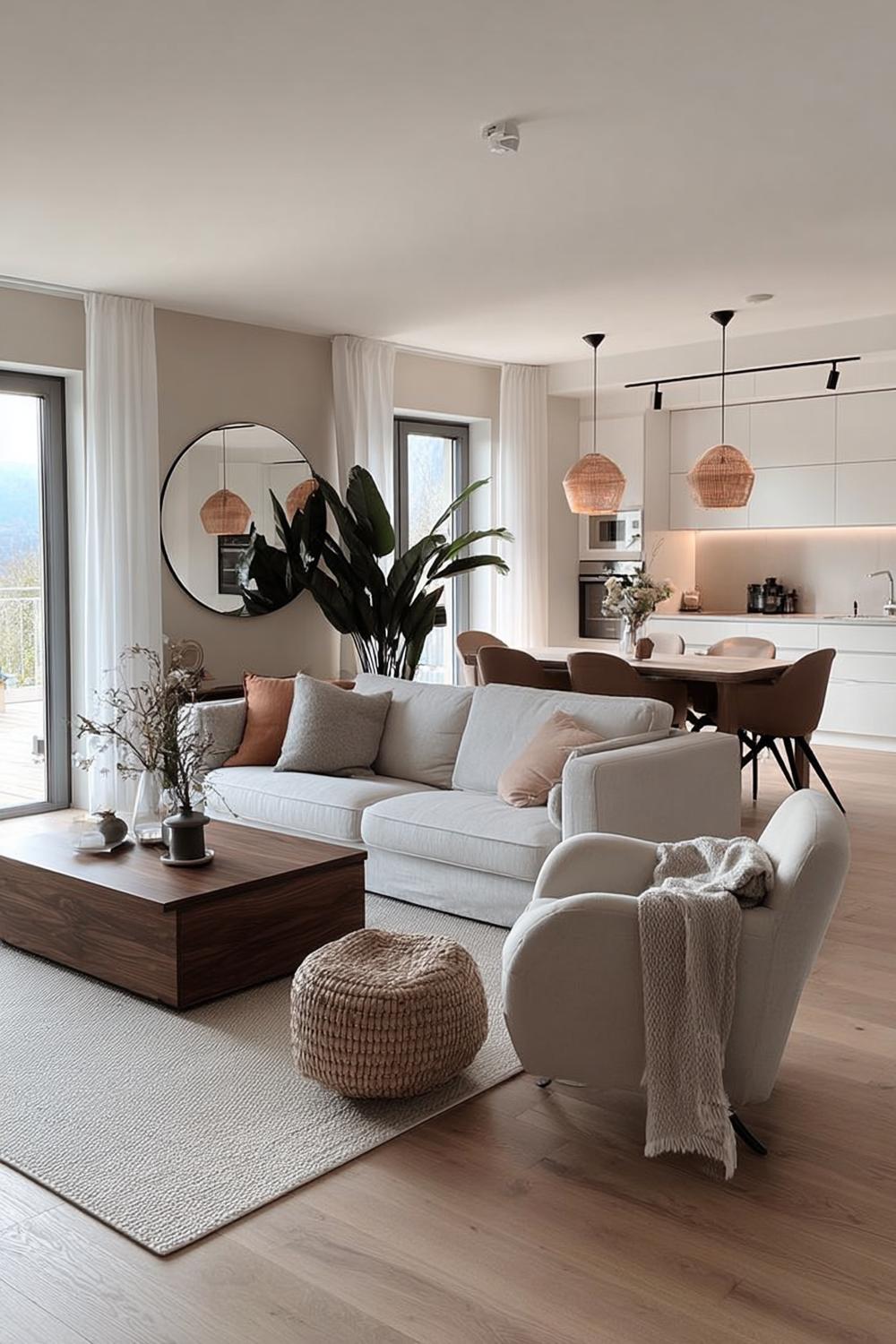
Striking the perfect balance between inviting warmth and uncluttered elegance can be challenging. Combining gentle shades like muted grays and creamy whites with rich, honey-hued woods such as oak or walnut creates a harmonious environment. The neutral palette keeps the space feeling light and open, while the wood introduces natural texture and grounding elements.
Imagine soft dove-gray couches paired with a kitchen island crafted from reclaimed timber, or whitewashed shiplap walls complementing butcher block countertops. The wood serves as a subtle connector, uniting the two areas without demanding exact matches.
This approach also offers flexibility, allowing you to refresh accent colors with the seasons without the need for extensive repainting.
Maximize Daylight with Expansive Windows in Open Layouts
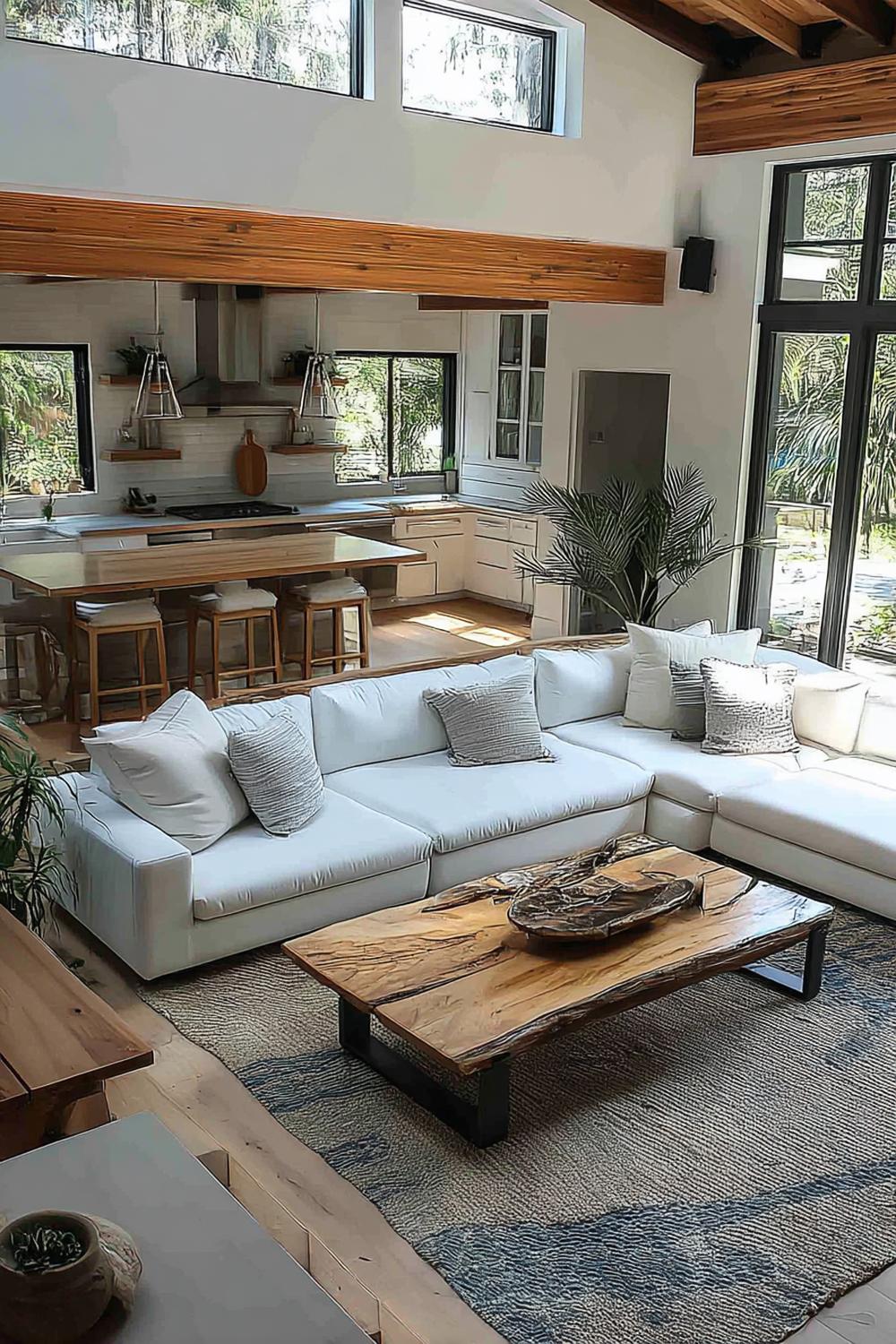
Sunlight acts as a natural designer, casting dynamic shadows and highlights that evolve throughout the day. Incorporating large windows—whether floor-to-ceiling panes or well-placed skylights—invites the outdoors in, making your combined kitchen and living area feel vibrant and alive.
Beyond simply brightening the space, sunlight reflecting off kitchen surfaces adds subtle movement and depth, while gentle morning rays create a calming atmosphere during breakfast preparation. As energy-efficient glazing technologies become more accessible, expect to see more homes embracing expansive glass features like window walls and corner windows.
Define Kitchen Areas with Statement Pendant Lighting
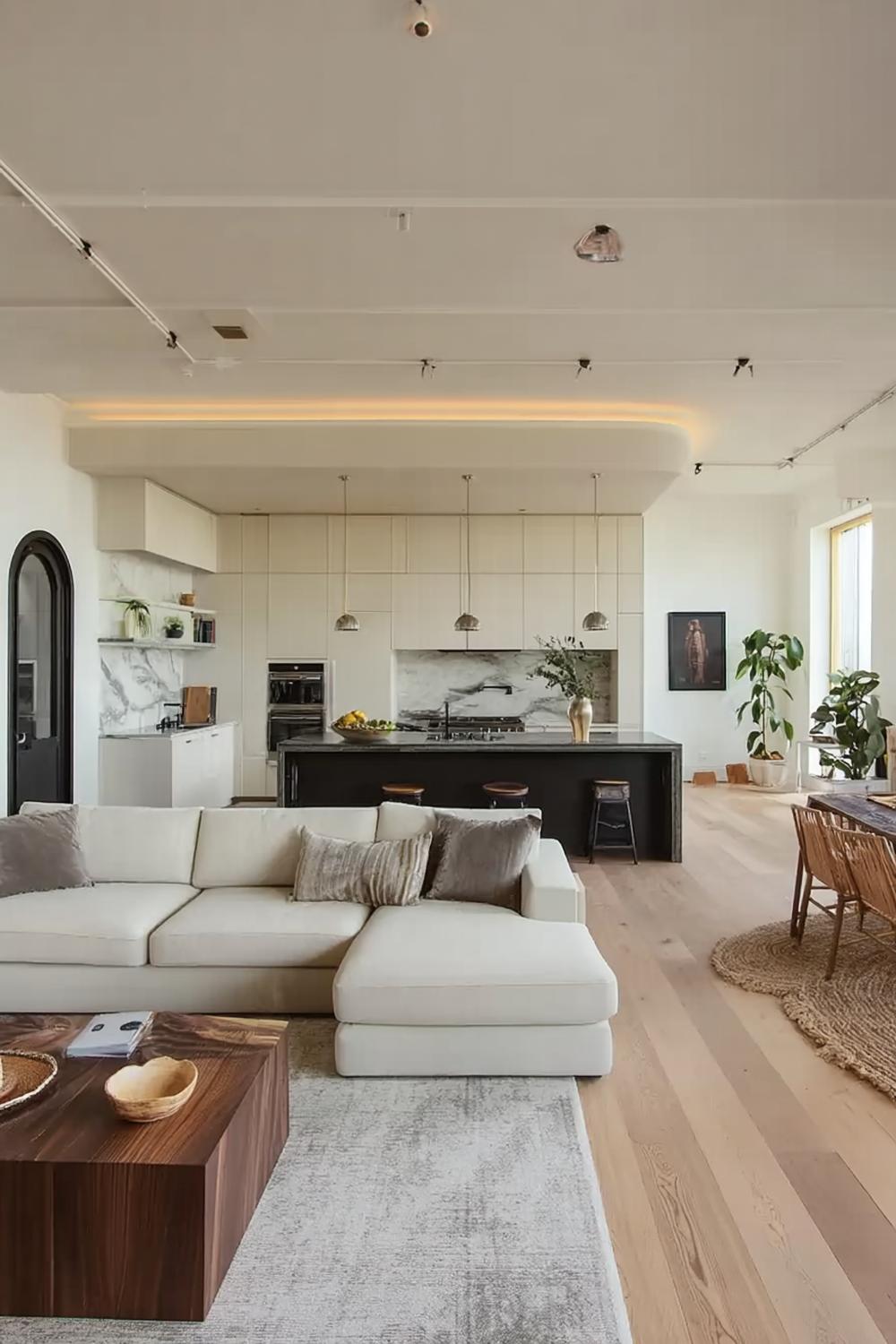
Pendant lights serve a dual purpose: they act as decorative focal points and subtly delineate kitchen zones without obstructing views. A trio of copper or matte black pendants suspended over an island instantly marks the culinary space while maintaining openness.
Drawing inspiration from restaurant lighting, which creates intimate pockets within large rooms, you can layer lighting types—pendants for focused tasks, track lights for artwork, and a central chandelier or flush mount for the living area. Varying heights and brightness levels guide the eye and clarify spatial boundaries.
Pro tip: Installing dimmer switches on all fixtures allows you to effortlessly shift from bright cooking light to cozy ambiance for movie nights.
Unify Spaces with Continuous Natural Wood Flooring
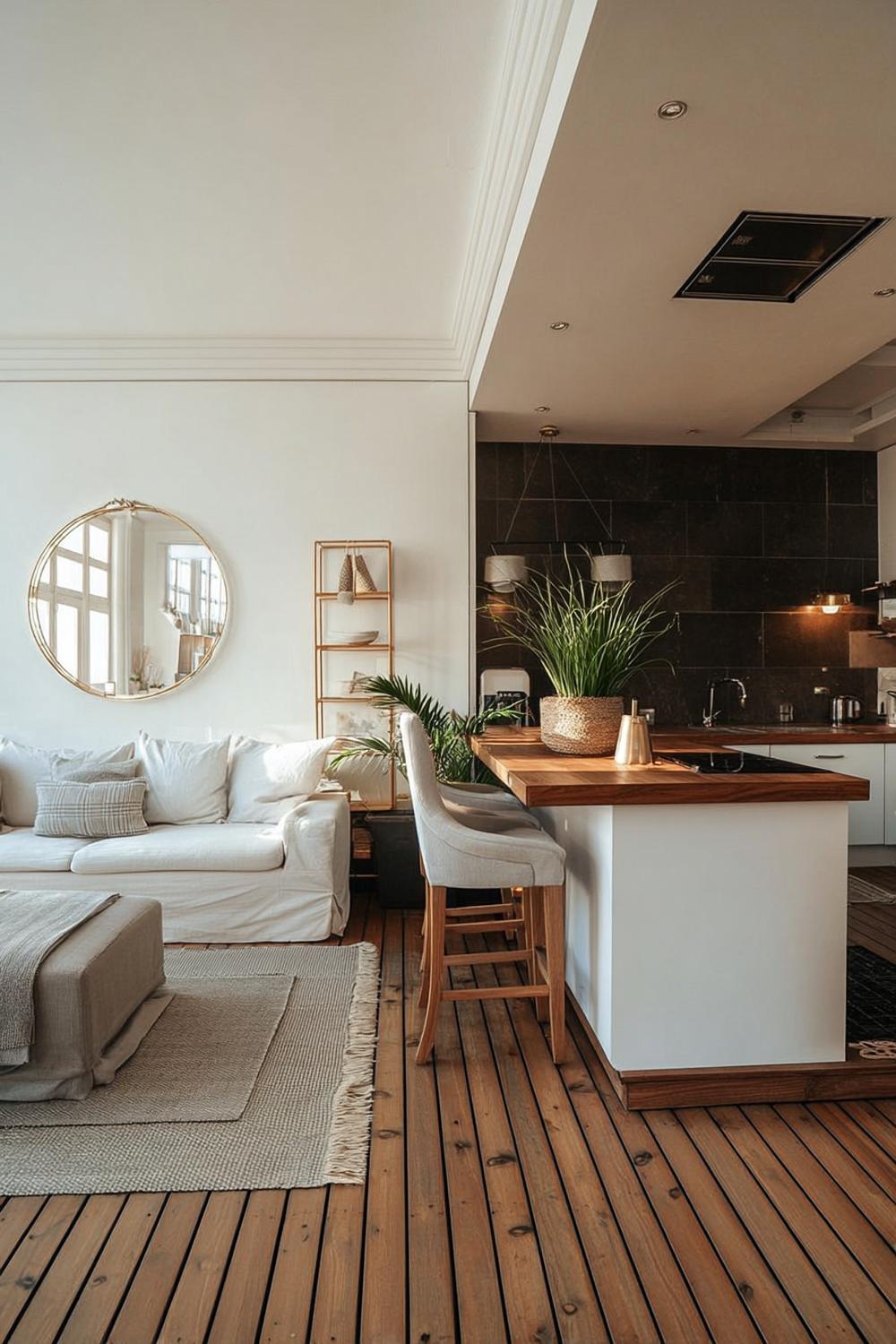
Contrary to the common advice of using different flooring to separate zones, extending natural hardwood flooring throughout both kitchen and living areas creates a seamless, expansive feel. This continuous surface tricks the eye into perceiving a larger footprint by maintaining unbroken sight lines.
Consider a loft where oak planks flow from the entryway through the kitchen and into the lounge, transforming what might feel segmented into a cohesive whole. A large area rug beneath the seating area can subtly define the living zone without disrupting the floor’s visual continuity.
While this means extra care around kitchen spills, the enhanced sense of space is well worth the effort. Avoid mixing too many flooring types, as it can fragment the room and complicate cleaning.
Boost Comfort with Plush Textiles and Soft Furnishings
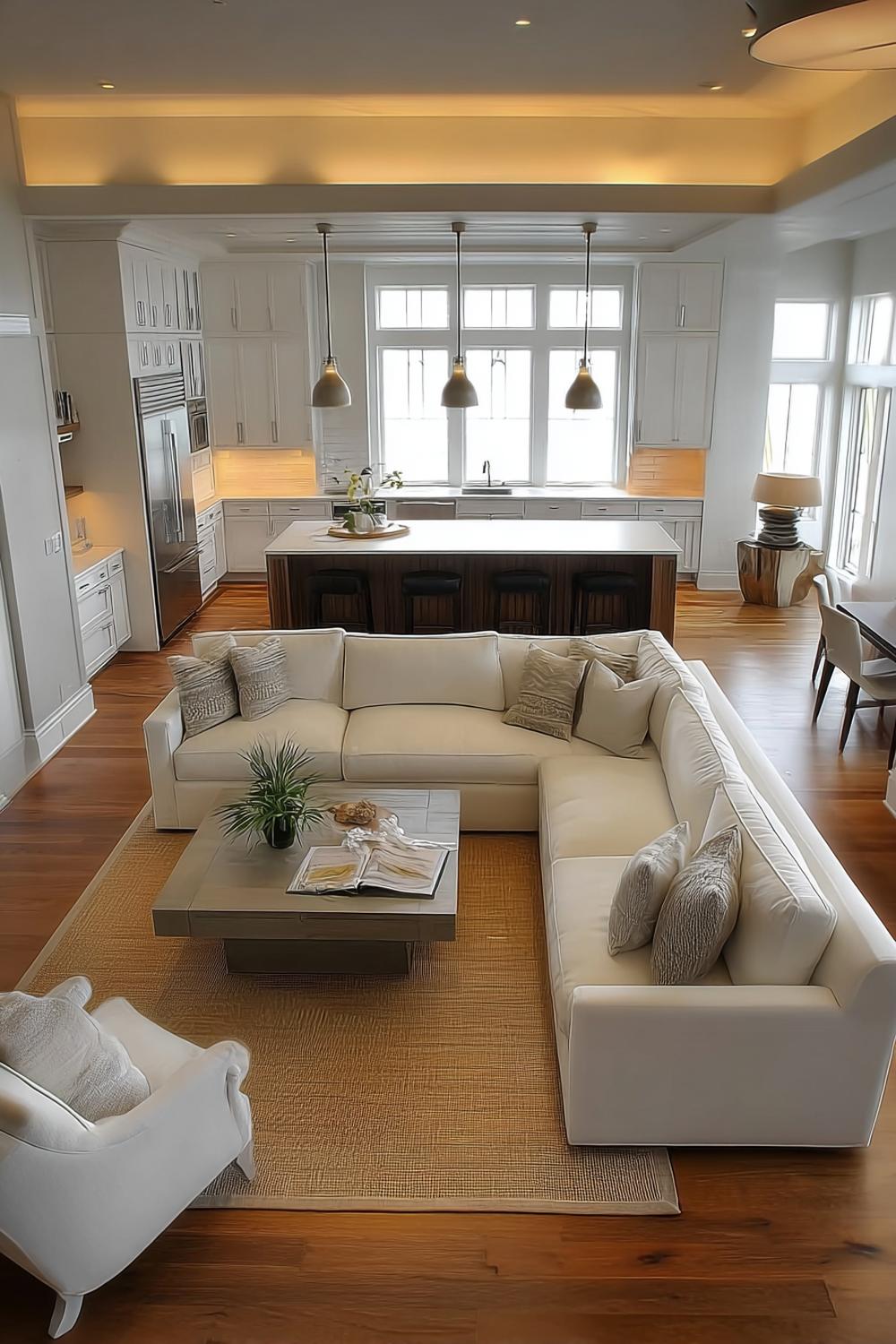
In spaces dominated by hard surfaces, incorporating soft textiles is essential for both comfort and sound absorption. Layering velvet cushions, chunky knit throws, and perhaps a leather pouf adds tactile richness and helps muffle kitchen noises.
These elements also offer a chance to personalize your space without permanent alterations—ideal for renters or those hesitant to commit to major renovations.
Opt for Sleek White Cabinets to Expand Small Kitchens
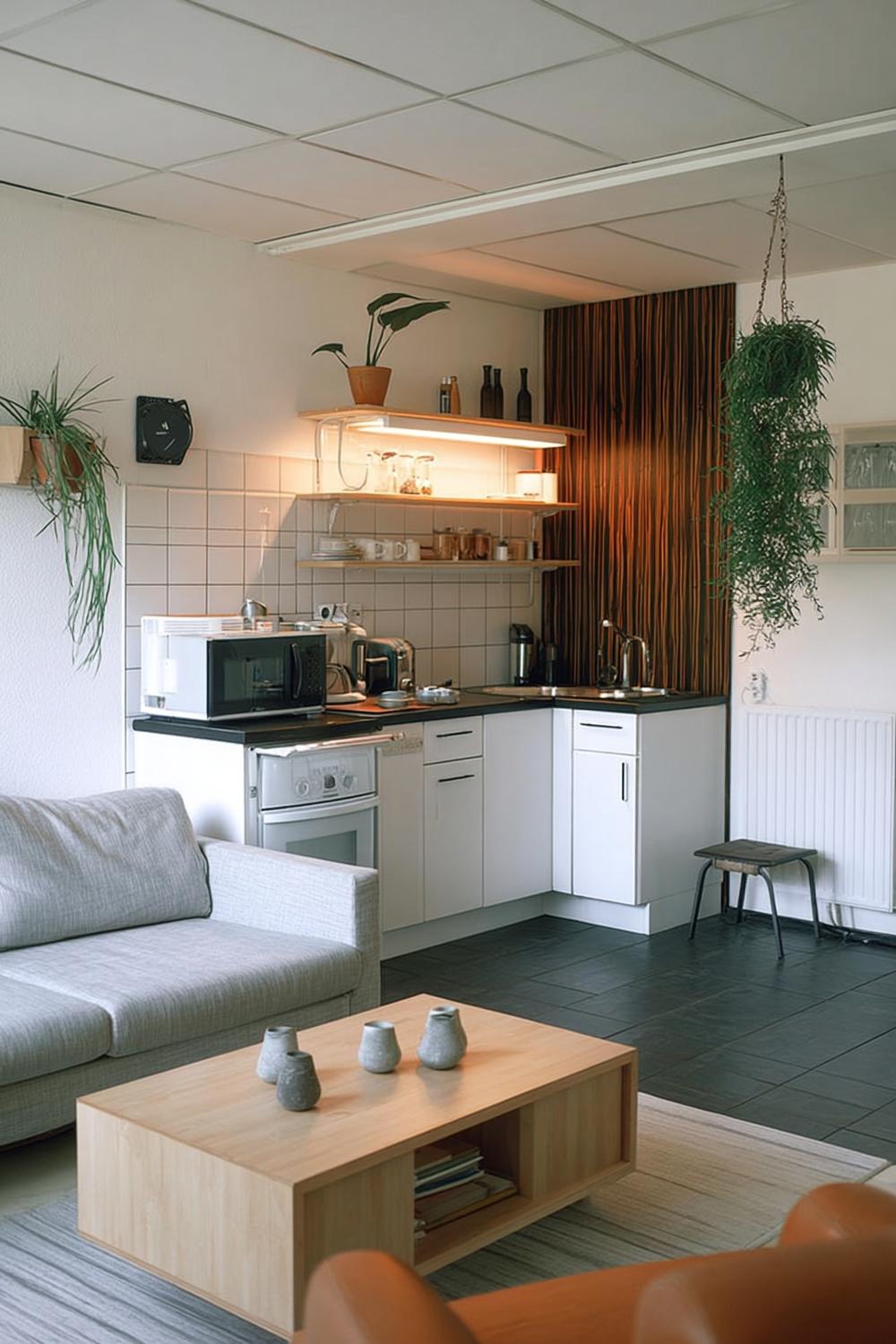
White cabinetry does more than convey cleanliness—it visually recedes, creating an illusion of extra space that darker finishes tend to absorb. Flat-panel doors without ornate details enhance this effect, acting like blank canvases that blend seamlessly into the background.
Pair these with integrated handles or touch-latch systems to minimize visual clutter, allowing your eye to glide effortlessly from kitchen to living area.
For those seeking to elevate this look, consider white kitchen cabinets that combine minimalist design with durable finishes.
Add Depth with Glossy Cabinet Finishes
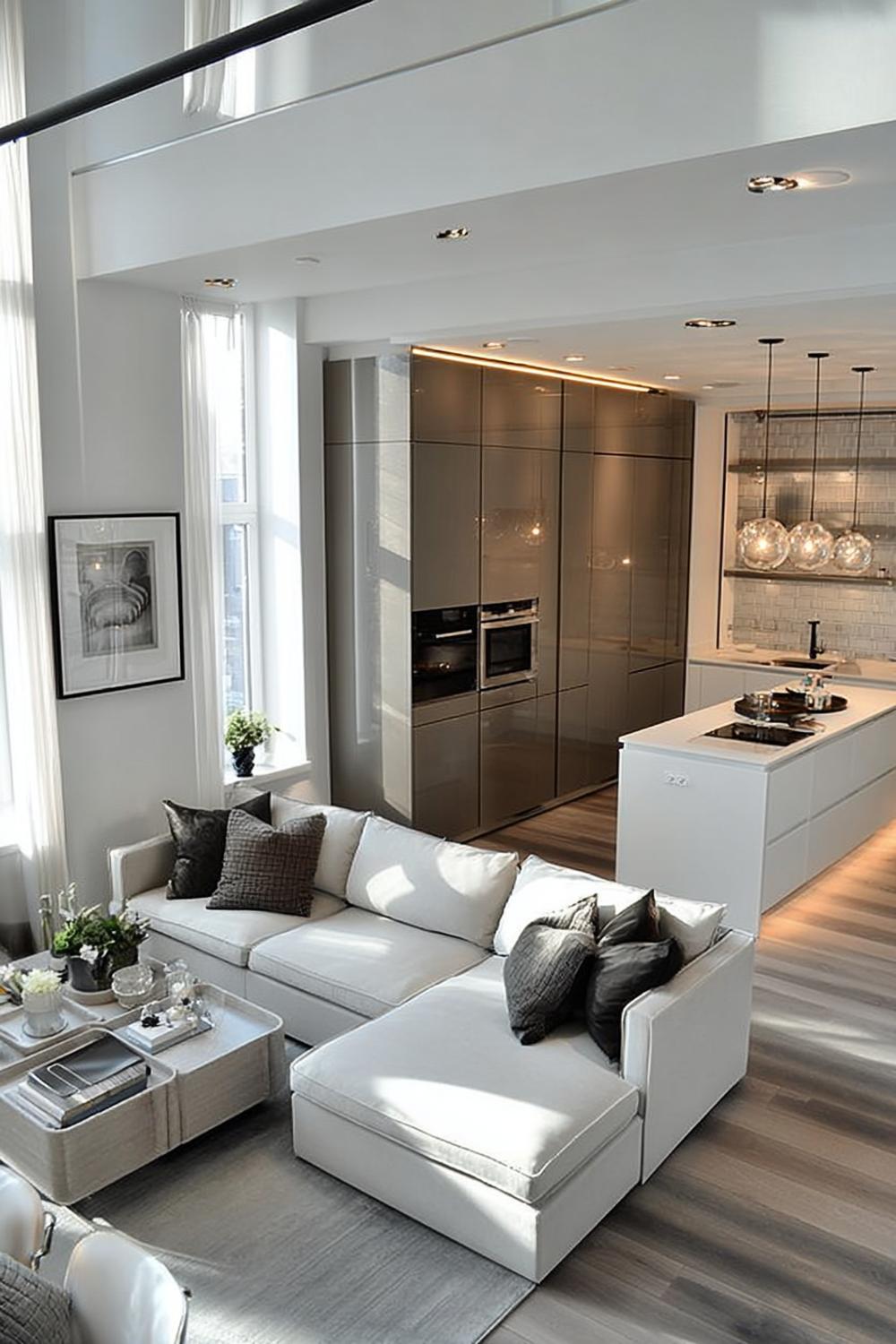
While glossy surfaces may reveal fingerprints more readily, their ability to reflect light dramatically enhances the brightness and perceived depth of your kitchen. This mirror-like sheen introduces movement and prevents the space from feeling static or heavy, especially important when the kitchen is visible from the living room.
Introduce Textural Warmth with Exposed Brick Accents
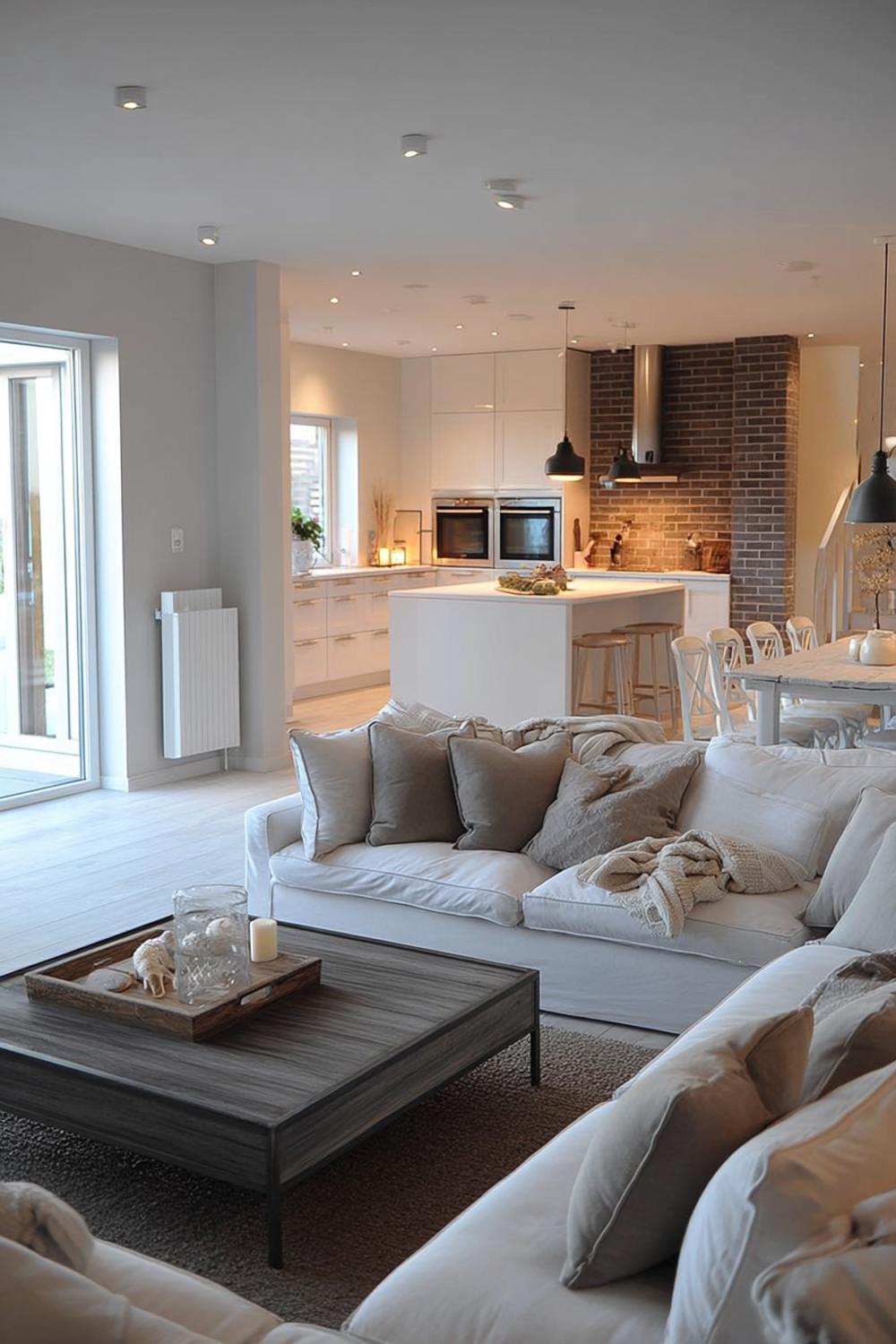
Exposed brick walls, whether authentic or high-quality veneers, add a rustic charm that balances industrial edge with cozy comfort. Their uneven surfaces create acoustic interest, subtly altering how sound travels and enriching the room’s atmosphere.
In the kitchen, brick backsplashes are not only durable but develop a unique patina over time, enhancing character. In the living area, the brick becomes a dynamic backdrop as natural light shifts throughout the day.
Showcase Your Kitchenware with Open Shelving
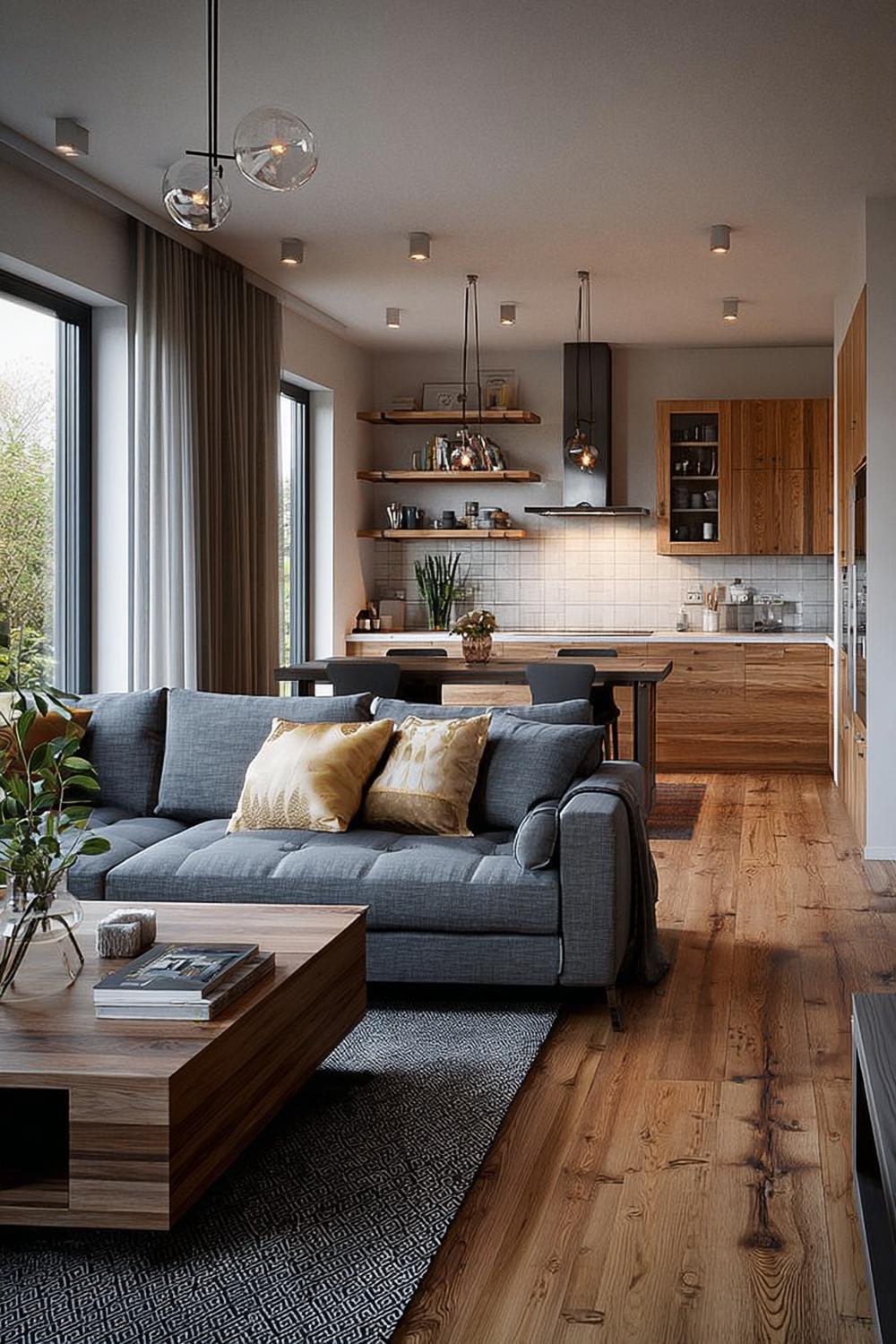
Why conceal beautiful dishes and glassware behind closed doors when they can double as decorative elements? Open shelving encourages curation, displaying only your most cherished or visually appealing pieces.
Floating shelves maintain open sight lines, essential in combined spaces, and create a light, airy feel. Arrange vintage teacups, artisanal bowls, or colorful spice jars to add personality and charm.
Keep in mind, this style requires regular tidying since every item is on display.
Combine Soft and Sleek Textures for a Balanced Ambiance
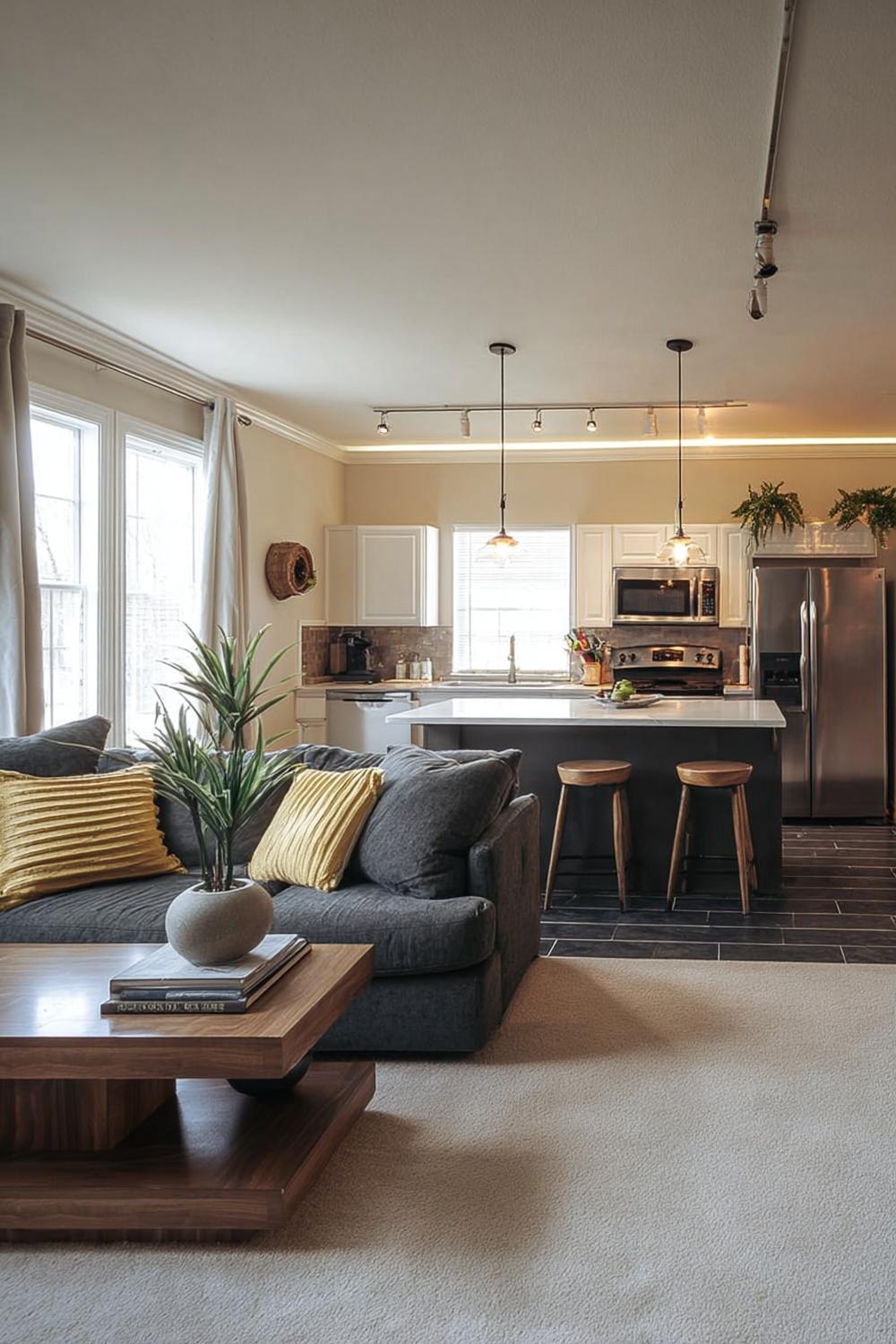
Think of pairing a luxurious cashmere throw with polished leather boots—this contrast creates visual and tactile interest. Smooth marble countertops and stainless steel appliances find their perfect counterbalance in plush ottomans or textured accent chairs.
Running your hand from a cool quartz surface to a soft linen cushion introduces a sensory richness that no single material can provide. However, moderation is key; too many competing textures can overwhelm and disrupt harmony.
Use a Sectional Sofa to Define Living Zones
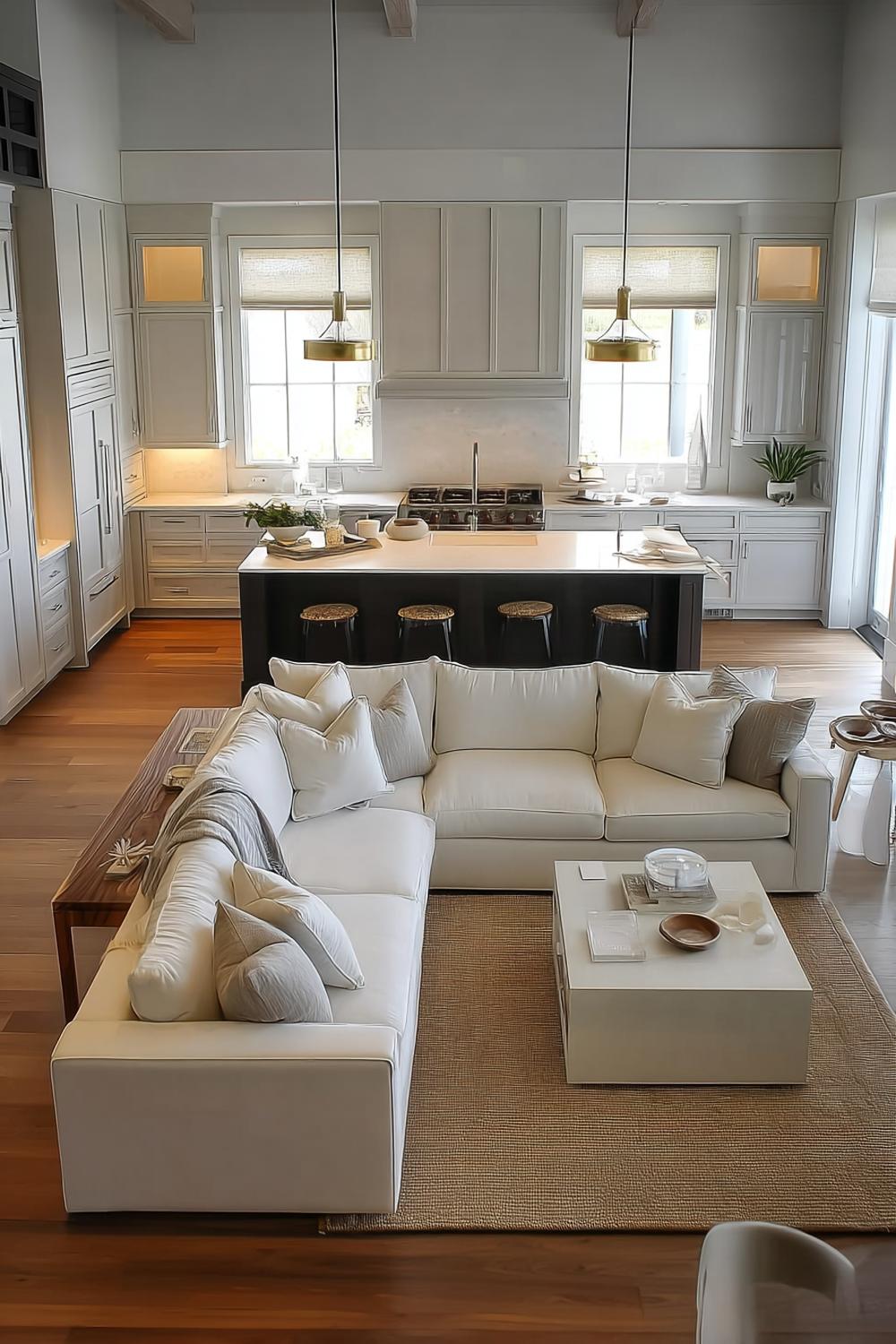
Instead of relying on walls, a strategically placed L-shaped sectional can delineate the living area, signaling where the kitchen ends. This furniture arrangement fosters connection, allowing conversations to flow naturally between cooks and guests.
Floating the sectional away from walls creates a cozy “room within a room,” with the sofa’s back acting as an implied boundary. Adding a slim console table behind it enhances functionality without sacrificing openness.
Angling the sectional slightly softens the division, promoting a welcoming, integrated environment.
Mix Wood Tones to Enrich Warmth and Visual Interest
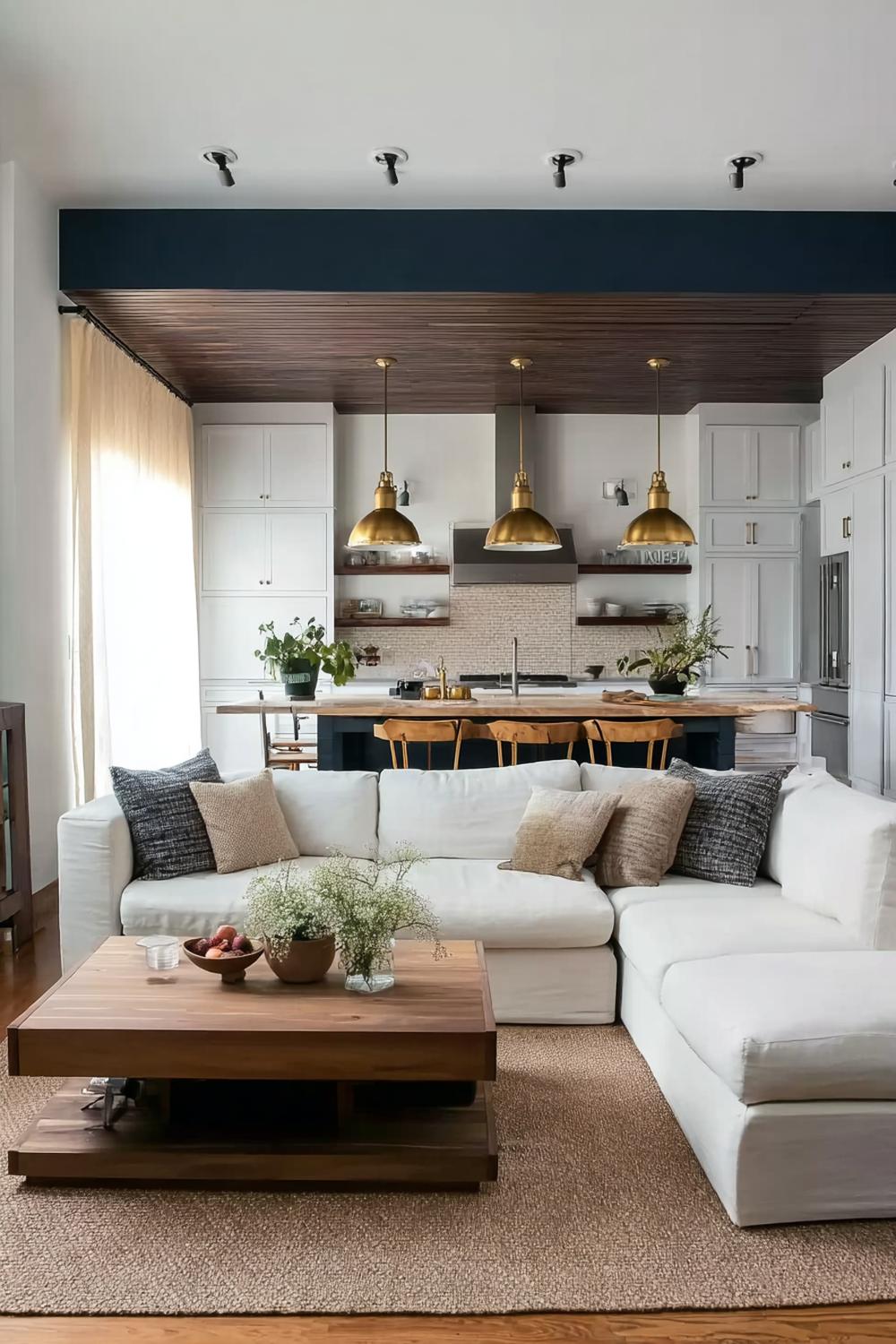
Discard the outdated advice against mixing wood finishes. Combining light oak flooring with walnut furniture and pine accents creates layered warmth and depth. This variety prevents a monotonous, showroom-like feel and offers the eye multiple points of interest as it moves through the space.
Elevate Ceilings with Geometric Patterns and Architectural Details
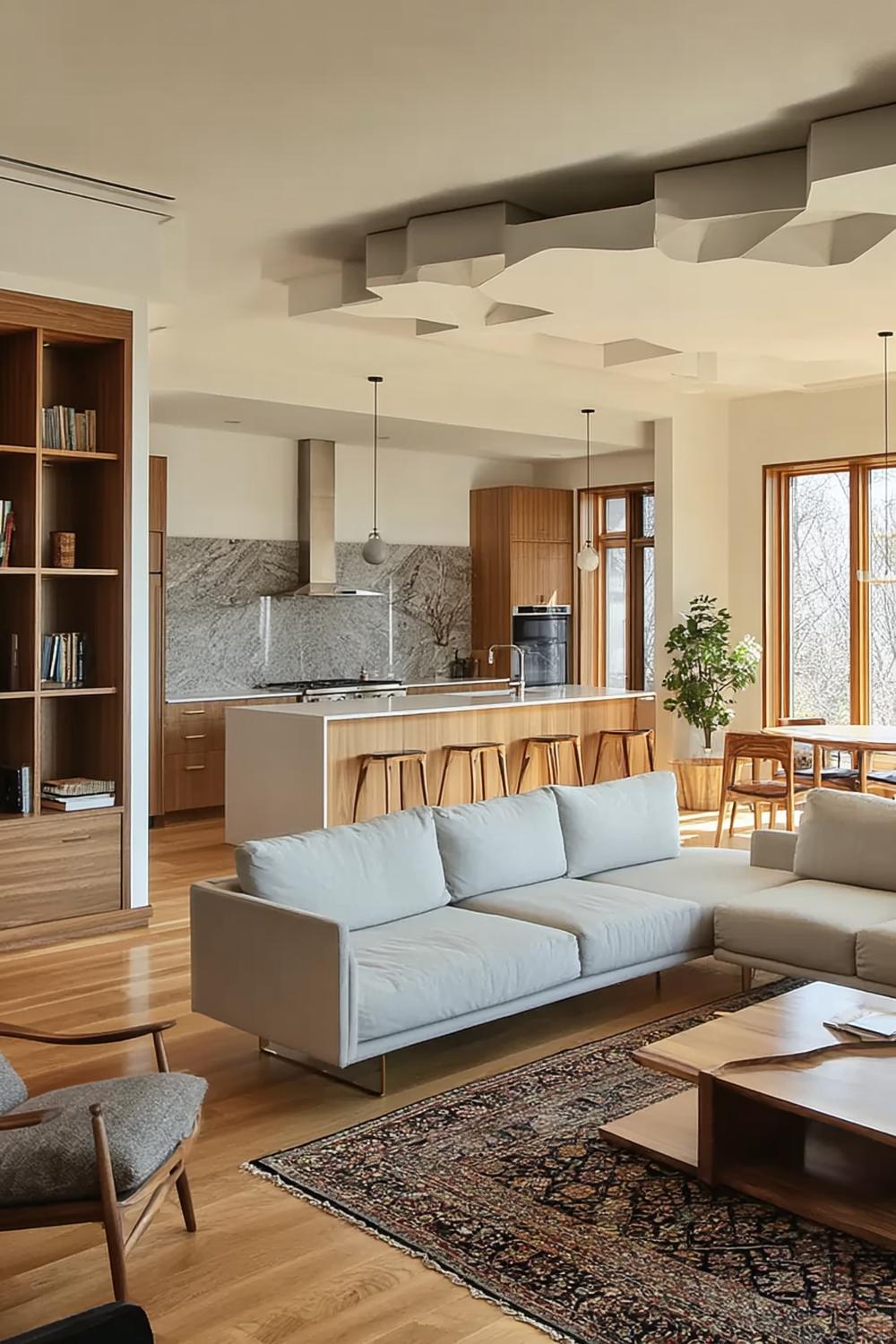
Ceilings often go unnoticed, yet they significantly influence a room’s atmosphere. Incorporating coffered designs, painted geometric motifs, or exposed beams can subtly define zones within an open layout.
For example, wooden beams over the living area contrasted with a smooth, white kitchen ceiling create invisible boundaries that the brain intuitively recognizes. The interplay of light and shadow on these features adds dynamic movement to the space.
Seamless ceiling transitions complement airy kitchen designs, reinforcing the open-concept flow.
Curate an Engaging Gallery Wall as a Shared Focal Point
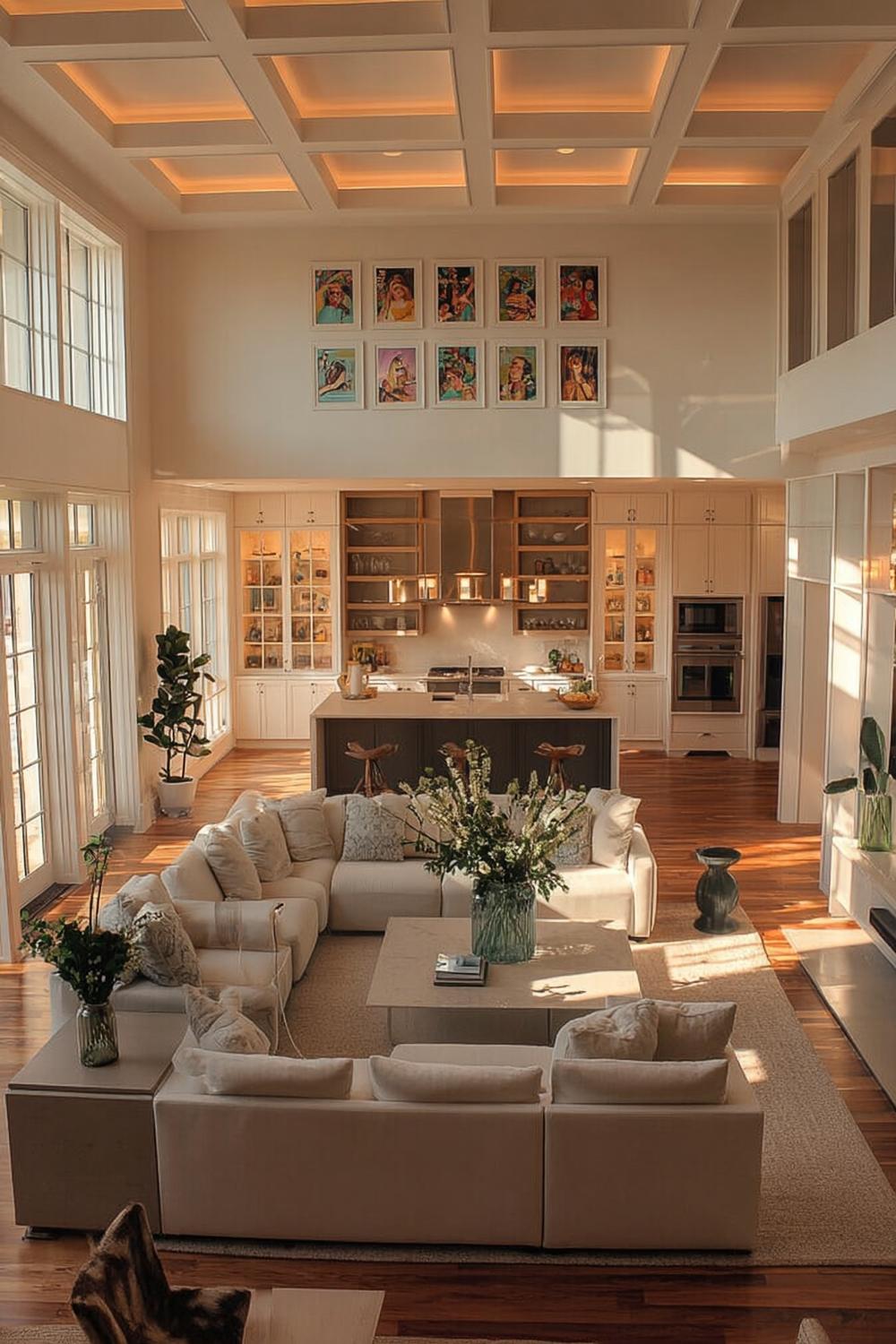
When a wall is visible from both the kitchen and living room, it deserves thoughtful decoration. A well-curated gallery wall becomes a shared focal point, blending personal mementos with artistic pieces.
Mix family photographs, abstract art, vintage mirrors, or sculptural objects to keep the eye engaged during cooking or relaxing. One cohesive gallery wall creates a stronger impact than scattered, unrelated artwork.
Warm Up Your Kitchen Island with Gold Pendant Lighting
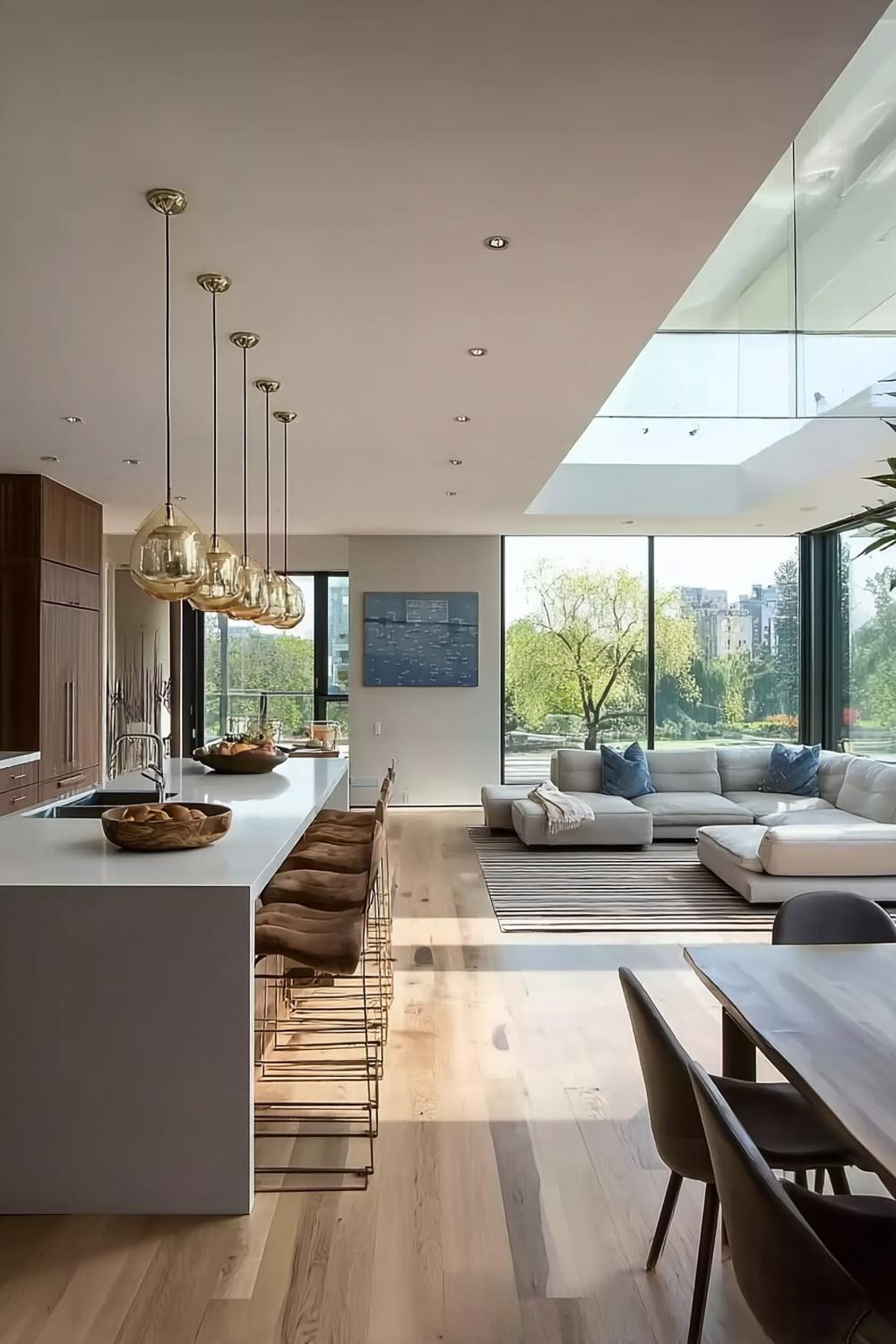
Brass and gold fixtures offer a timeless appeal, developing a rich patina over time that chrome cannot replicate. Sleek gold pendants above your kitchen island add a warm metallic glow that softens the transition between task lighting and ambient illumination.
Observe how these fixtures interact with natural and artificial light—morning sun makes them sparkle, while evening lighting gives them a molten warmth. This final touch elevates your open-plan space from functional to thoughtfully curated.
Final Thoughts
Your combined kitchen and living area holds untapped potential, inviting you to embrace the fluidity of modern living rather than working around spatial constraints. Whether you opt for a bold black kitchen or simply upgrade your lighting fixtures, each design choice resonates throughout the entire space.
The beauty of open-concept living lies in its adaptability—hosting a lively dinner party feels as natural as enjoying a quiet morning coffee. Choose one idea that speaks to you, implement it soon, and watch your home transform into a more connected, inviting environment.