 efistu.com Home Decor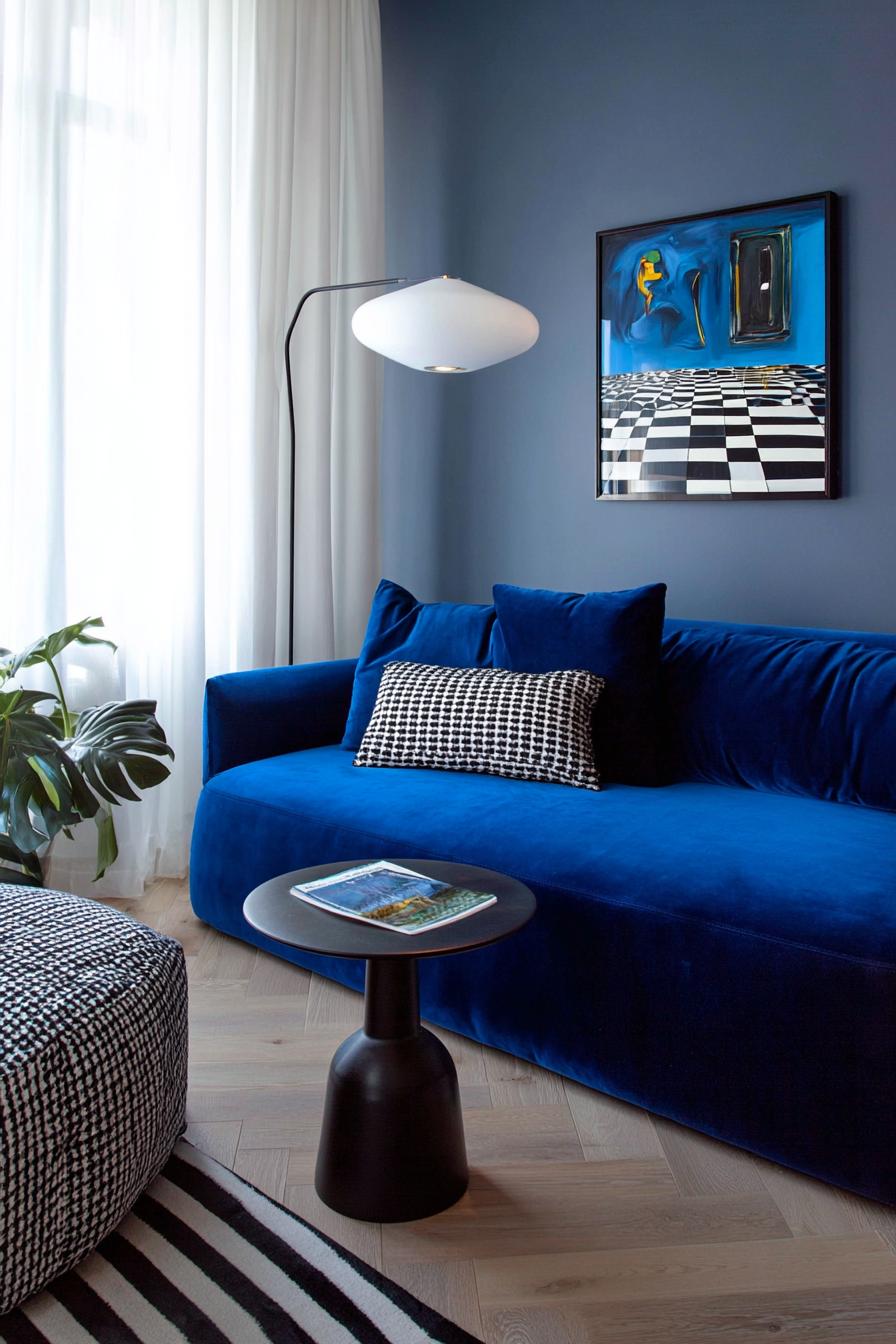
Blue-themed living rooms can evoke a sense of calm refuge or, conversely, feel chilly and unwelcoming. The key to achieving a warm and inviting atmosphere lies in the thoughtful interplay of textures, contrasts, and harmonious color pairings.
Mastering these design components can elevate a space from dull and uninspiring to a cozy haven perfect for relaxing evenings or lively gatherings.
1. Harmonize Blue Walls with Warm Wooden Elements for Cozy Contrast
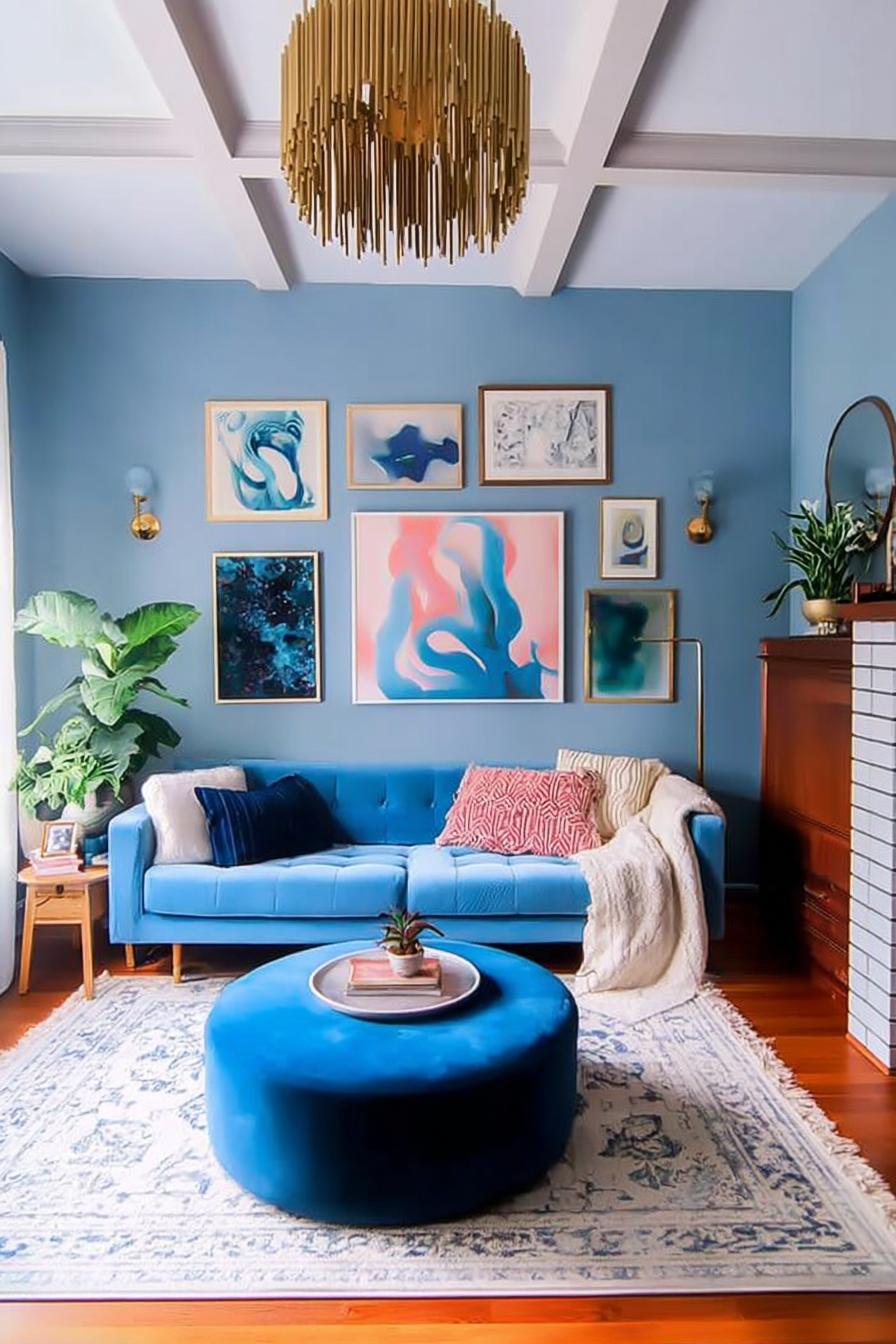
Blue walls don’t have to feel cold or distant. Combining deep blue hues with warm-toned wooden furnishings—such as walnut or oak—introduces a grounded elegance that balances coolness with natural warmth. The wood’s texture and grain bring an organic softness that complements the blue’s depth.
Imagine a navy feature wall paired with a mid-century modern teak sideboard. The golden undertones of the wood subtly brighten the blue, while the blue backdrop accentuates the wood’s rich patterns. Alternatively, pairing blue-gray walls with espresso-stained furniture can create a moody, library-inspired vibe.
This blend of warm and cool tones prevents the room from feeling stark or heavy, instead fostering a lived-in ambiance that invites relaxation and conversation.
2. Elevate Your Floor with Grey Chevron Patterns for Classic Elegance
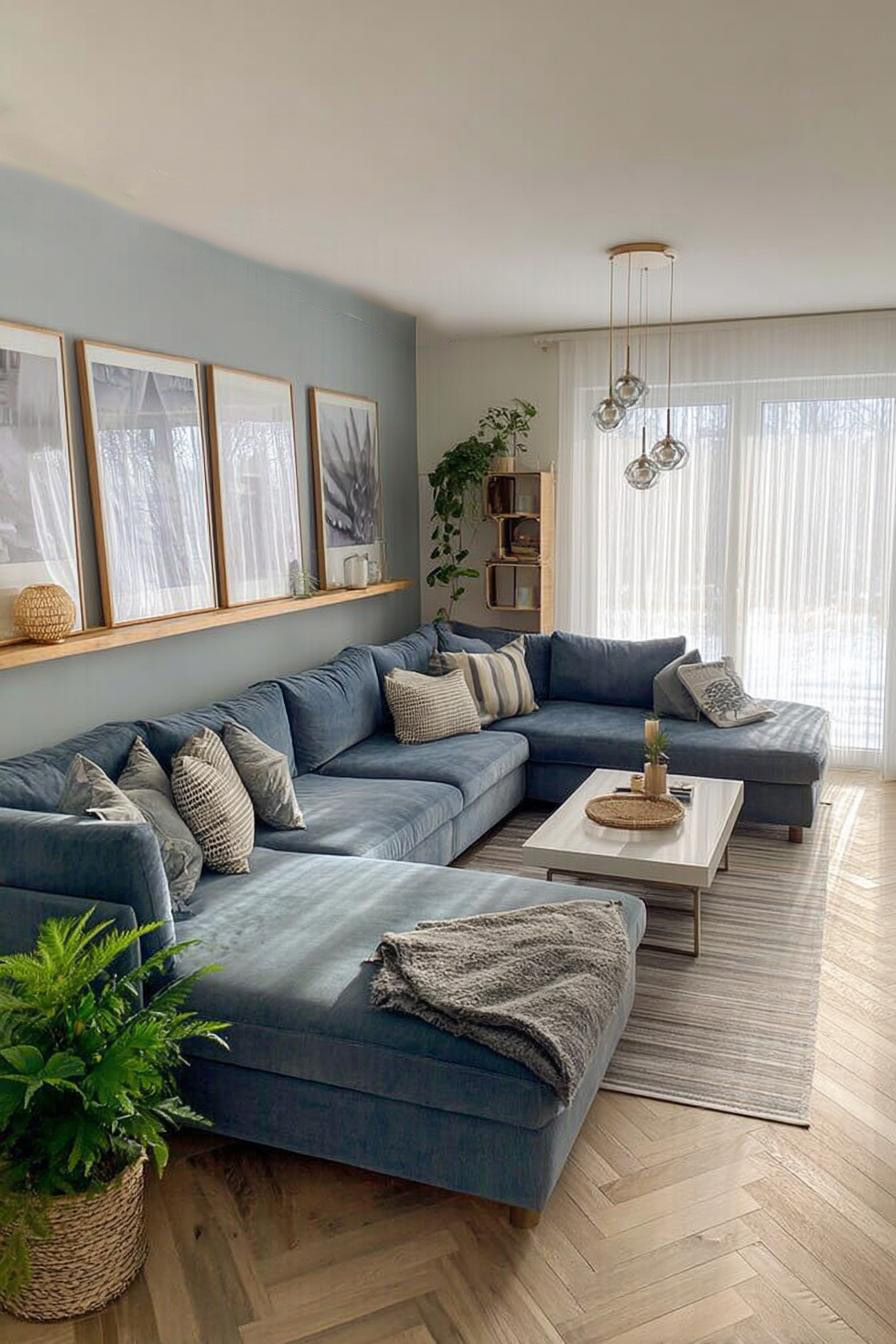
Chevron flooring offers a dynamic alternative to traditional planks, guiding the eye with its distinctive zigzag pattern. Grey-toned chevron wood floors provide a neutral yet sophisticated base that enhances blue walls without competing for attention.
This pattern bridges classic and modern aesthetics, adding subtle movement that visually expands smaller spaces. When combined with soft powder or slate blue walls, grey chevron floors create a refined backdrop adaptable to minimalist or maximalist interiors alike.
3. Introduce a Textured White Rug for Gentle Contrast and Comfort
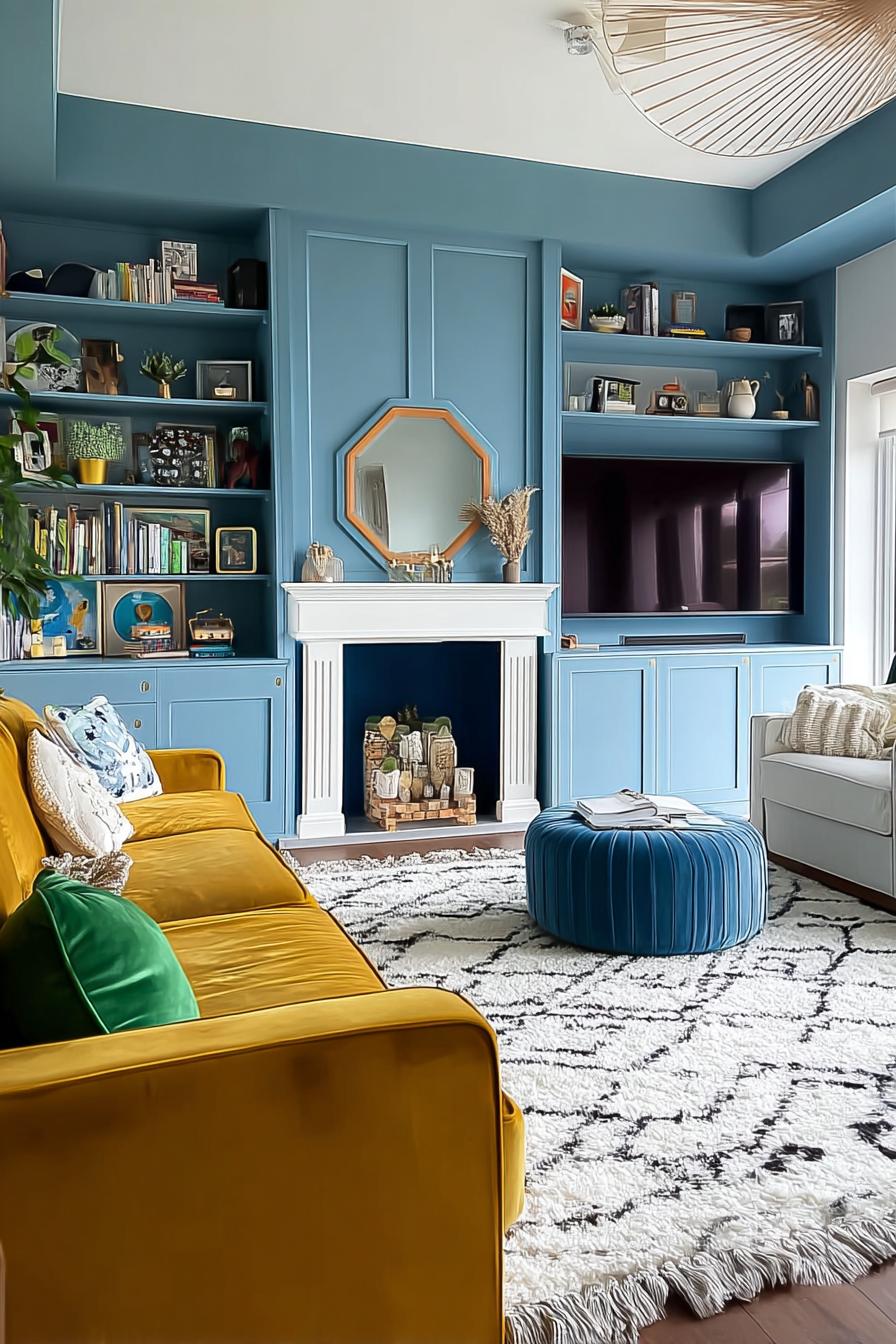
To soften the intensity of blue walls without diminishing their impact, layer in a plush white rug featuring tactile textures like shag, Moroccan boucheroute, or braided wool. This creates a cloud-like foundation for your seating area, offering visual relief and inviting comfort.
Texture plays a crucial role here; a flat white rug can feel sterile, whereas a textured one interacts with light throughout the day, adding subtle dynamism. This effect is especially beneficial in rooms with darker blue tones, as the white surface reflects light and brightens the space.
4. Make a Velvet Sofa the Luxe Focal Point of Your Room
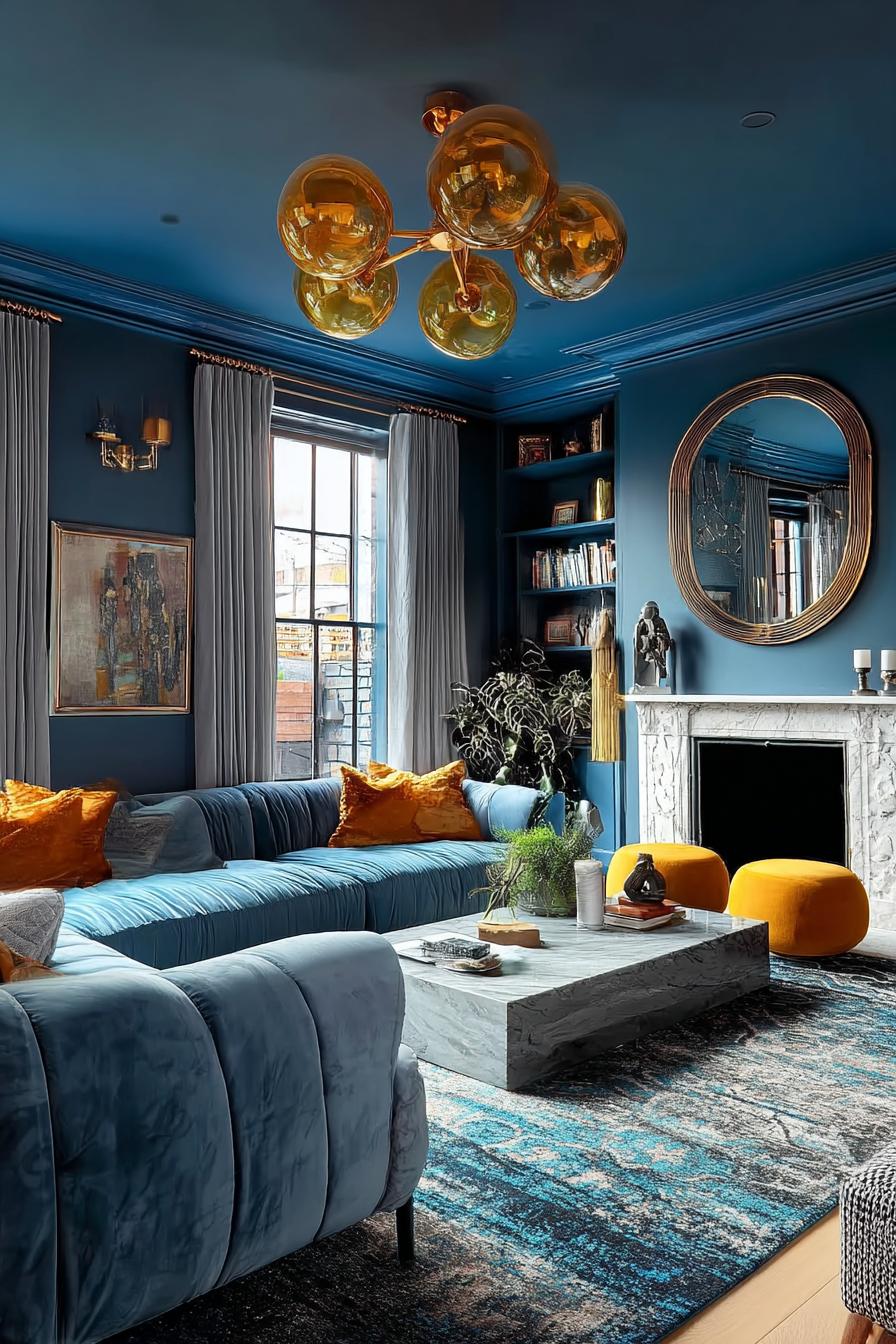
Velvet upholstery interacts with light uniquely, creating a rich, jewel-toned centerpiece in shades like navy, sapphire, or teal. The fabric’s pile reflects and absorbs light variably, adding depth and a luxurious feel that flat textiles cannot replicate.
Choosing velvet instantly elevates the room’s sophistication, even on budget-friendly frames, and adds acoustic softness that enhances intimate conversations. Modern performance velvets also offer improved stain resistance compared to older versions.
To avoid visual clutter, pair velvet with simpler fabrics such as linen or cotton, allowing the sofa to remain the room’s star without competing textures.
5. Utilize Floating Shelves to Showcase Personal and Decorative Items
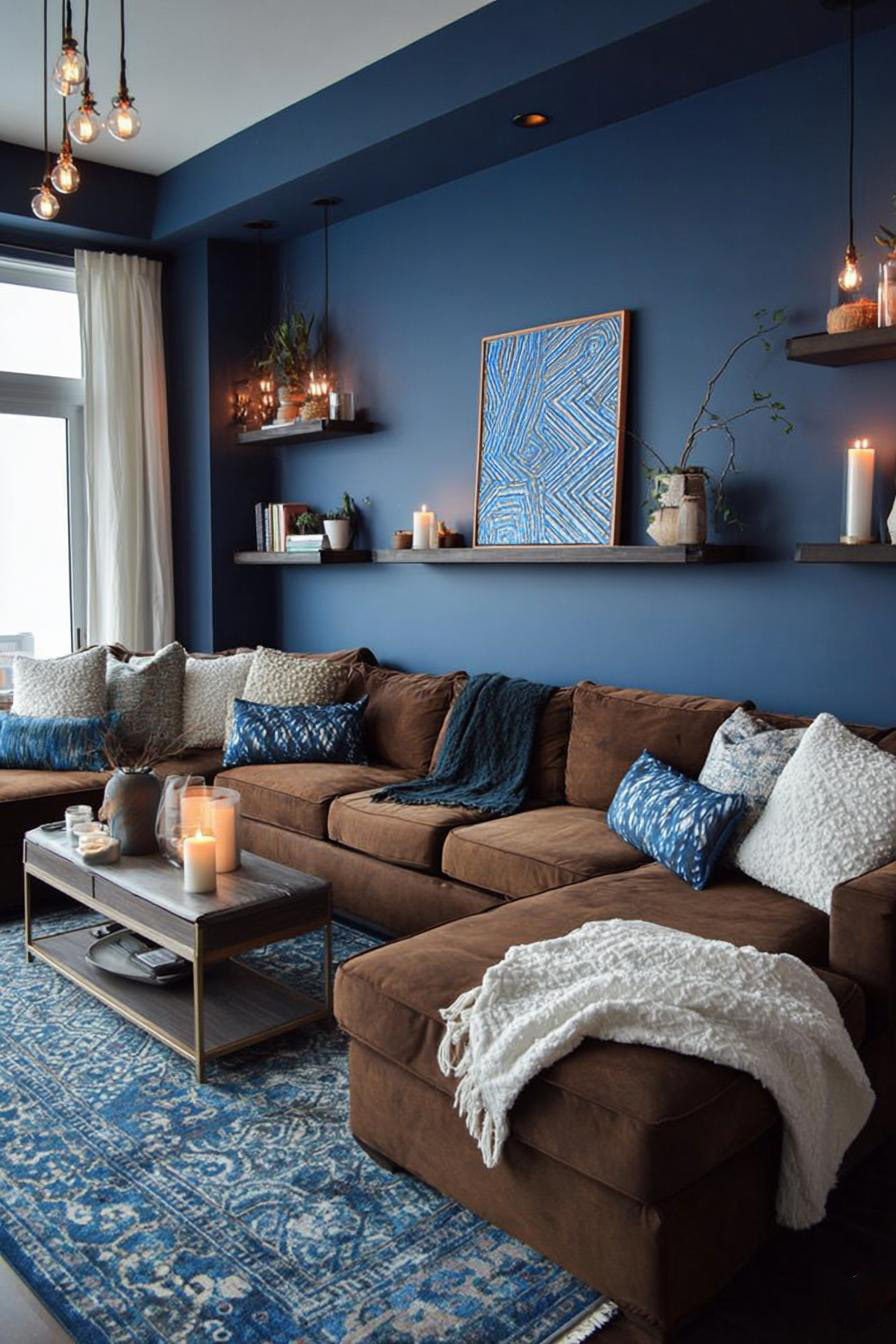
Empty walls can make even the most beautiful blue tones feel flat. Installing floating shelves in light wood or white lacquer breaks up large expanses of color and provides a platform to display items that express your personality.
Arrange a curated mix of books, small plants, ceramics, and framed photos with varied heights, ensuring enough space between objects to avoid clutter and maintain a curated look. The horizontal lines of shelves also visually widen the room.
6. Contrast Deep Blue Walls with Sheer White Curtains for Airy Elegance
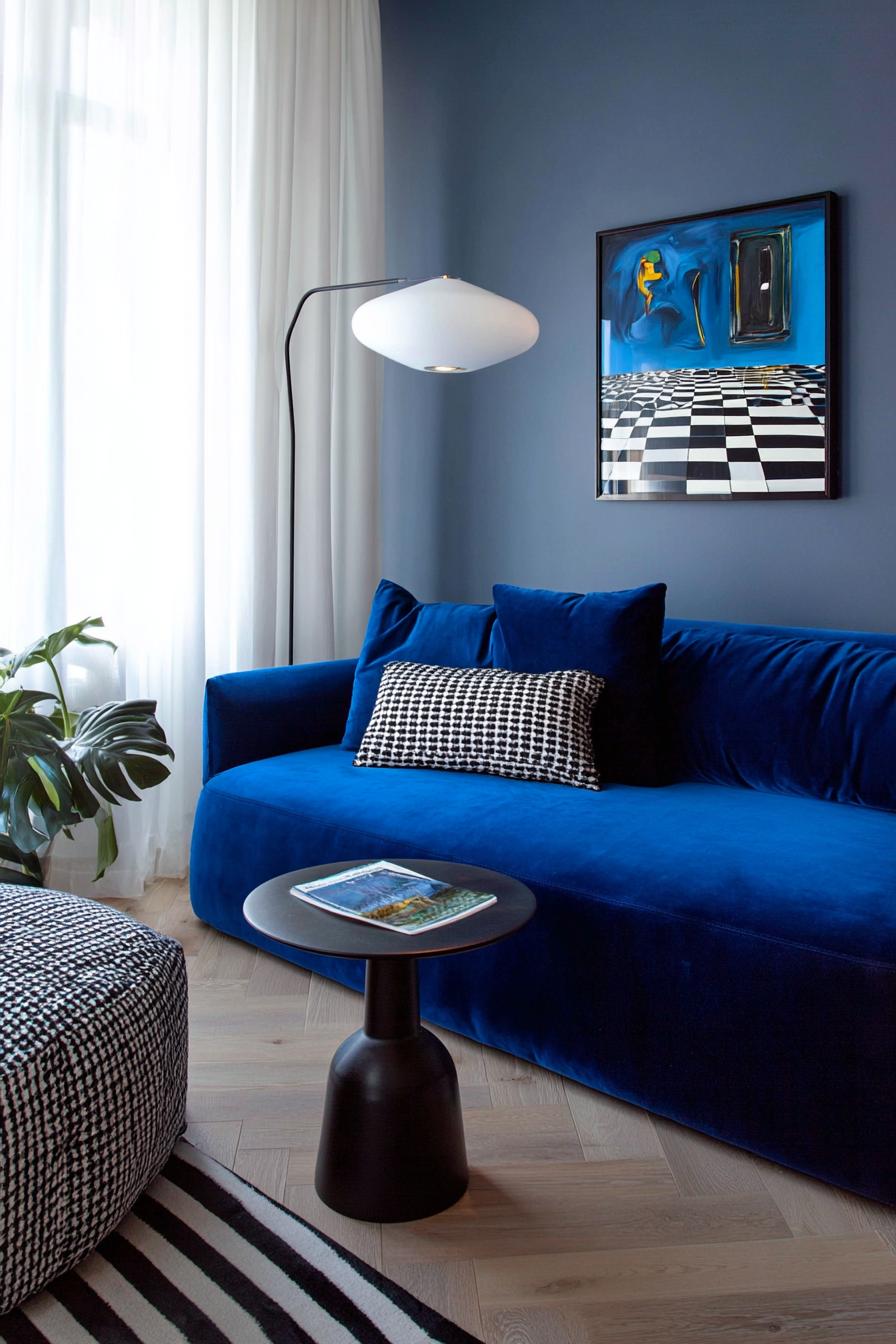
Sheer white curtains soften incoming natural light, creating a gentle glow that prevents dark blue walls from feeling oppressive. Their movement with air currents adds life to otherwise static surfaces.
Installing curtains from floor to ceiling visually elongates the room’s height, while the stark white against blue highlights architectural details. Even when heavier drapes are drawn, the sheers maintain a soft layer that preserves contrast and light diffusion.
7. Curate Coffee Table Books for Stylish and Thoughtful Accents
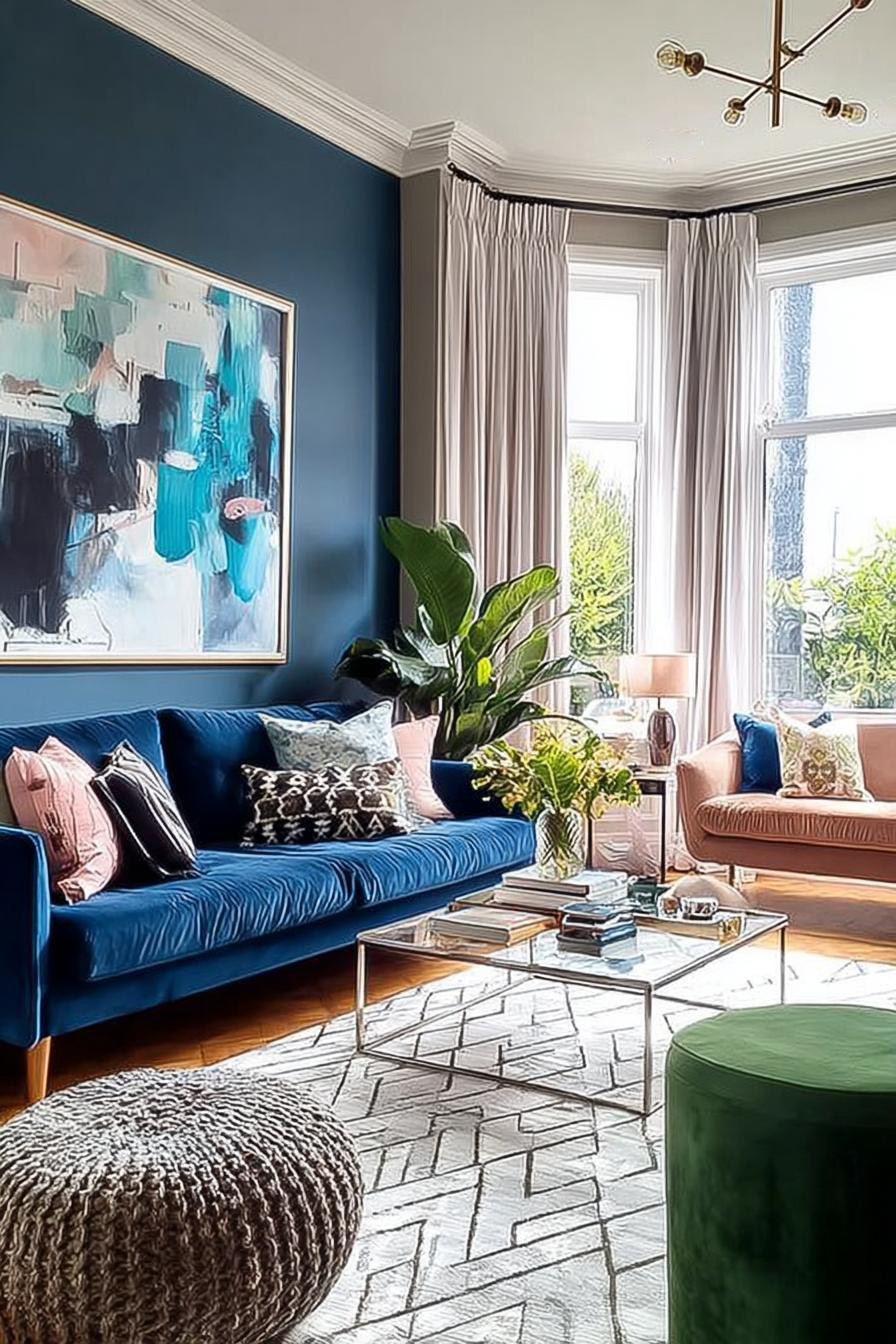
Rather than scattering decorative books haphazardly, stack oversized volumes on art, architecture, or photography to create a visually weighted centerpiece that signals sophistication. The covers and spines add complementary color accents to your blue palette.
Opt for books with covers in hues like burnt orange, cream, sage, or gold to introduce intentional pops of color. Top stacks of three to five books with a small sculpture or candle for an effortlessly curated vignette.
Consider which books on your shelves could double as decor elements to enhance your living room’s aesthetic.
8. Incorporate Woven Pendant Lights for Natural Texture and Warmth
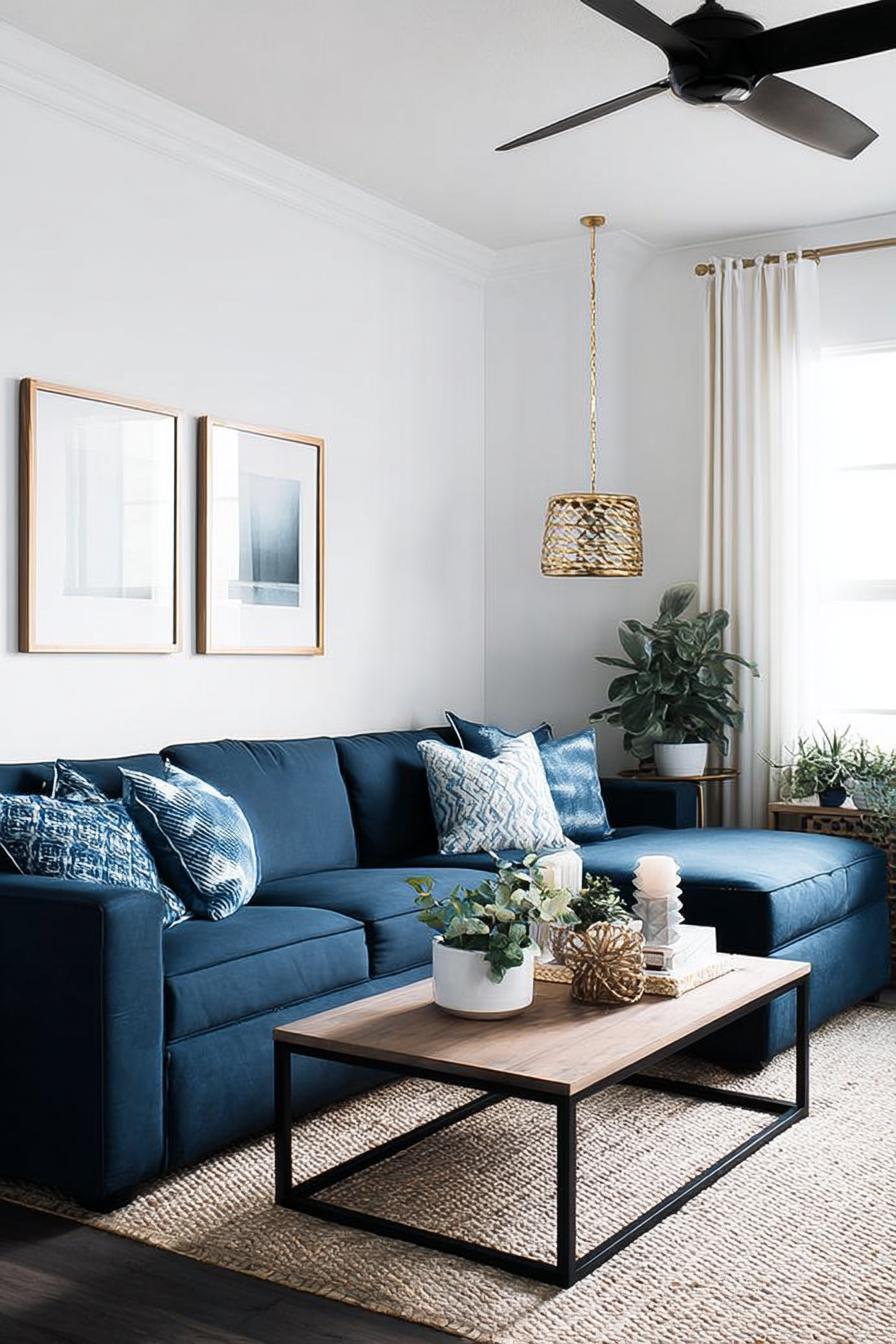
To soften the formality of blue interiors, natural fiber light fixtures made from rattan, seagrass, or jute introduce organic texture overhead. Their woven construction casts intricate shadows, adding depth and visual intrigue.
While these fixtures complement coastal or bohemian styles, contemporary designs with geometric shapes make them suitable for modern blue living rooms as well. The warmth of natural fibers balances cooler blue tones without competing for attention, drawing the eye upward to a surprising focal point.
9. Bring in Tall Green Plants to Revitalize and Balance the Space
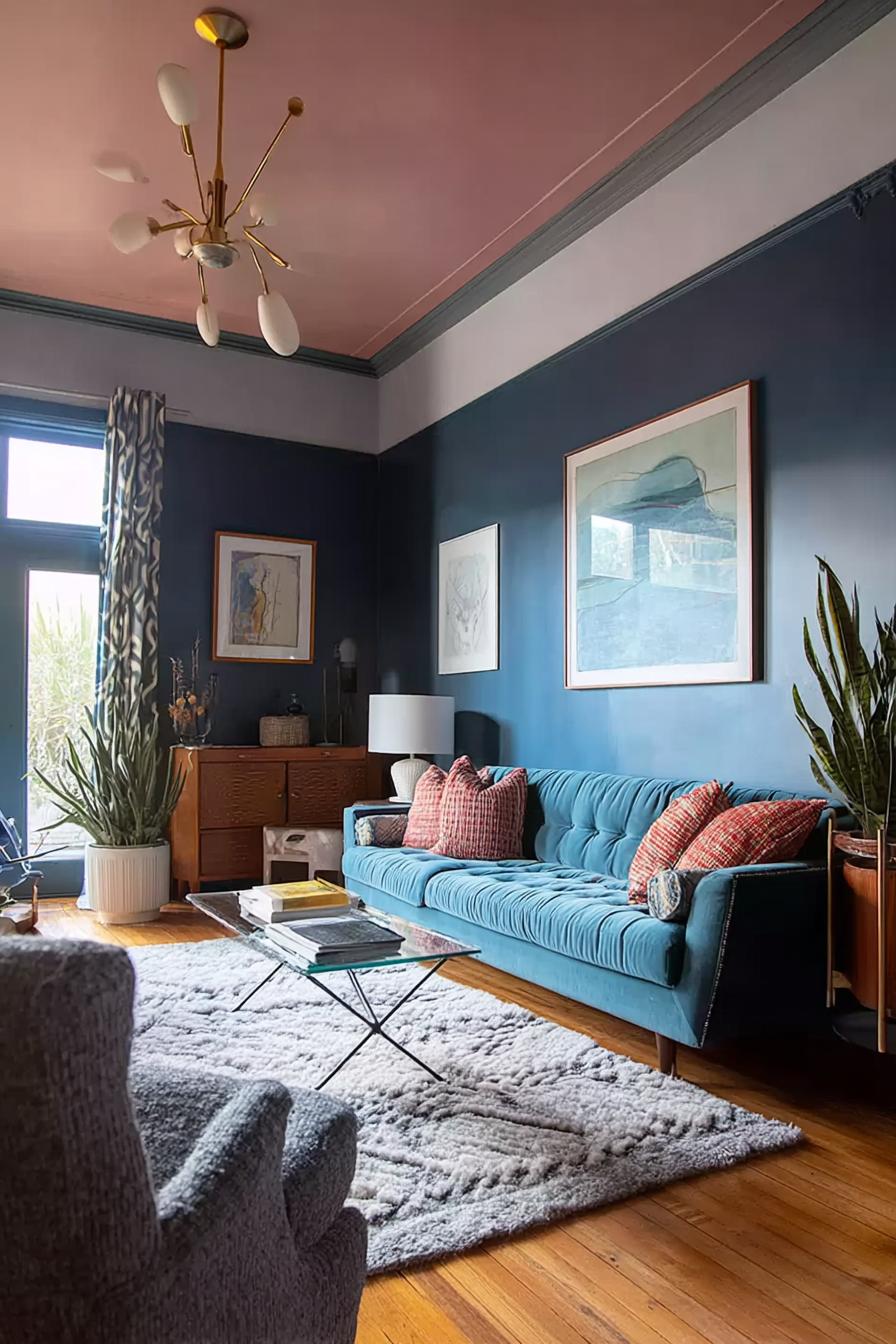
Adding lush greenery breathes vitality into blue rooms both visually and atmospherically. Tall plants like fiddle leaf figs, bird of paradise, or snake plants introduce vertical interest and organic shapes that contrast beautifully with structured furniture and architectural lines.
The combination of green and blue resonates with our innate connection to nature—evoking imagery of forests meeting oceans or skies above meadows. This biophilic design principle enhances the room’s freshness and sense of wellbeing.
Place plants where they receive natural light and complement your furniture layout. Appropriately scaled greenery can fill awkward corners, frame seating areas, or provide subtle privacy without permanent alterations.
Indoor plants have become essential for wellness-focused interiors, reflecting a growing trend toward integrating nature into everyday living spaces.
10. Use Monochrome Art to Create a Refined Blueprint Accent
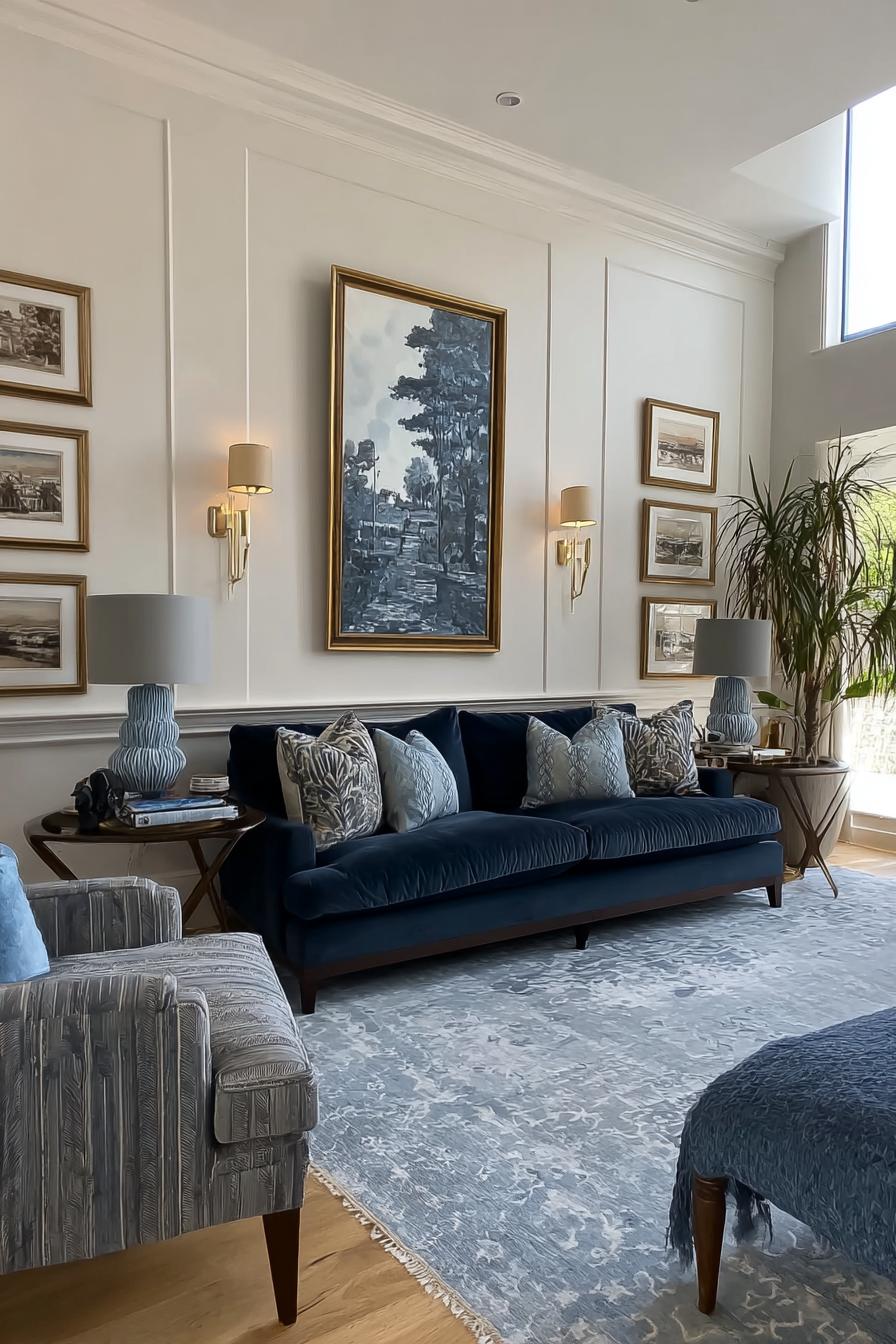
Contrary to popular belief, colorful artwork isn’t necessary to warm blue walls. Black-and-white photography or line art offers striking focal points that feel curated and sophisticated. The high contrast complements mid to dark blue tones, allowing the wall color to remain dominant.
Monochrome pieces lend a gallery-like atmosphere, conveying confidence and restraint without relying on busy patterns or bright hues. Whether abstract, architectural, or figurative, these artworks add depth without overwhelming the space.
Opt for a few well-placed pieces rather than overcrowding walls, ensuring your blue backdrop remains a compelling feature rather than mere background.
11. Layer Soft Fabrics on Your Sofa for a Welcoming Feel
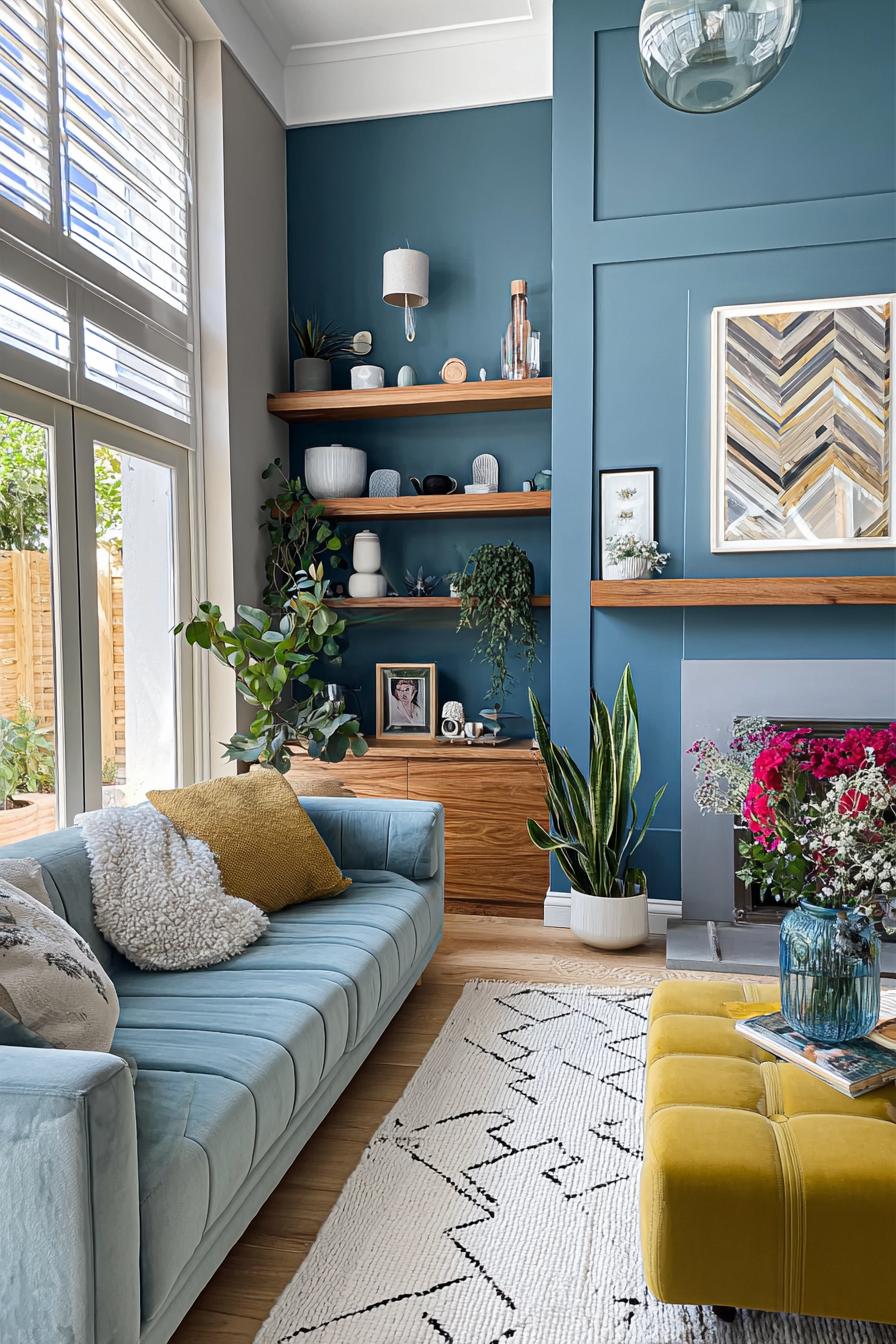
Think of your sofa as a cozy retreat—layering textiles adds both comfort and visual intrigue. Begin with the upholstery, then drape a complementary throw blanket over one arm, and arrange pillows of varying sizes and materials to create depth.
This layering softens blue’s sometimes formal vibe. A chunky knit throw in neutral tones adds warmth, while velvet or silk pillows introduce subtle sheen. Mixing matte and shiny fabrics enhances light play, making the sofa visually engaging throughout the day.
The result transforms your couch from mere furniture into an inviting space that encourages guests to linger.
12. Install a Gold-Toned Chandelier for Striking Overhead Drama
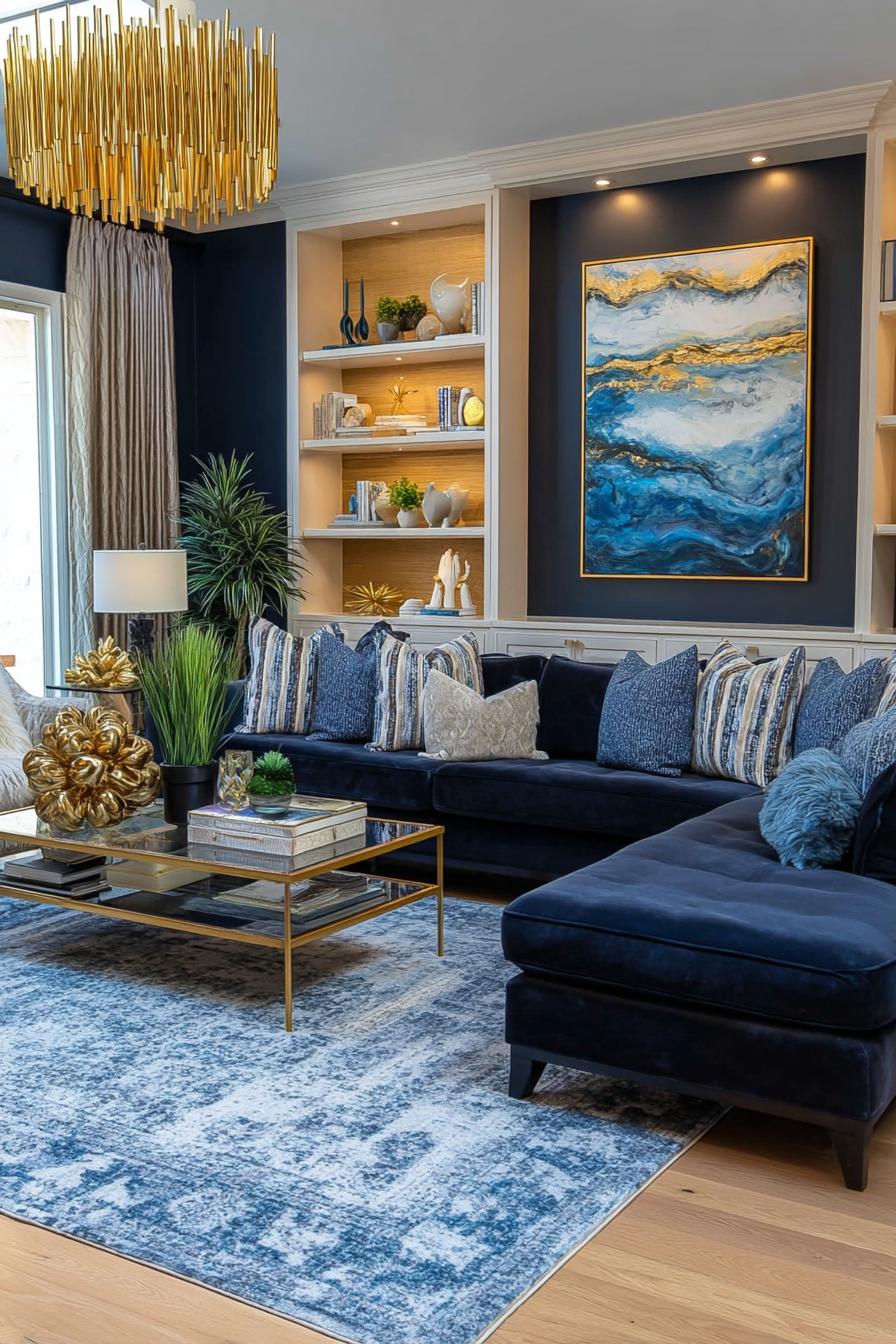
Ceiling lighting often gets overlooked, but a statement chandelier in brushed gold or brass can act as jewelry for your room. It draws the eye upward, adding dimensionality and warmth that contrasts beautifully with blue walls.
Modern geometric designs avoid the stuffiness of traditional chandeliers, favoring linear, sculptural, or globe shapes. Choose a fixture with ample scale to make a confident statement rather than fading into the background.
Besides aesthetics, metallic fixtures amplify both natural and artificial light, brightening blue rooms more effectively than recessed lighting alone.
Lighting is increasingly treated as sculptural art, helping define open-concept spaces while adding personality overhead.
13. Mix and Match Patterned Throw Pillows for Vibrant Texture
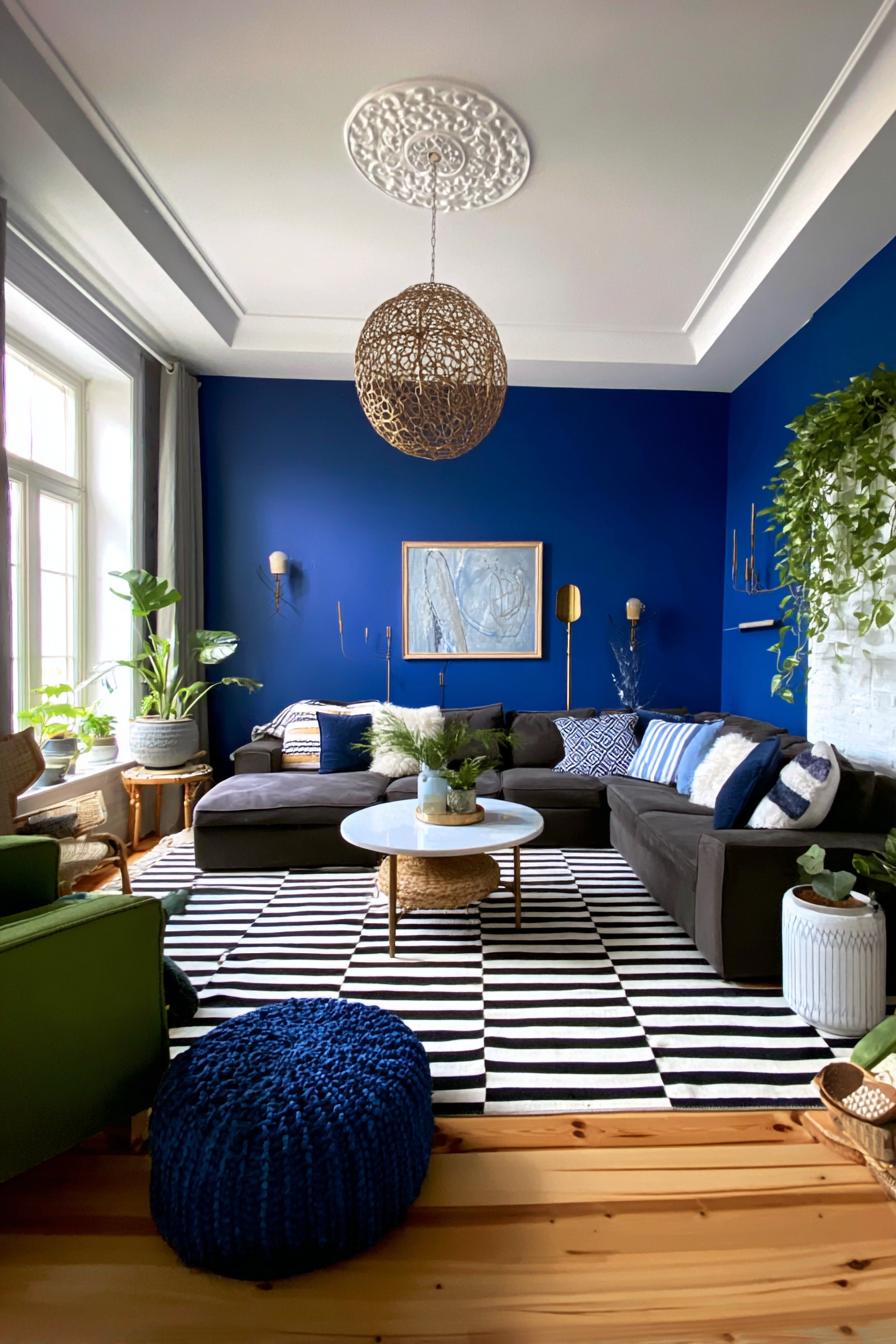
Throw pillows have evolved beyond matching sets into curated collections that tell a story. Combine geometric patterns with organic florals, stripes with ikat, or mix scales within a controlled color palette to energize blue seating areas without overwhelming them.
Successful pillow mixing hinges on a cohesive color story. Draw accent hues from your blue walls—gray undertones pair well with gray-and-white patterns, while teal blues invite green and gold accents. Vary pattern scale to avoid visual competition.
Texture is equally important: blend smooth cotton, textured linen, plush velvet, and perhaps one embroidered pillow for tactile richness. Odd numbers of pillows (five or seven) tend to look more natural and collected.
For versatility, keep one or two neutral pillows year-round and swap seasonal accents to refresh your space effortlessly.
14. Opt for a Glass Coffee Table to Maintain Openness and Showcase Flooring
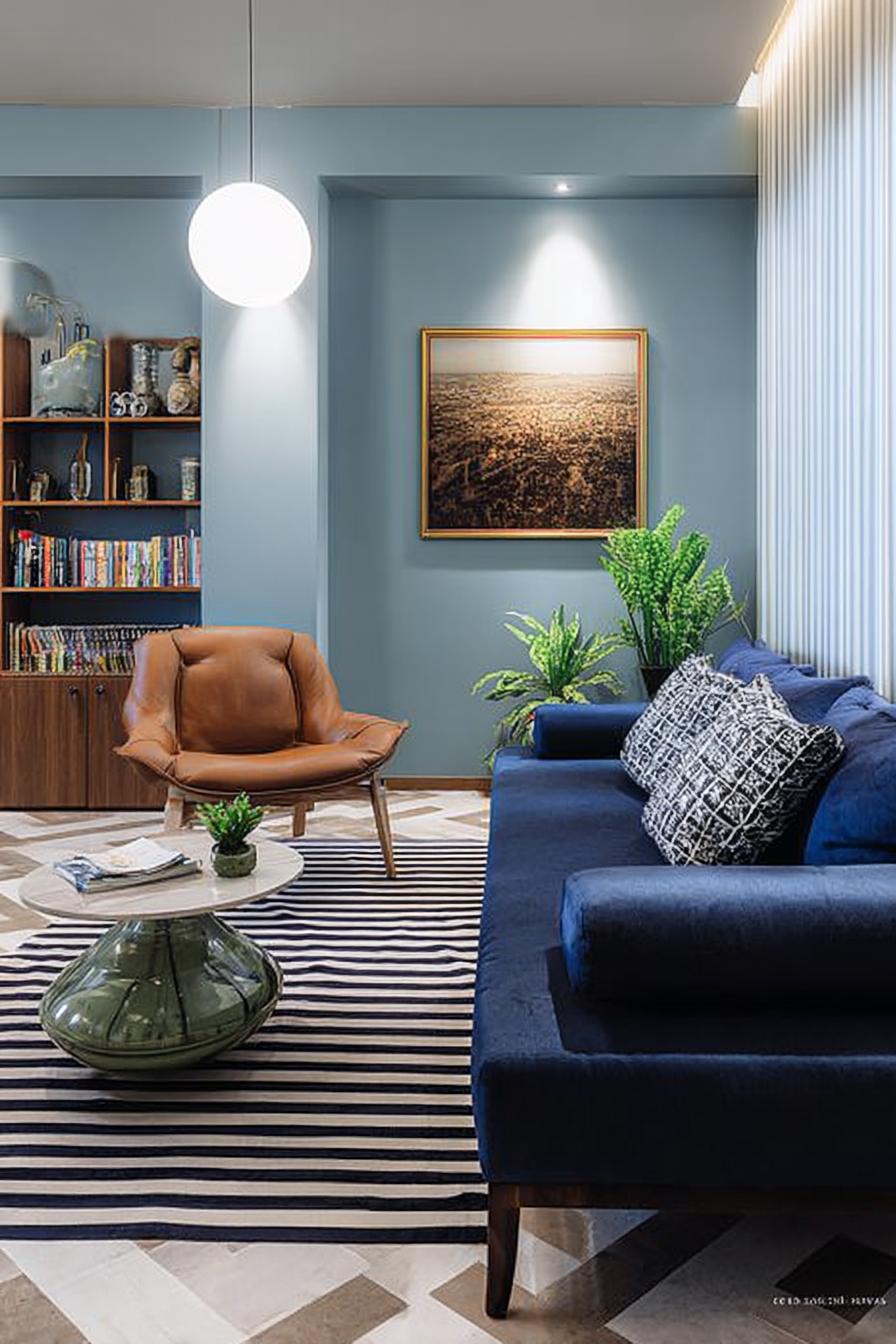
Recall the earlier mention of chevron floors? A glass coffee table preserves the visibility of your beautiful flooring, creating a seamless visual flow that makes the room feel larger and less obstructed.
A round glass top with brass or black metal legs in front of a blue velvet sofa strikes a balance between airiness and substance. Glass tables are especially advantageous in compact living rooms where solid wood pieces might feel bulky, and they highlight rugs beneath without hiding them.
Keep styling minimal—perhaps a small stack of books, a sculptural object, and a tray for remotes—to maintain the table’s open feel.
15. Scatter Metallic Accents to Reflect Light and Add Subtle Glamour
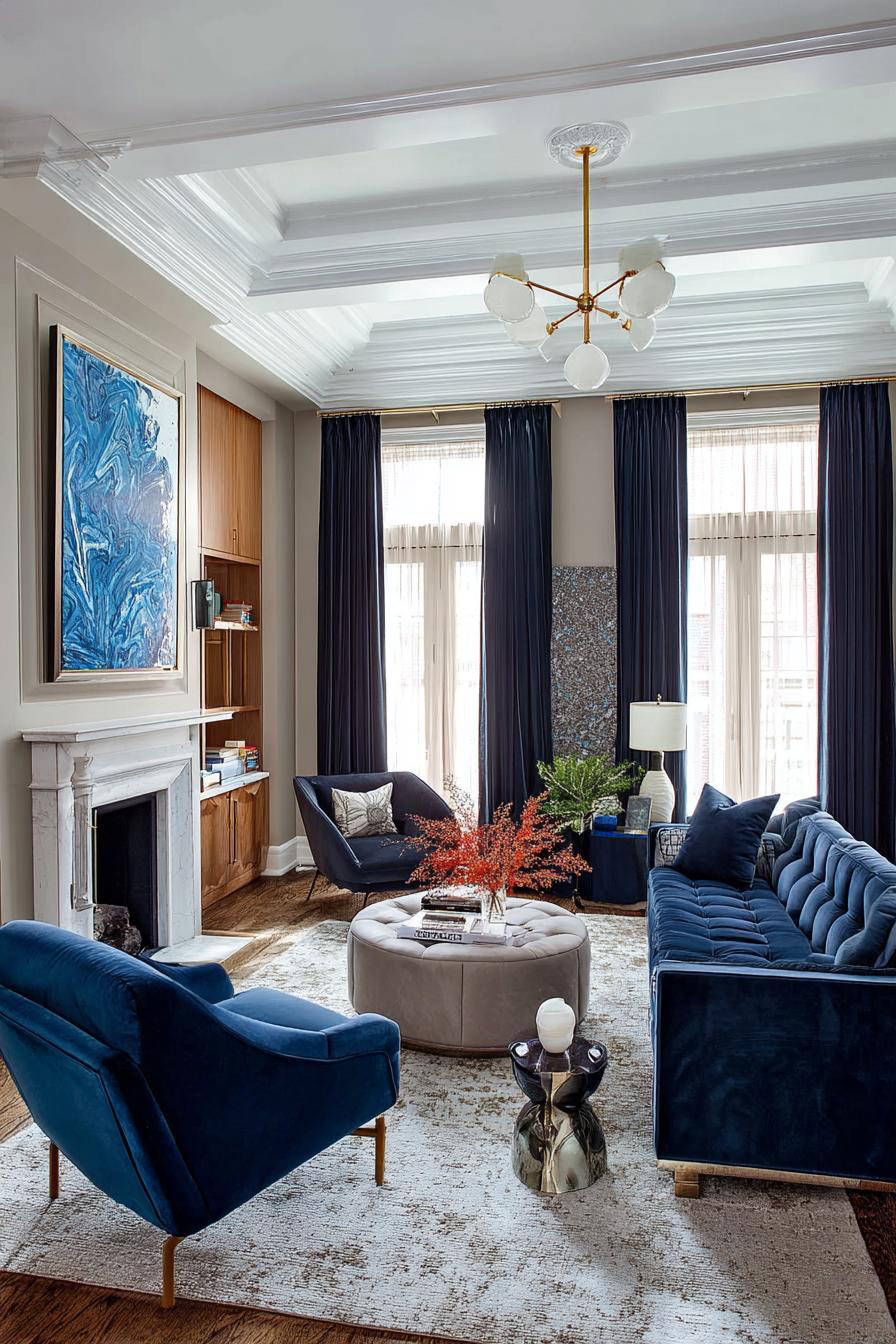
Blue interiors can absorb light, sometimes making spaces feel dimmer than intended. Incorporating metallic decor—such as brass candlesticks, silver frames, copper bowls, or gold-trimmed trays—helps scatter light like miniature mirrors, brightening the room without additional lamps.
The effect accumulates with multiple pieces placed thoughtfully around the room, creating a gentle shimmer that enlivens the space. Mixing metals freely is encouraged, as the old rule of matching metals is outdated and variety adds a collected, layered look.
16. Introduce Mustard Yellow Pillows for Vibrant Contrast
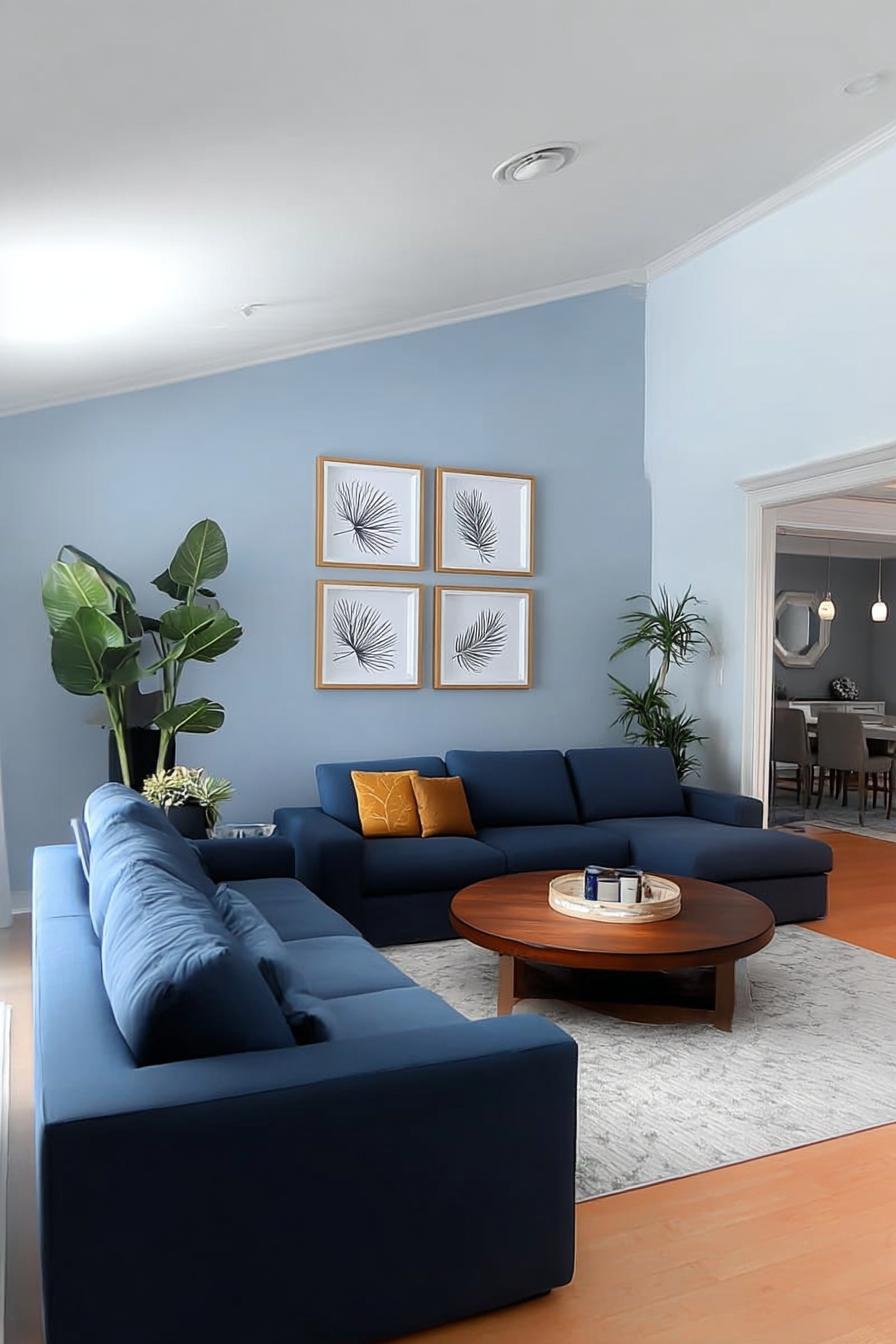
While soft neutrals complement blue beautifully, mustard yellow injects a bold, energizing contrast. This pairing leverages complementary color theory—blue and yellow-orange sit opposite on the color wheel, intensifying each other’s vibrancy.
Start with a couple of mustard pillows if you’re hesitant. Opt for deeper golden hues rather than bright lemon tones to maintain sophistication. The warmth of mustard balances any coolness in blue walls, creating a harmonious and lively atmosphere.
17. Use Layered Coffee Tables for Versatile Entertaining
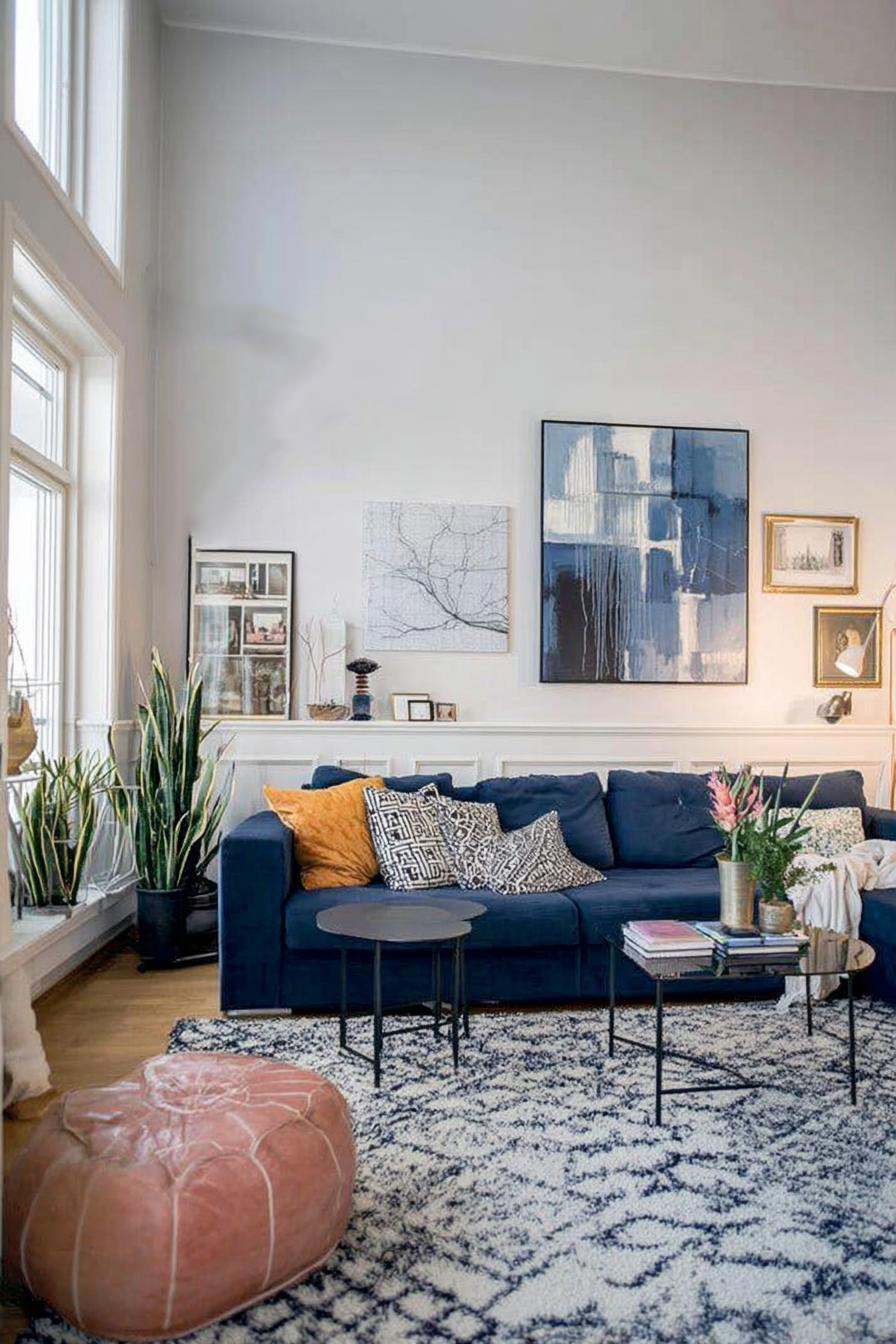
Layered or nesting coffee tables offer flexible surface options. Two or three tables of varying sizes can be grouped for a large party surface or separated to serve different seating zones.
This setup is ideal for frequent entertainers, allowing smaller tables to move closer to guests and eliminating awkward reaches. Look for mixed materials like metal frames paired with wood or marble tops to add textural interest.
18. Create a Cozy Reading Corner Near the Fireplace
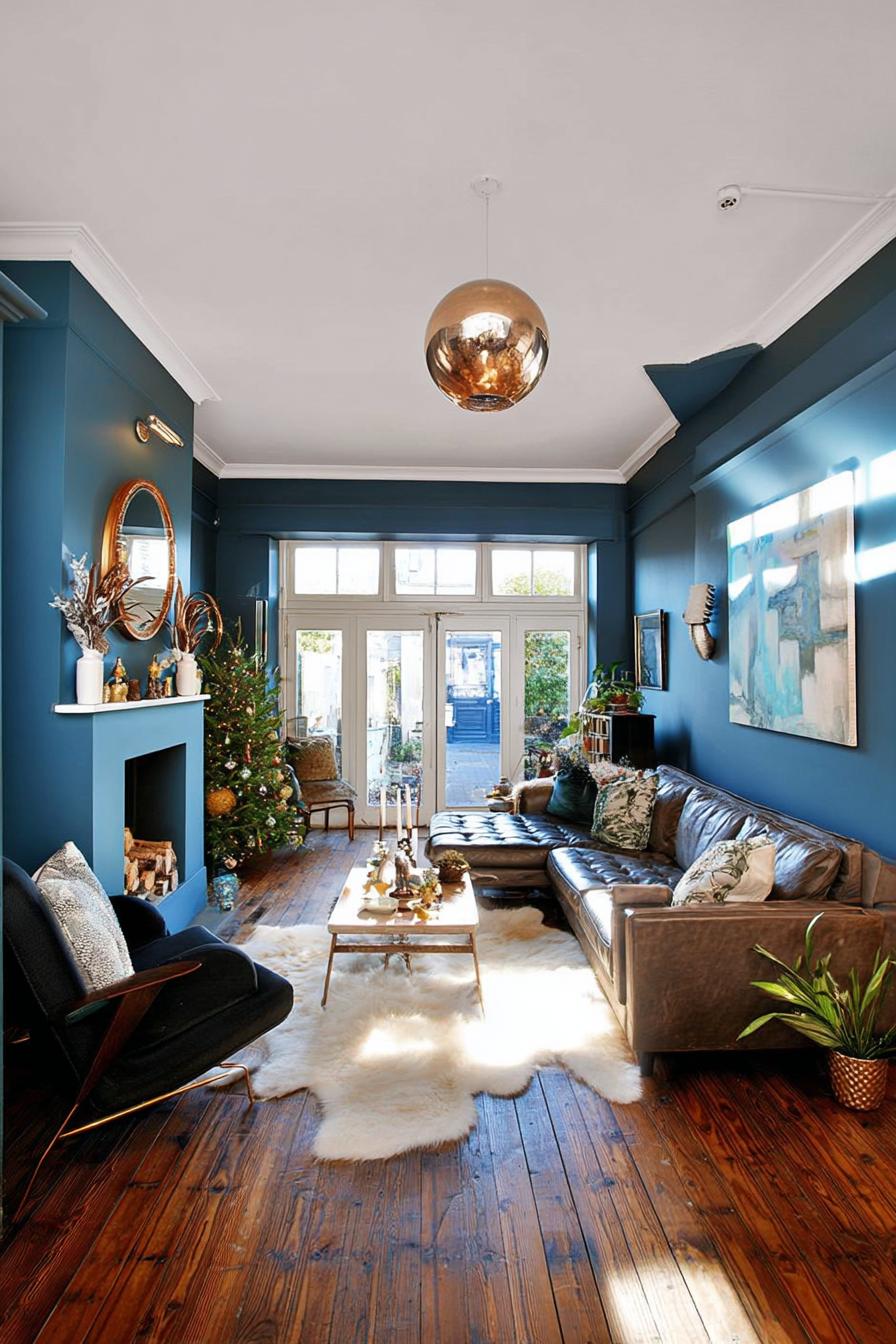
Fireplaces naturally invite relaxation, making the adjacent area perfect for a dedicated reading nook. Furnish this space with a comfortable chair, adjustable lighting, and a small side table for books or beverages.
The blue walls create a cozy, intimate backdrop, separating the nook visually from the main living area. Add a soft throw and pillow for extra comfort, making this corner a personal retreat ideal for quiet moments.
19. Feature a Gilded Mirror for Timeless Elegance and Light Enhancement
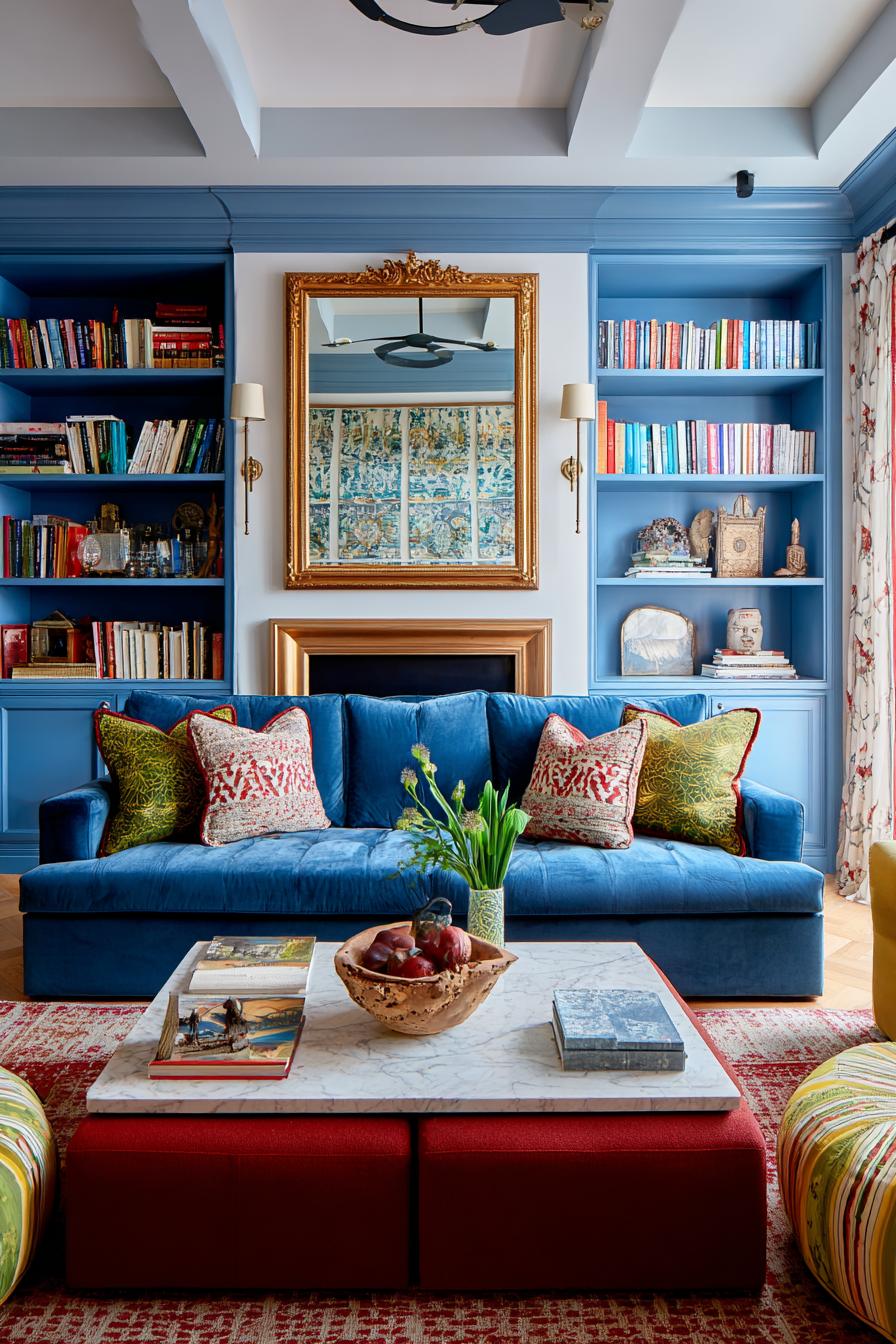
Mirrors amplify light and expand perceived space, but a gold-framed mirror adds an extra layer of sophistication. The ornate gilt frame contrasts beautifully with blue walls, infusing the room with classic charm and elevating the overall design.
This pairing suits both traditional and eclectic styles, creating a high-low mix that feels curated. Position the mirror opposite a window to maximize light reflection or above a console for a stylish entryway focal point.
20. Paint the Ceiling Blue to Amplify Room Depth and Drama
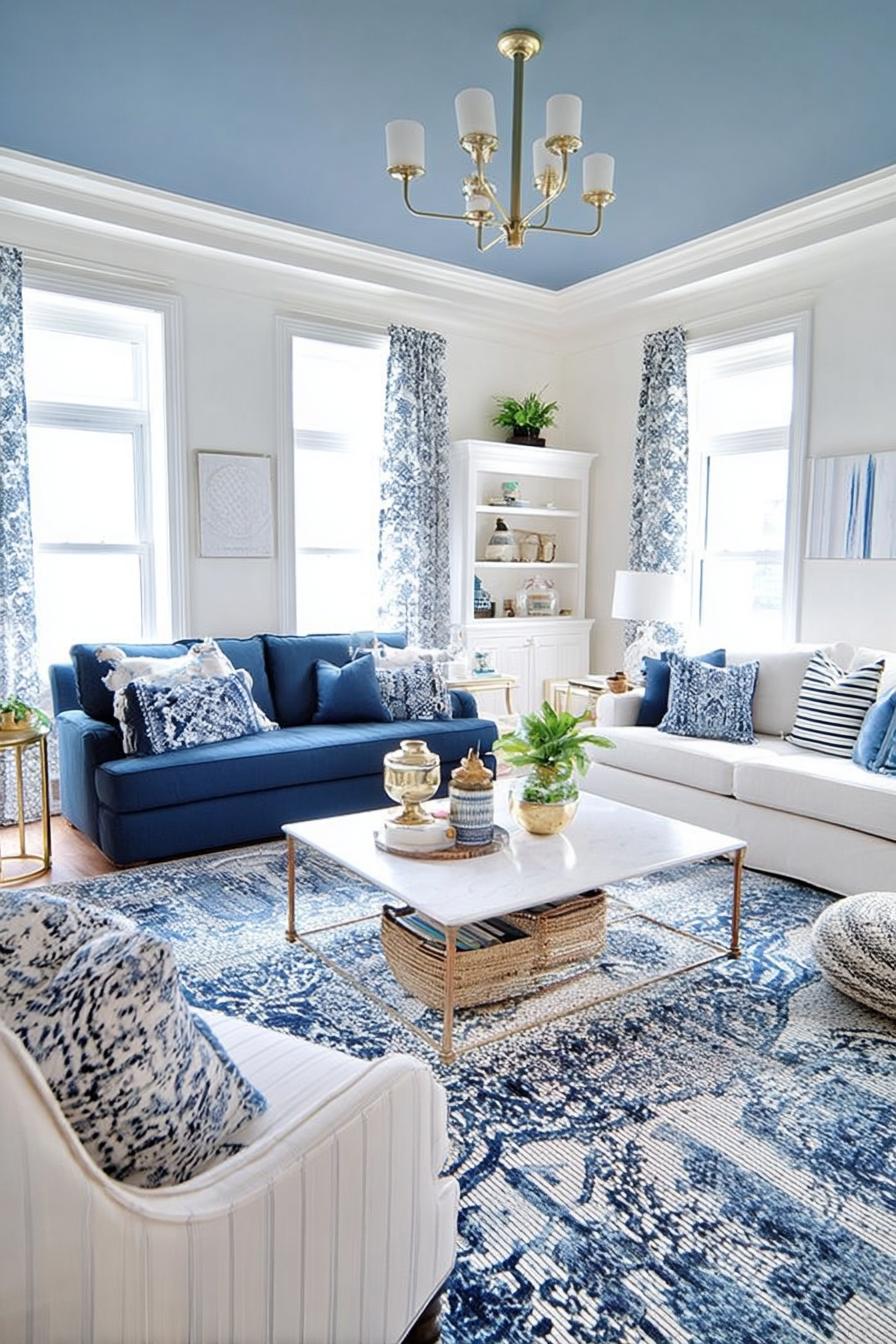
Extending blue paint onto the ceiling creates an enveloping, cozy effect that surprisingly enhances spatial perception. Lighter blues like powder or robin’s egg evoke the sky, making the ceiling feel expansive rather than confining.
This continuous color flow removes the visual break of a white ceiling, making walls appear taller and emphasizing architectural details such as crown molding. In rooms with less natural light, consider painting only a tray ceiling or architectural feature to avoid overwhelming the space.
Always test ceiling paint samples on foam boards before committing, as ceiling colors can appear different than on walls.
21. Curate a Gallery Wall to Personalize Your Blue Living Room
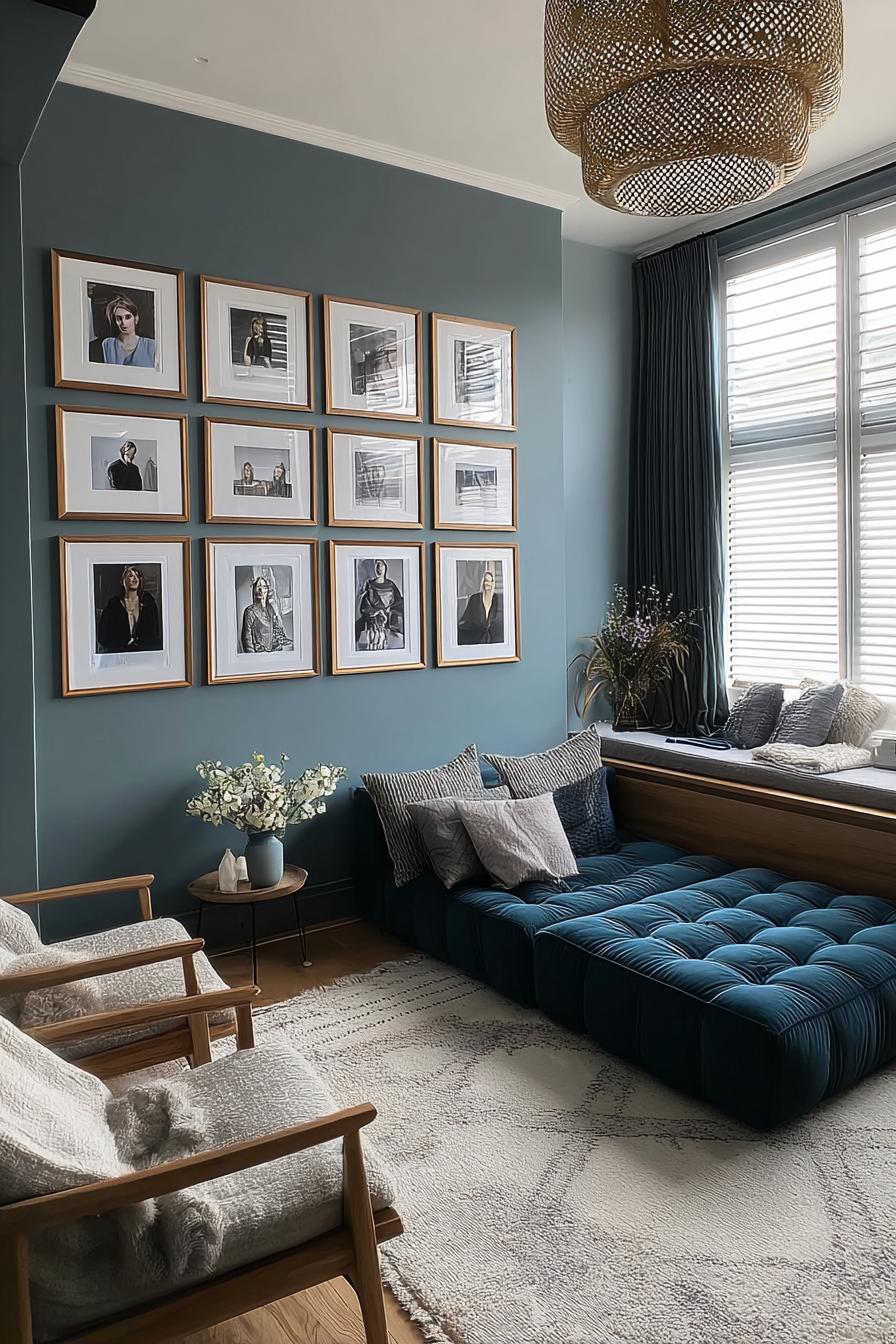
A gallery wall transforms blank blue walls into a personal narrative. Combine family photos, art prints, vintage finds, and modern pieces to create a unique collection that reflects your story.
The blue backdrop unifies diverse frame styles and subjects, preventing visual chaos. Begin with larger anchor pieces and fill in with smaller works, maintaining consistent spacing for cohesion.
Gallery walls evolve over time, allowing you to add, swap, or rearrange pieces, making them a dynamic and sustainable decor choice.
22. Paint Built-In Shelving Blue for Seamless Architectural Impact
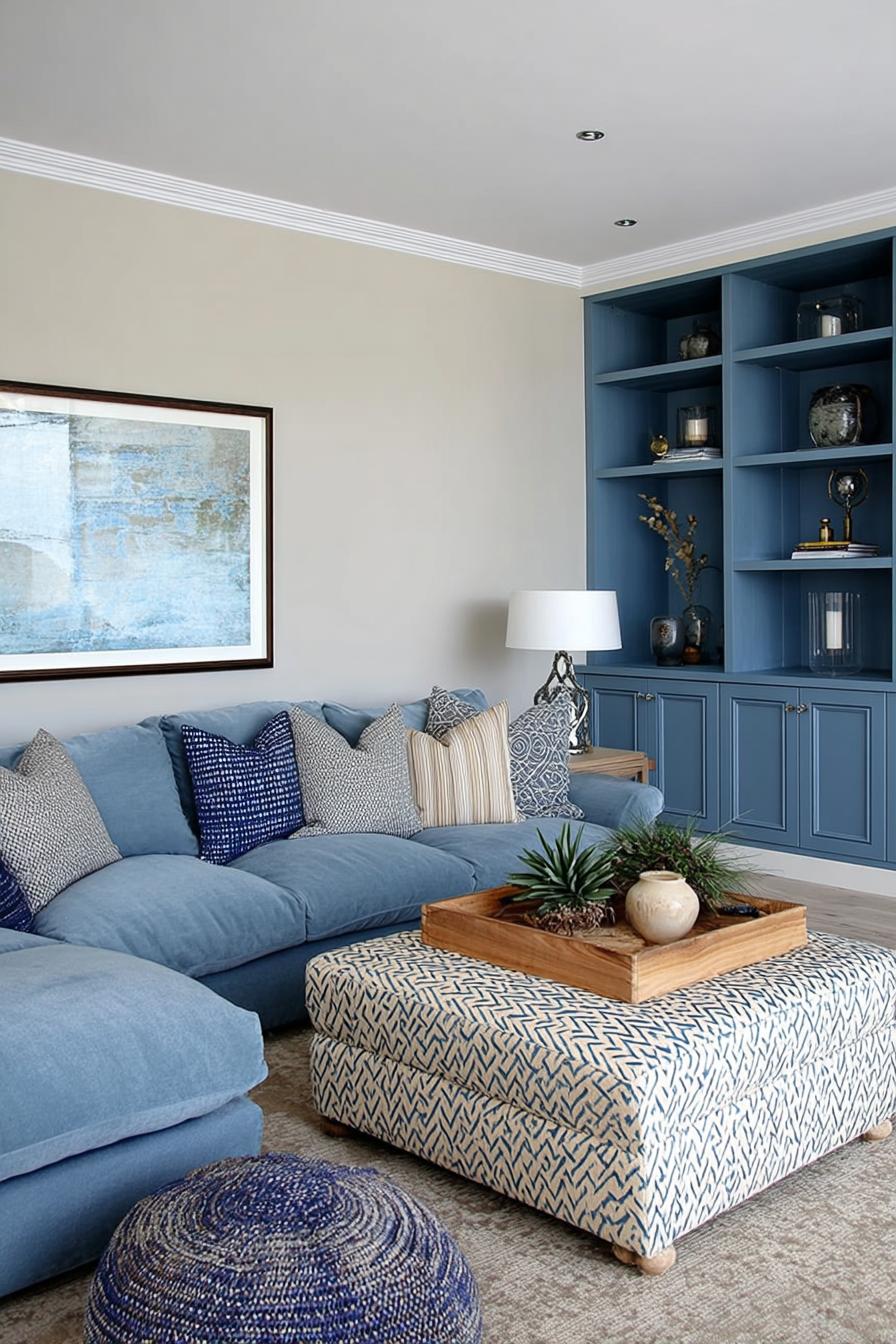
Custom or renovated built-in shelves painted the same blue as your walls create a striking monochromatic effect, turning storage into an architectural feature. This approach integrates new elements seamlessly into traditional spaces, such as shelves flanking a fireplace.
Objects displayed—books, ceramics, plants—stand out vividly against the blue backdrop. For a subtler effect, paint only the interior backs of shelves, leaving frames in white or wood for a shadow-box look.
Style shelves thoughtfully, grouping similar items and leaving space for visual rest to showcase your personality rather than clutter.
23. Elevate Side Tables with Sculptural Vases for Artistic Flair
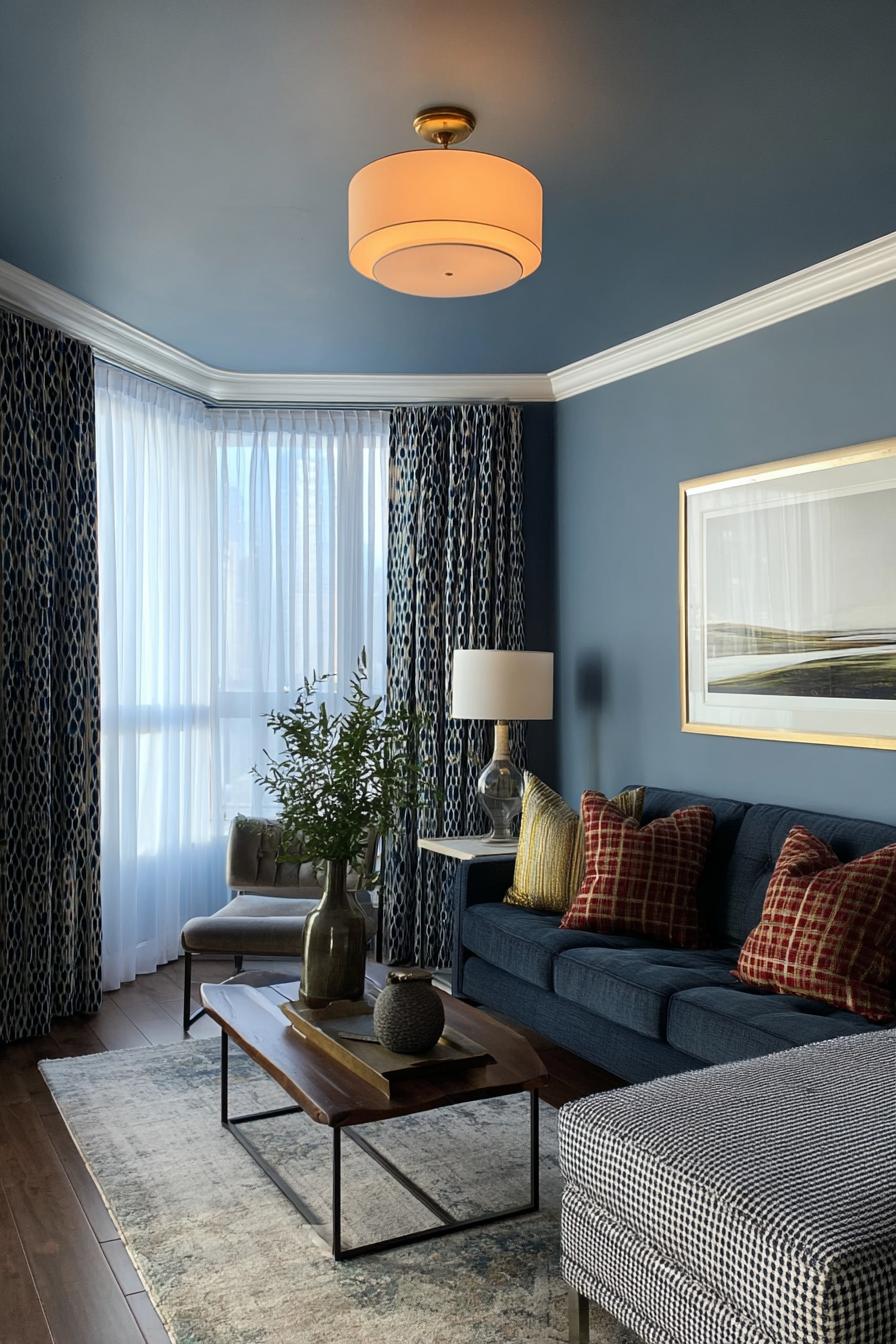
Side tables can serve as mini galleries when adorned with sculptural vases. Even empty, these vases act as art pieces, adding vertical interest and personality. Seek out organic shapes, unusual proportions, or architectural forms that captivate.
Against blue walls, white or cream ceramics offer crisp contrast, while brass or colored glass introduces warmth. Often, the vase’s form is more impactful than its contents, with empty statement pieces appearing more intentional than wilted flowers.
24. Choose Patterned Drapes to Infuse Subtle Drama and Texture
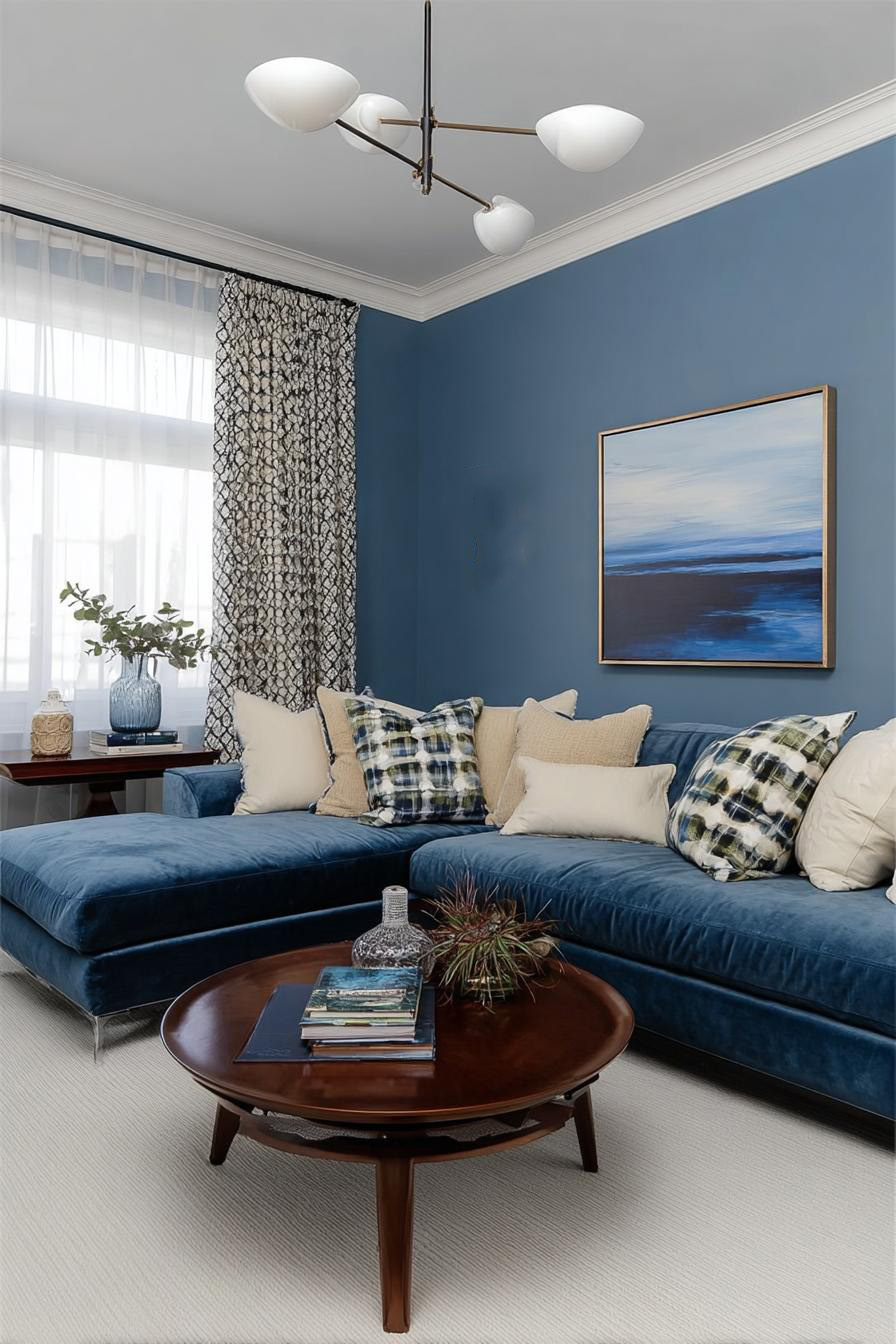
Move beyond plain curtains by selecting drapes with geometric, botanical, or abstract patterns that incorporate your wall’s blue alongside one or two accent colors. This adds dimension and softens the walls while maintaining color harmony.
For example, blue-and-white ikat drapes repeat the wall color in a fresh way, while large-scale floral patterns in navy and gold echo metallic accents elsewhere. Floor-length patterned drapes draw the eye upward, emphasizing ceiling height and turning windows into design features.
Careful selection ensures these drapes bridge various decor styles seamlessly.
25. Incorporate an Oversized Ottoman for Casual, Multi-Functional Seating
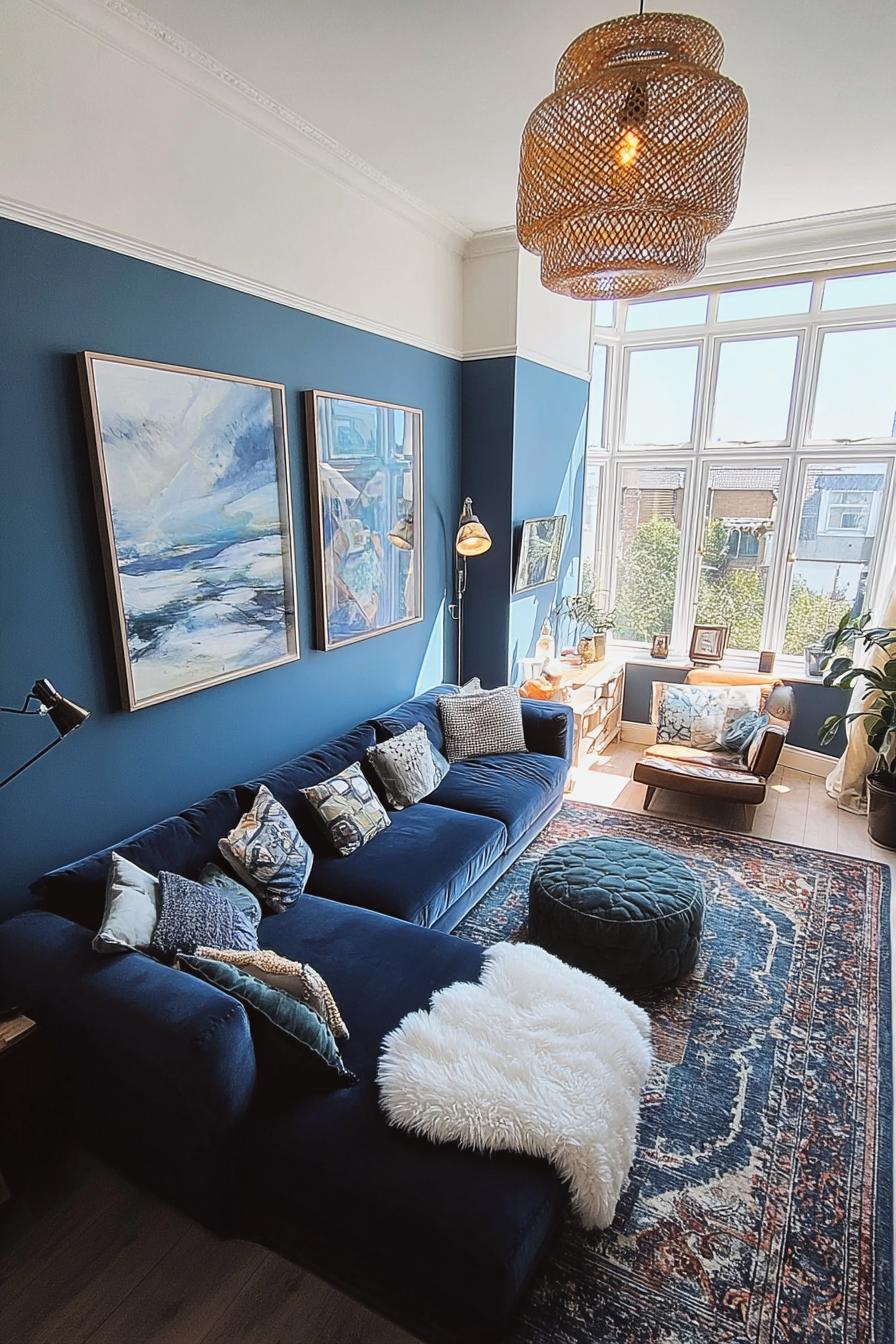
Oversized upholstered ottomans offer a versatile alternative to traditional coffee tables, providing soft surfaces for trays and books, extra seating, and a relaxed vibe that hard tables lack.
In blue living rooms, leather ottomans in warm cognac or caramel tones introduce texture and warmth, while blue velvet ottomans create a luxurious monochromatic look. Patterned upholstery can unify wall and accent colors.
Many ottomans also offer hidden storage, solving clutter issues. Their soft edges are especially appreciated in homes with children. Aim for an ottoman about two-thirds the length of your sofa to ensure proportional balance.
Use a large tray on top when a stable surface is needed, removing it to enjoy the full plushness.
26. Embrace Blue Drapery for a Serene, Monochromatic Finish
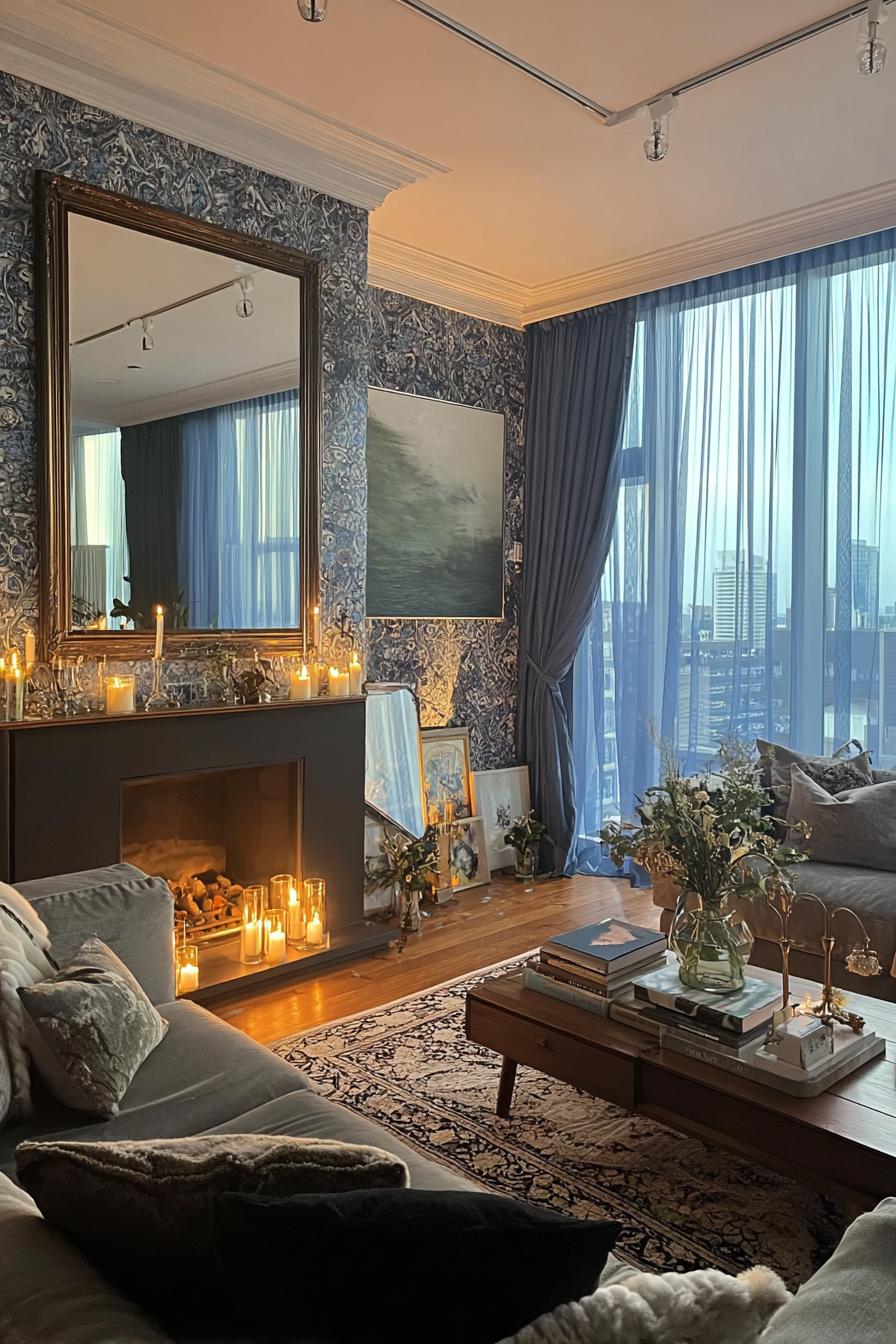
Sometimes, layering more blue is the answer. Floor-to-ceiling drapes in a shade slightly lighter or darker than your walls add subtle tonal variation and depth without introducing new colors, creating a calm and sophisticated atmosphere.
Fabric choice matters—linen drapes catch light differently than velvet or silk, adding texture through material rather than hue. The vertical lines soften architectural edges, while the monochromatic scheme envelops the room in cohesive tranquility.
Final Thoughts
Your blue living room is a canvas brimming with potential, ready to be transformed through intentional layering, balanced contrasts, and personal touches. Begin by selecting one or two ideas that resonate with your style and space, then build upon them.
The beauty of these design strategies lies in their adaptability—mix, match, and customize to create a living room that tells your story in your favorite shade of blue. Start today and watch your space evolve from ordinary to extraordinary.