 efistu.com Home Decor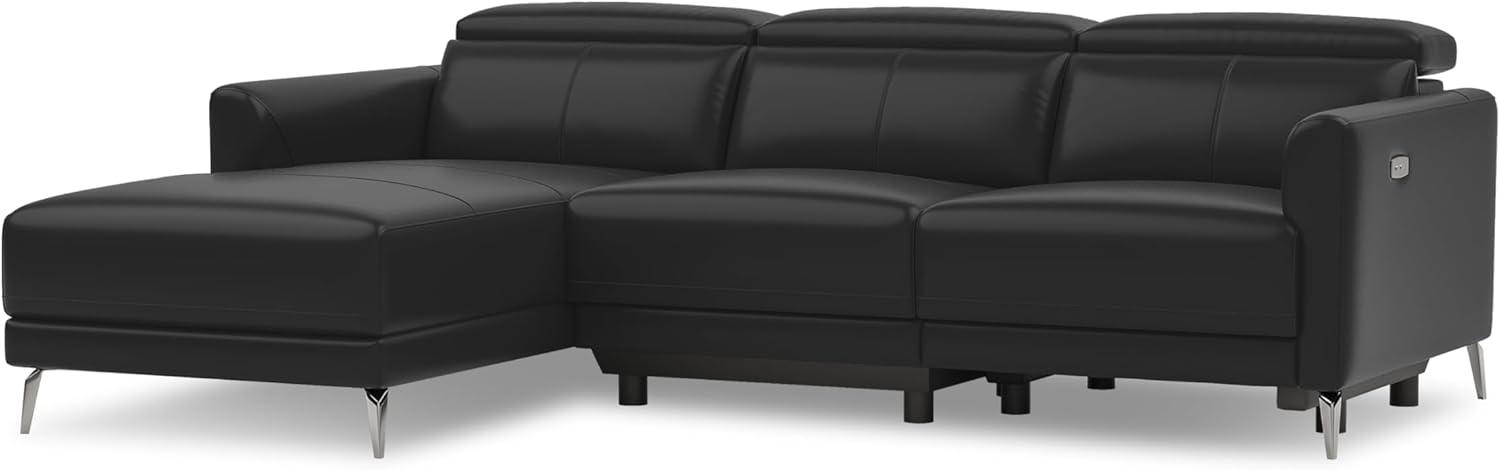
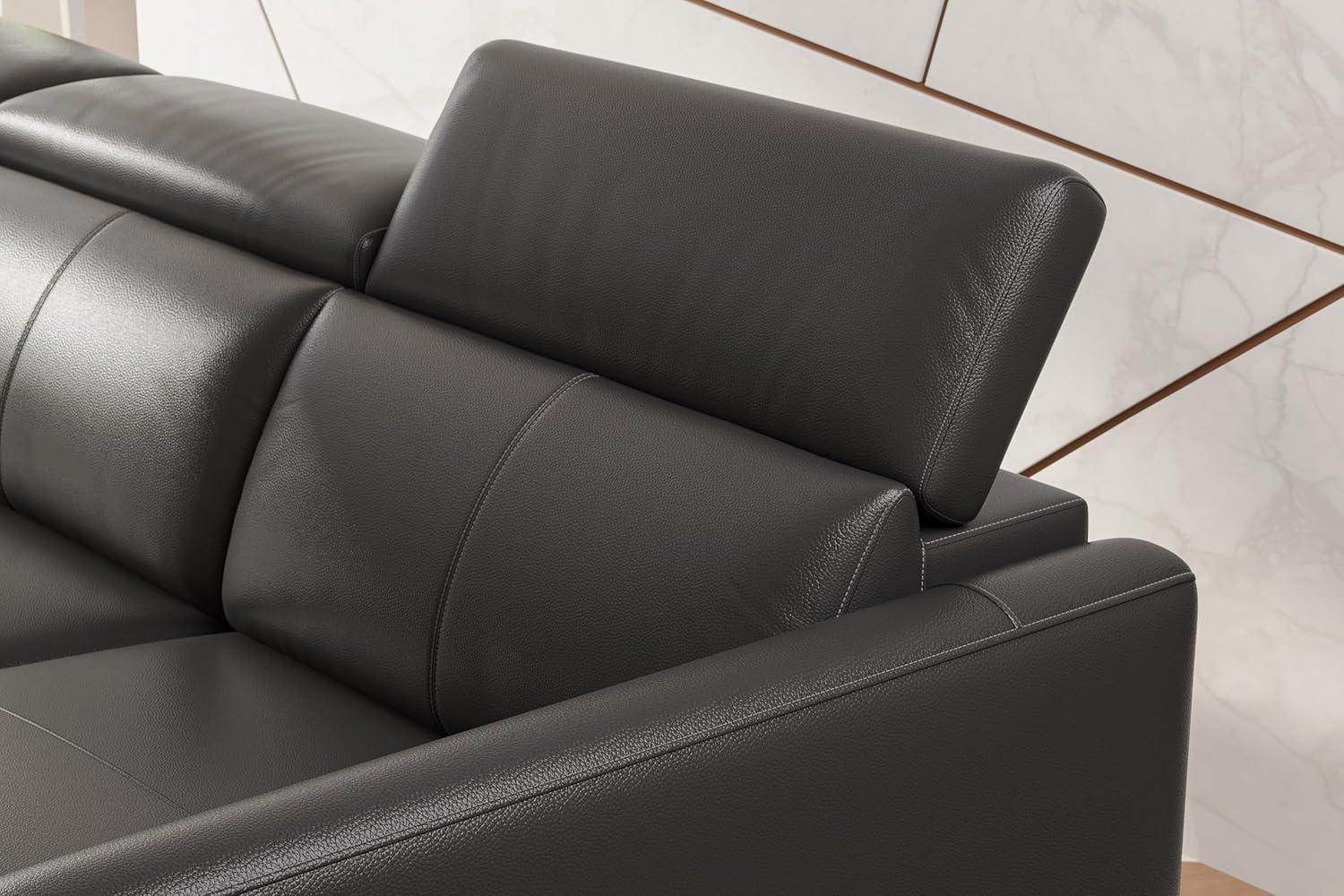
Sunlight picks out a soft sheen on the black leather as you glide a hand across the seat—cool at first, then giving way into a deep, cushioned sink. This is the Valencia Andria reclining sectional, though in the room it reads simply as the big, dark chaise you end up sprawling on. Its low back and stainless-steel legs lend a horizontal, weighty silhouette that quietly anchors the space, while the Italian top-grain leather shows natural creases where people habitually settle. A tucked-in controller with a USB port feels unexpectedly modern; press it and the power recline eases back without the couch needing to move, and the headrests lift by hand into place.
Meet the Valencia Andria reclining sectional and what it brings into your living room
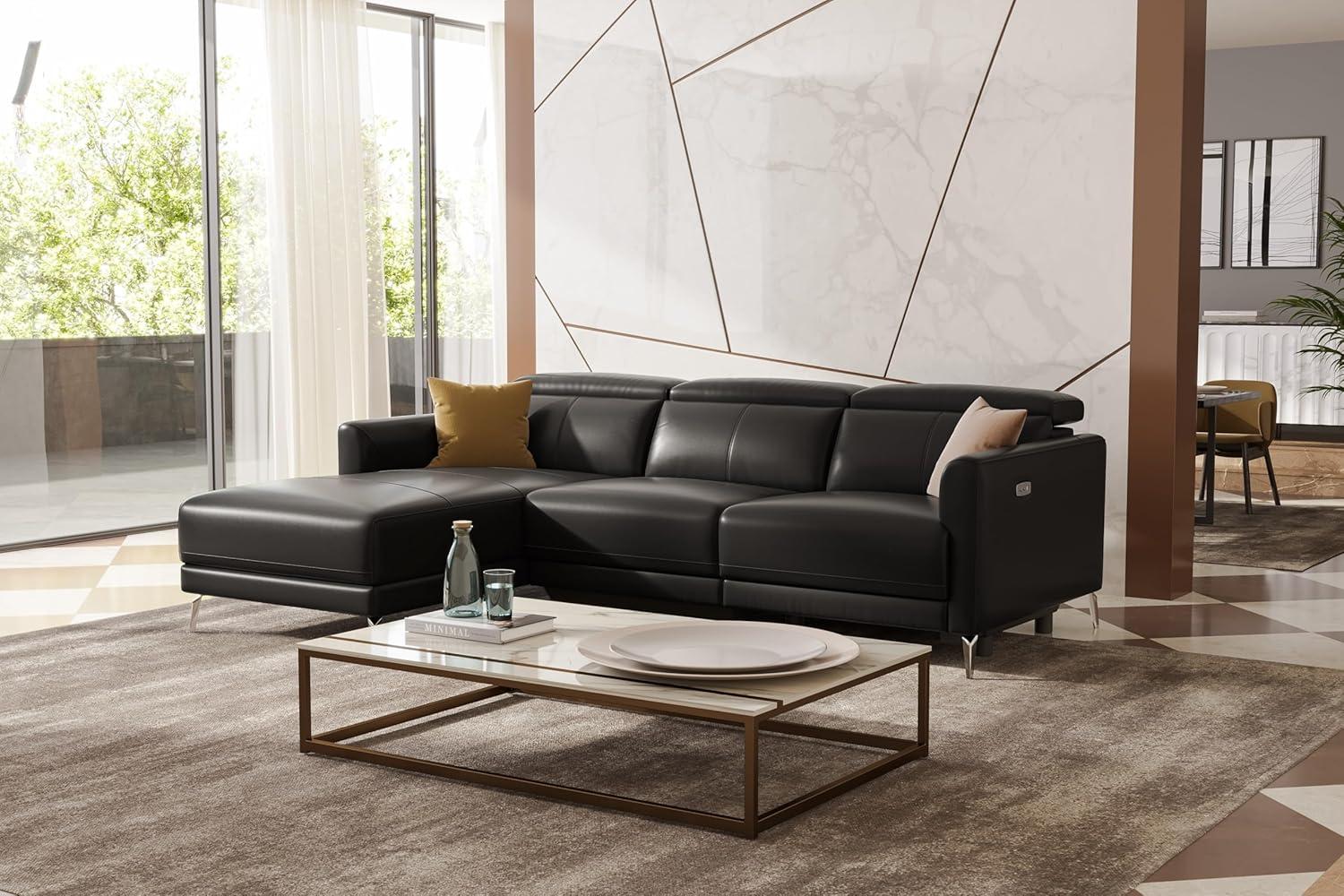
When the sectional is in the room, it reads more like a functional anchor than just a seat. You notice the reclining action as part of the room’s rhythm: a soft whirr when the power seat extends, a brief pause while the headrests are adjusted by hand, and the chaise settling under your legs. The leather catches the light differently as people shift—brief glossy tracks where hands smooth the cushions, tiny creases forming near seams as the pieces flex. Stainless-steel legs lift the form off the floor enough to show baseboards and let a vacuum head pass beneath, while the frame’s solid feel is evident when you lean back and the assembly resists the initial give.
Day-to-day use brings small, repeatable habits. You tend to smooth the seat back almost unconsciously after reclining, and the controller’s USB port becomes the usual spot to top off a phone while lounging. The sectional’s ability to recline without much space behind it keeps it close to a wall, though parts still need a couple inches to move freely in practice. The cushions compress and rebound with repeated sitting, and the headrests are often nudged into different positions depending on weather someone is reading, watching TV, or dozing. In most cases the overall presence is one of calibrated comfort—a large, active piece that quietly defines how the living space gets used rather than merely filling it.
How the italian Nappa top grain leather, stitching and frame detail look and feel up close in your space
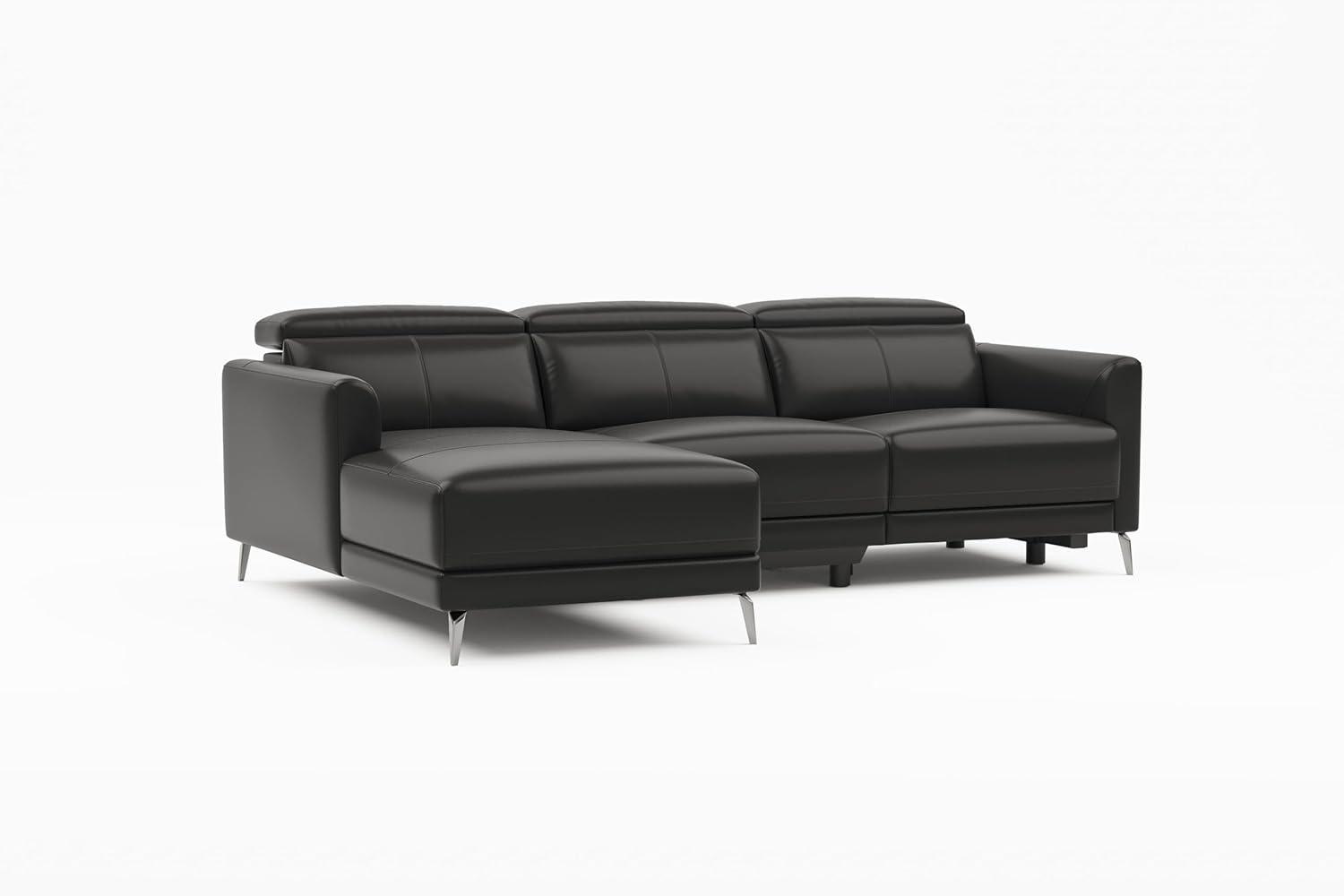
Up close, the black leather reads as a soft, low-sheen surface that shifts with the light — in bright sun you’ll see a faint grain, while in the evening it looks almost even and velvety. When you run a hand across a cushion the hide starts cool and then warms quickly; a few shallow creases form where your palm presses and the leather gives slightly before springing back. You’ll find yourself smoothing seams out of habit: the stitched edges sit proud enough to be felt under the fingertips, and the folded piping along the chaise edge keeps a crisp silhouette even after you push down to settle in.
The stitching is tidy and regular, with closely spaced rows that follow the sofa’s contours. Where panels meet, the thread pulls the leather into small, lived-in folds that become more noticeable with repeated use. small puckering appears at high-contact spots — the front of the arm and where the seat meets the recline — and the stitch lines anchor those folds so they don’t wander.The exposed frame elements read as purposeful details: the legs present a cool, reflective surface and the base sits flush enough to hide most of the reclining mechanics, though a narrow gap opens at full recline. Dust and fingerprints show more on flat planes than on textured areas, so you’ll find yourself brushing the surface now and then to keep lines clean.
| Feature | Up-close notes |
|---|---|
| Leather surface | Soft,low-sheen; grain visible in direct light; quick to warm to touch |
| Stitching | Even,closely spaced; creates defined seams and small,lasting folds at stress points |
| frame/legs | Cool metallic finish; base conceals much of the mechanism but reveals a slim gap when reclined |
What unfolds when you settle in: power reclining, adjustable headrests and the left hand chaise in motion
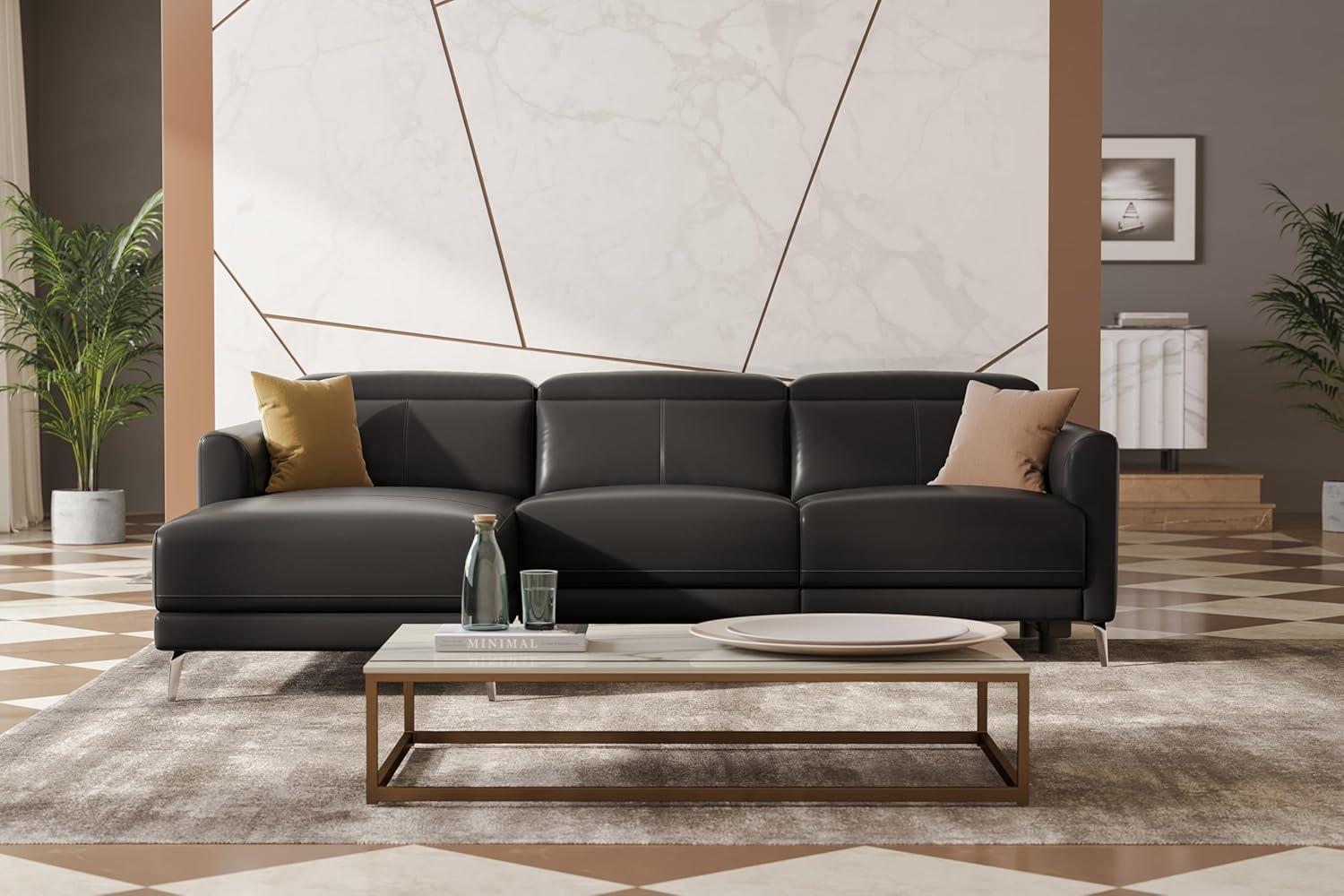
You ease down, find the button and press; the motor responds with a steady, even push. The back tilts back and the footrest lifts in a single, connected sweep — you feel the cushions yield beneath you, a slight forward lurch of the seat base, and the leather smoothing and creasing where your weight settles. With the headrests, you reach up and set the angle by hand: they hinge in small increments and hold where you leave them, so the line of support behind your neck changes as the back reclines. In the moment between upright and fully open you’ll notice seams stretch a bit, and a tendency to nudge or resettle the lower cushion to find the spot where the foam supports rather than caves in.
The left-hand chaise figures into that choreography more as a partner than a separate stage. It generally remains a broad platform under your legs while the adjacent powered seat articulates; as the recliner moves you can feel the meeting point between chaise and seat shift, and you’ll frequently enough slide a hand along the joint to flatten the leather or tuck a knee into a new groove. In some positions the chaise becomes the dominant support for your legs, in others it functions as a steady landing when the footrest rises — the interaction between the two pieces defines how you settle, and it can prompt small, habitual adjustments (smoothing, shifting hips, lifting a cushion corner) as the pieces find their new alignment.
| Action | Observable result |
|---|---|
| Press and hold recline | Back tilts, footrest rises; seat base nudges forward, cushions compress |
| Manually adjust headrest | Headrest clicks into angle, changes neck support as back moves |
| Settle into left-hand chaise | Chaise serves as stable leg platform; seams and cushion junctions shift under weight |
Fitting the three seater and left hand chaise into your layout with measurements, sightlines and doorway access
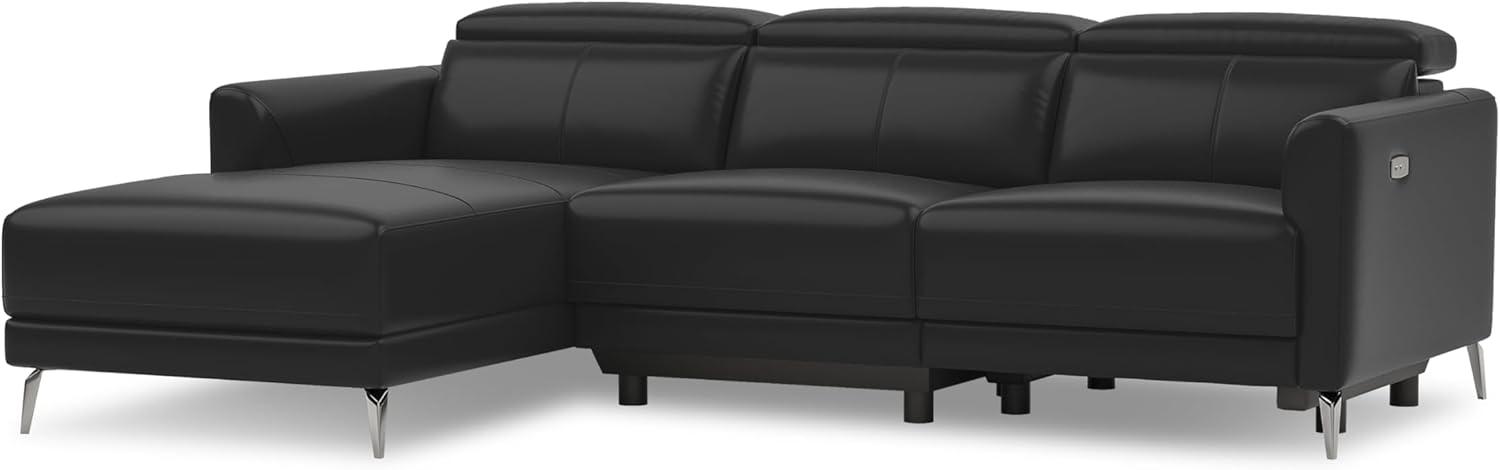
Before you slide the pieces into place, walk the route the sofa will travel from the delivery point to the final spot. Take a tape measure and note the narrowest doorway, any stair landing where the sofa must pivot, and the tightest corridor. Think in terms of the object moving through three dimensions: width, height and the diagonal that happens when you tilt or turn it around a corner. You’ll find yourself smoothing a cushion or nudging a seam as you test different angles — those small adjustments matter when clearance is tight.
Keep the chaise orientation in mind as you measure: the chaise sits to the left when you are facing the couch, so the open side that needs clear floor space will be on that side.Check how close you can push the back to a wall; with the reclining mechanism in use the back doesn’t need extra rear clearance, so you may feel comfortable placing the unit nearer the wall than a traditional recliner would allow. At the same time, the power cord and controller will require access to an outlet at the side or behind the sofa, and the USB controller usually rests where you can reach it without leaning over the arm — that influences how far from a plug you position the piece.
| What to measure | Where/why |
|---|---|
| Narrowest doorway or hallway width | Determines whether you can pass the sofa through upright or need to angle it diagonally |
| Ceiling height and stairwell clearance | Vital if you must tilt the sofa or carry it up stairs — handrails and light fixtures reduce usable height |
| Final placement wall-to-wall and wall-to-front distances | Shows how close you can push the back to the wall and how much floor the chaise will occupy |
| Diagonal (corner to opposite corner) of the assembled piece | Helps predict whether turning through a corner is absolutely possible without disassembly |
When you position the sofa, stand in the flow of the room and look from common sightlines: the kitchen pass-through, the TV seating, the hallway that guests will use. Raised headrests change the silhouette and can interrupt a low window sill or a mounted television when you tilt them up; when recliners are in use the seat front moves forward, which shifts the visual and practical clearance in front of the unit.In many homes the chaise becomes a visual anchor, so take a few steps back and watch how sightlines develop as you raise and lower headrests or let someone recline — you’ll notice the room’s perceived balance shift by a few inches.
test the actual manoeuvre: measure, mark a path on the floor if needed, and simulate the turn with a rolled-up rug or cardboard before the delivery. That practice run frequently enough reveals an awkward door swing, a tight stair landing, or a low pendant that you hadn’t noticed. Small adjustments — angling the frame, tilting slightly, or shifting cushions — frequently make the difference between a smooth move and a tight squeeze.
How the sofa lines up with your expectations and where practical limits appear in everyday life
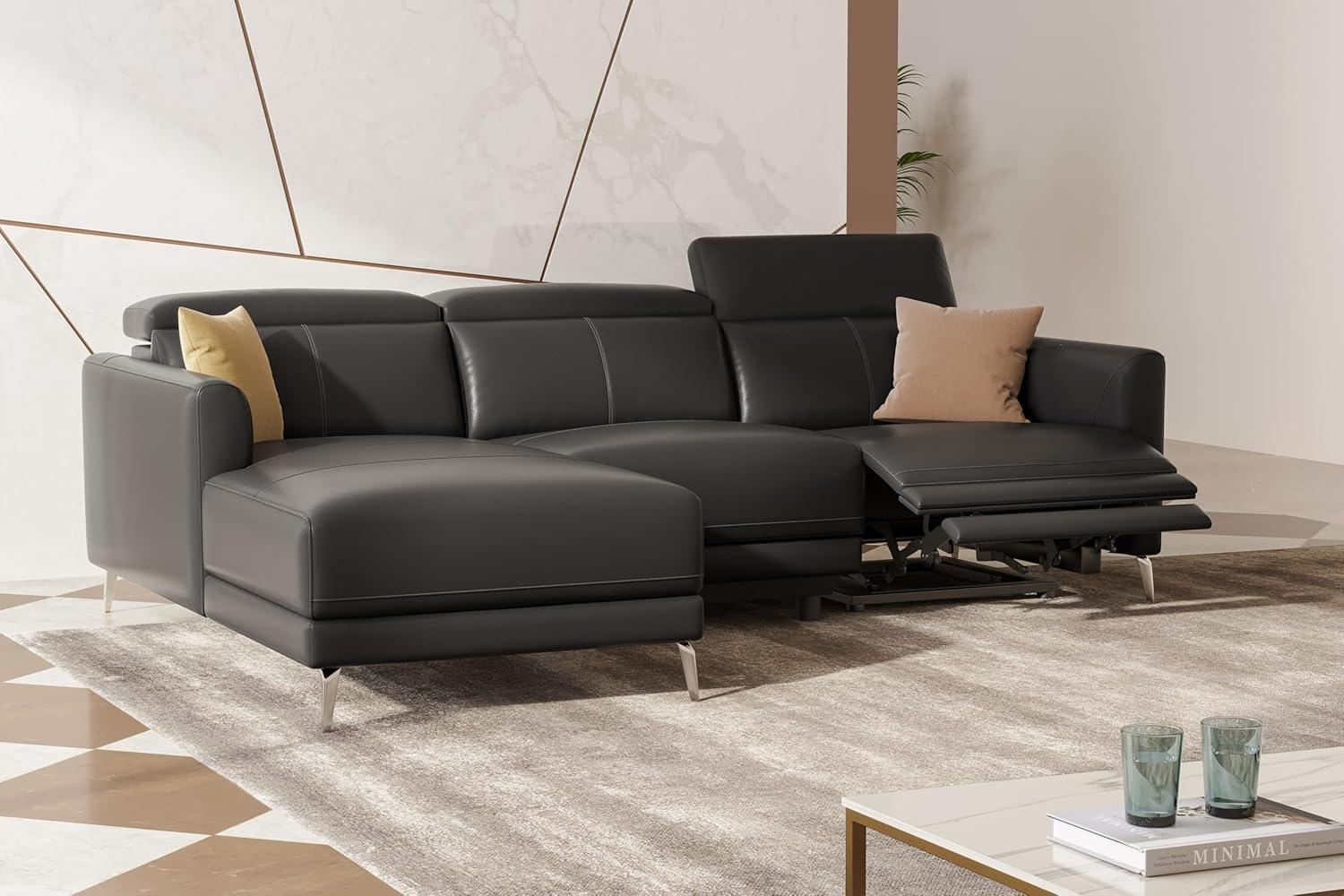
expectation versus everyday reality tends to arrive in small, repeated moments rather than a single revelation. On paper, features promise effortless reclining and adjustable head support; in daily use the power seat does lower and raise with little drama, and the headrests get nudged into position between episodes or naps. The leather warms to contact and develops the soft, lived-in creases that invite smoothing with the palm; cushions shift a little from habitual leaning, and there’s a short, automatic routine—brushing seams, plumping the chaise corner—before settling in for a long stretch.
Certain practical limits show up as habits instead of hard faults. The reclining motion is steady but prompts a pause to reposition a coffee table or a footrest in tight layouts; the controller’s charging port is handy when sitting near it but less reachable from the far end of the chaise, so devices sometimes get shuffled mid-evening. The black surface tends to reveal dust and light fibers in ways that encourage an unconscious swipe before guests arrive, and over weeks of use the seat foam can feel slightly kinder to the hips than the initial, firmer break-in—nothing dramatic, just a slow accommodation that changes how cushions are smoothed and where arms are rested.
| Expectation | Everyday outcome |
|---|---|
| Seamless power recline | Quiet and reliable, though spatial adjustments (tables, ottomans) are frequently enough needed |
| adjustable headrests | Used frequently between sitting positions; sometimes requires two hands to fine-tune |
| Leather appearance | Softens with use and shows light creasing; attracts visible dust/fibers on the black finish |
| Integrated charging | Convenient from the controller’s side; less so from other seats, prompting device reshuffles |
View full specifications and available size or color options
What living with the Valencia Andria looks like day to day: cleaning,pets,family traffic and power upkeep
in everyday use the leather surface develops the kinds of marks that come from living rooms in motion: light creases where people settle in, a patina that deepens on frequently used seats, and pet hair that tends to lie along the grain on darker finishes. For some households this shows up as quick, visible traces after a busy evening; in others it’s more gradual. Spills usually sit on the surface long enough to be noticed, and crumbs or grit from shoes collect in the seams and between cushions where family traffic funnels most often.
Pets and kids shape the lived experience in predictable ways. Claws or energetic play can leave faint scuffs on the top-grain leather, and an animal’s body heat or a child’s habit of launching off the chaise will compress foam over time in local spots. The reclining sections attract attention: people tend to leave the power seat partially reclined during TV time, which changes how cushions settle and how nearby upholstery rubs at the joints. The controller and the small USB charging port see regular use, and reported patterns include occasional re-seating of plugs after heavy use and brief interruptions after household power events.
| Common observation | Typical pattern seen in households |
|---|---|
| Surface cleaning and pet hair | daily to several times weekly removal of hair and surface dust, more obvious on black leather |
| Wear at cushions and seams | Localized softening or creasing in high-traffic spots over weeks to months |
| Power mechanism and controller | Frequent use of recline functions with occasional need to reconnect or cycle after outages |
living with this sectional tends to feel like maintaining a well-used piece of furniture rather than attending to a delicate object: everyday habits leave visible traces, and the mechanical elements introduce an element of occasional attention as part of normal use.
View full specifications and options
How the Set Settles Into the Room
Over time you notice the Valencia Andria Reclining Leather Sectional Sofa, 3 Seater Reclining Couch with Left Hand Chaise | Italian Nappa 11000 Top Grain Leather | Power Reclining Seat with Adjustable Headrests – Black easing into the corner like another participant in the household, less announced than it was at first. You see how the seating gives way to familiar postures, how the leather takes small creases where hands and hips regularly rest, and how the chaise quietly reshapes how that patch of floor is used. In daily routines it figures into short naps, evening pages turned, and the soft pauses between tasks. It stays.