 efistu.com Home Decor
 Integrating your bedroom and living room into a single area might initially seem challenging, yet it unlocks a world of creative potential. This fusion crafts a seamless environment that effortlessly shifts with your daily routine—from sipping morning coffee to unwinding at night—without the need to move between rooms.
Whether you reside in a compact studio or aim to optimize every inch of your home, these innovative design strategies will help you fashion a space that feels both spacious and inviting.
1. Design Intimate Corners Using Warm Pendant Lighting in Compact Areas
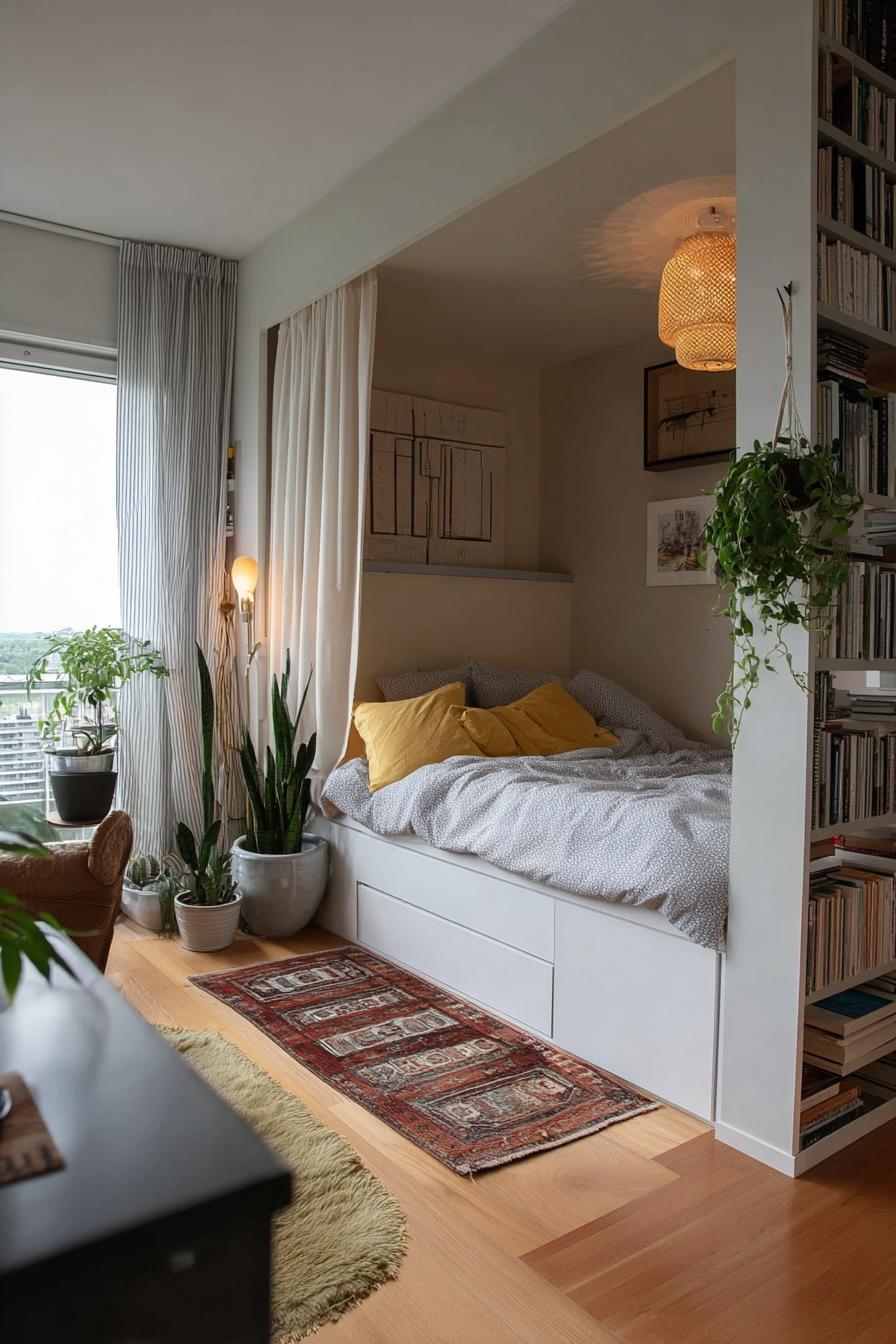
The hygge-inspired approach to lighting reveals how thoughtful illumination can transform limited spaces into cozy sanctuaries. Pendant lights with amber-hued bulbs or natural fiber shades delineate zones without sacrificing valuable floor area.
Suspending a cluster of pendants at staggered heights above your sleeping nook subtly defines the area, signaling “rest here” while preserving an open visual flow. These gentle light pools guide the gaze, making a modest 300-square-foot studio feel like it contains distinct rooms, even though it doesn’t.
Incorporate dimmer switches to effortlessly transition from bright, focused lighting during the day to a soft, ambient glow in the evening.
2. Employ Open Shelving as a Stylish and Practical Divider
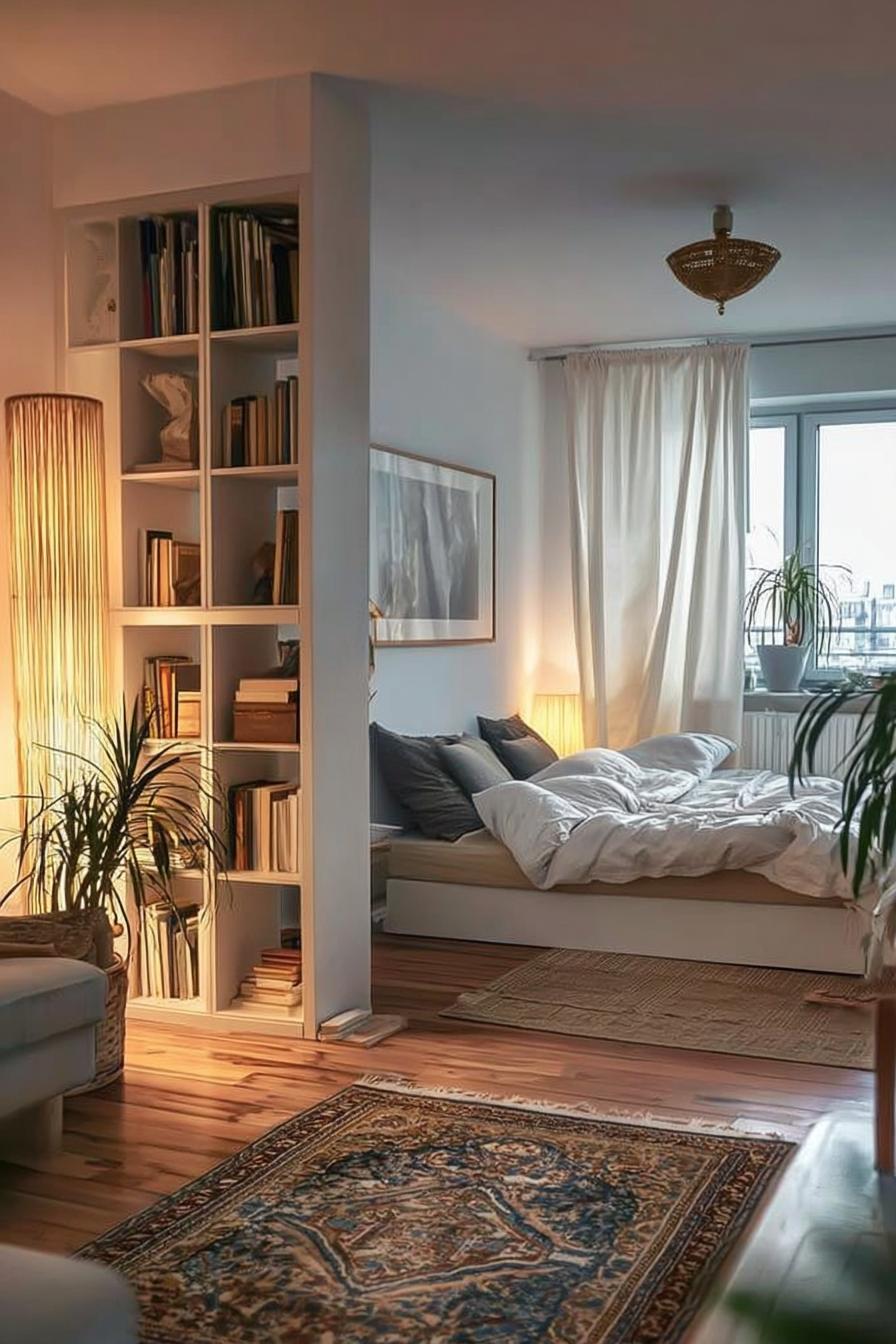
Imagine separating your living and sleeping zones without obstructing natural light or making the room feel confined. Open shelving units perform this feat brilliantly, acting as see-through partitions that maintain airiness.
Arrange books, decorative ceramics, and leave some shelves intentionally empty to create breathing space. The balance between filled and open compartments is key to a harmonious look.
How will you personalize your shelves to reflect both your social and private spaces?
3. Maximize Vertical Space with Loft Beds
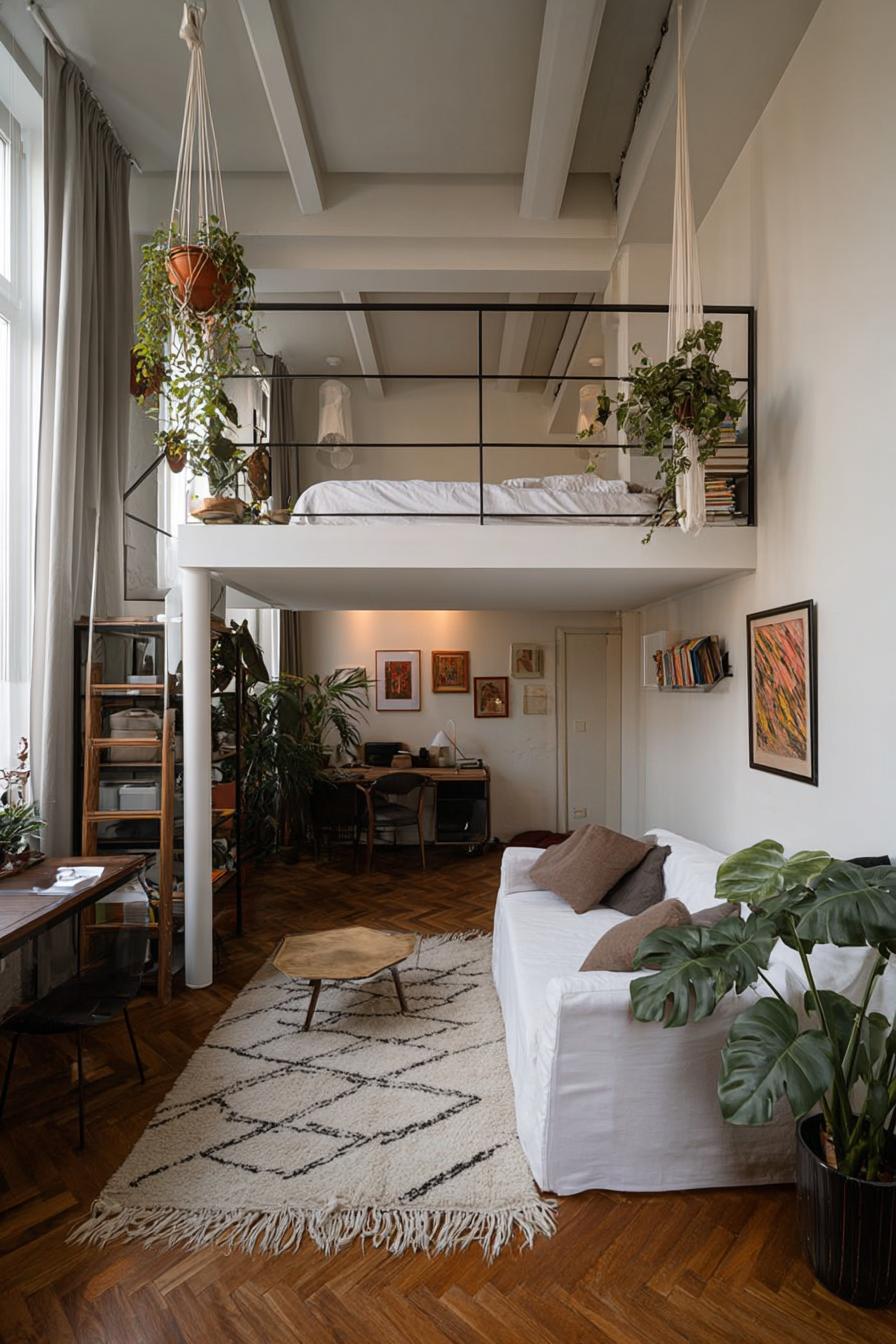
Instead of spreading your furniture horizontally, loft beds elevate your sleeping area, freeing up valuable floor space beneath.
Raising your bed about six feet off the ground creates room for a workspace, reading nook, or a compact seating area. Many modern loft beds feature built-in stairs with storage drawers and integrated shelving, combining functionality with style.
This vertical approach transforms limited square footage into a dynamic, multi-level living environment.
4. Add Depth with a Curated Gallery Wall
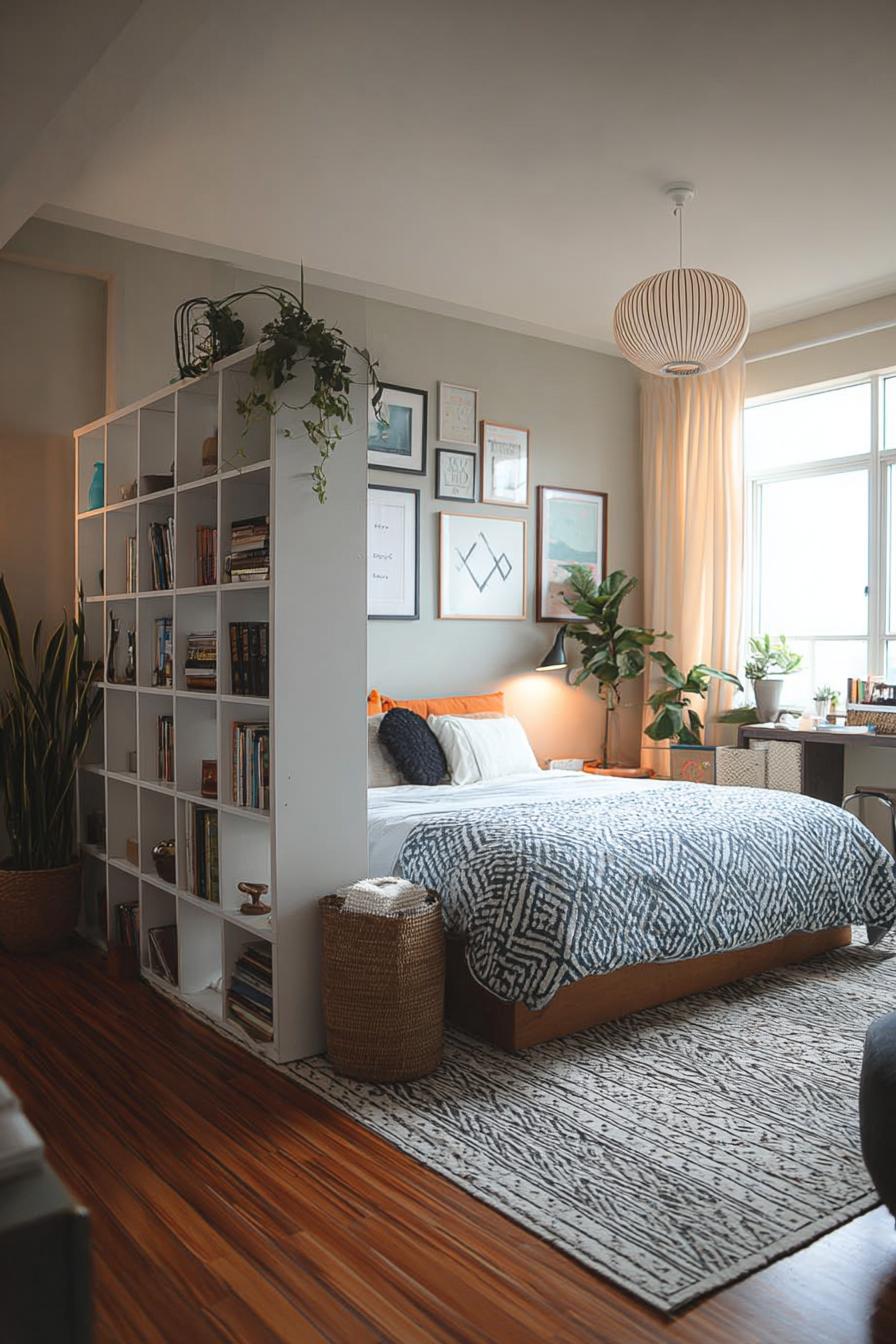
Who says you need separate walls to express your style? A thoughtfully arranged gallery wall serves as both art and architectural element.
Combine vintage frames with contemporary prints, vary sizes, and extend your display from floor to ceiling. This draws the eye upward, visually increasing ceiling height and subtly marking the boundary between your sleeping and living areas.
5. Define Zones by Elevating the Bedroom Area
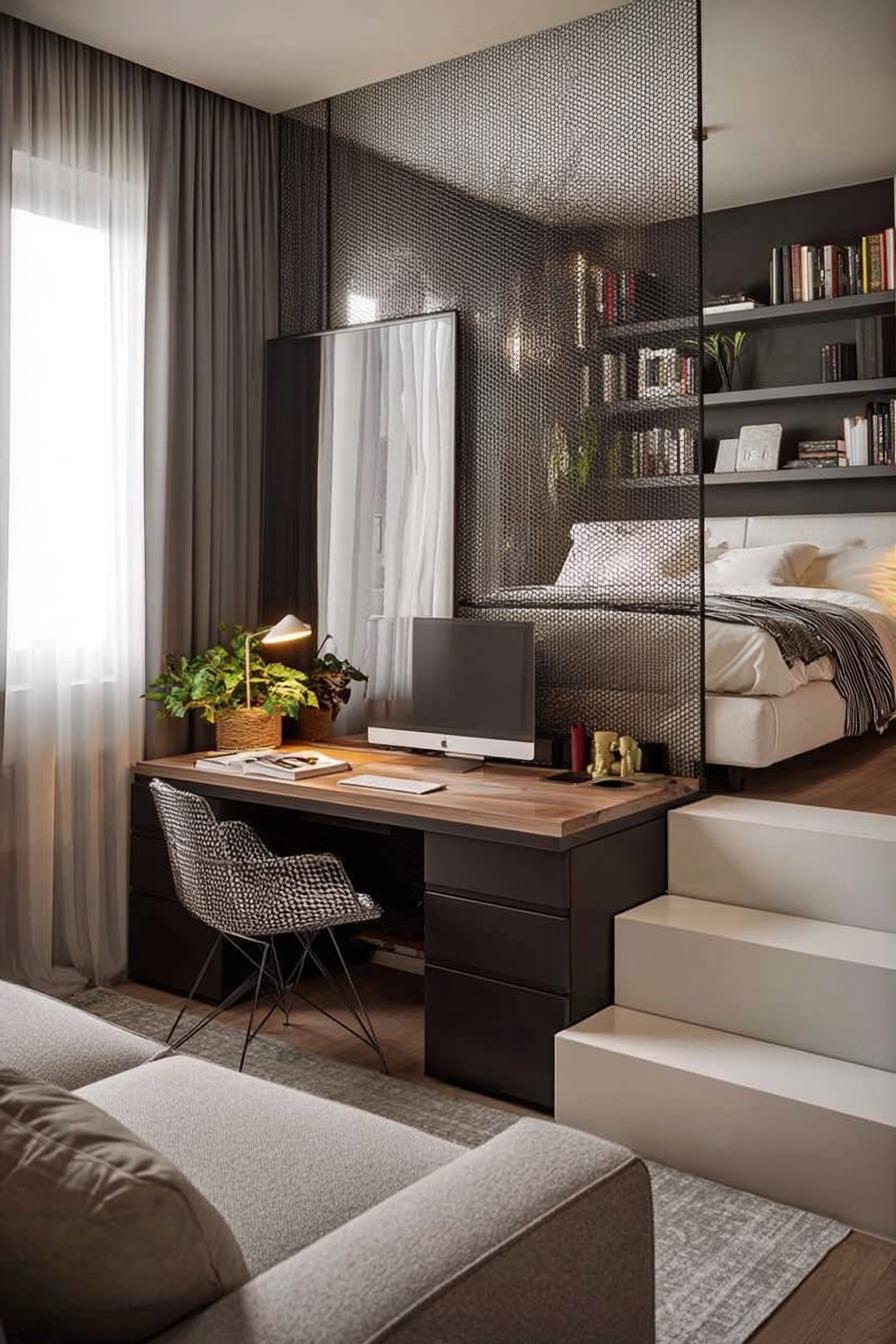
Raising your bed on a platform might seem like a niche idea, but those extra inches create a psychological separation between rest and activity zones.
This subtle elevation signals “step up to relax, step down to engage.” Plus, the platform base doubles as hidden storage—ideal for stashing seasonal clothing, extra linens, or miscellaneous items. Incorporate pull-out drawers for added convenience.
6. Install Floor-to-Ceiling Curtains for Instant Privacy
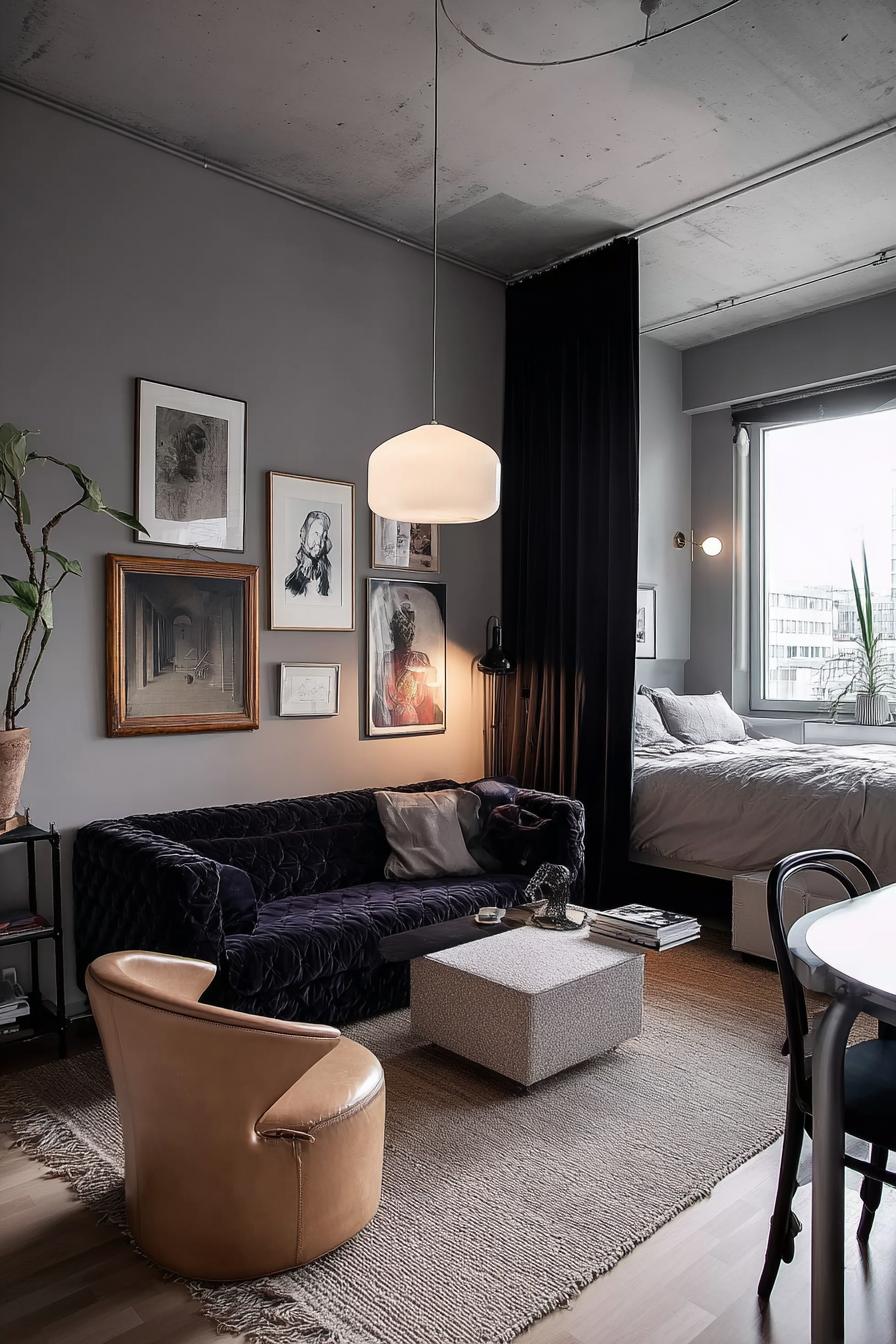
Complementing the elevated bed, a ceiling-mounted curtain track allows you to convert an open area into a private retreat in moments.
Opt for heavy linen curtains for full seclusion or sheer fabrics that soften light while maintaining a connection to the rest of the room. When drawn back, the fabric cascades elegantly, adding sculptural interest.
7. Infuse Bohemian Vibes with Lush Greenery on Shelves
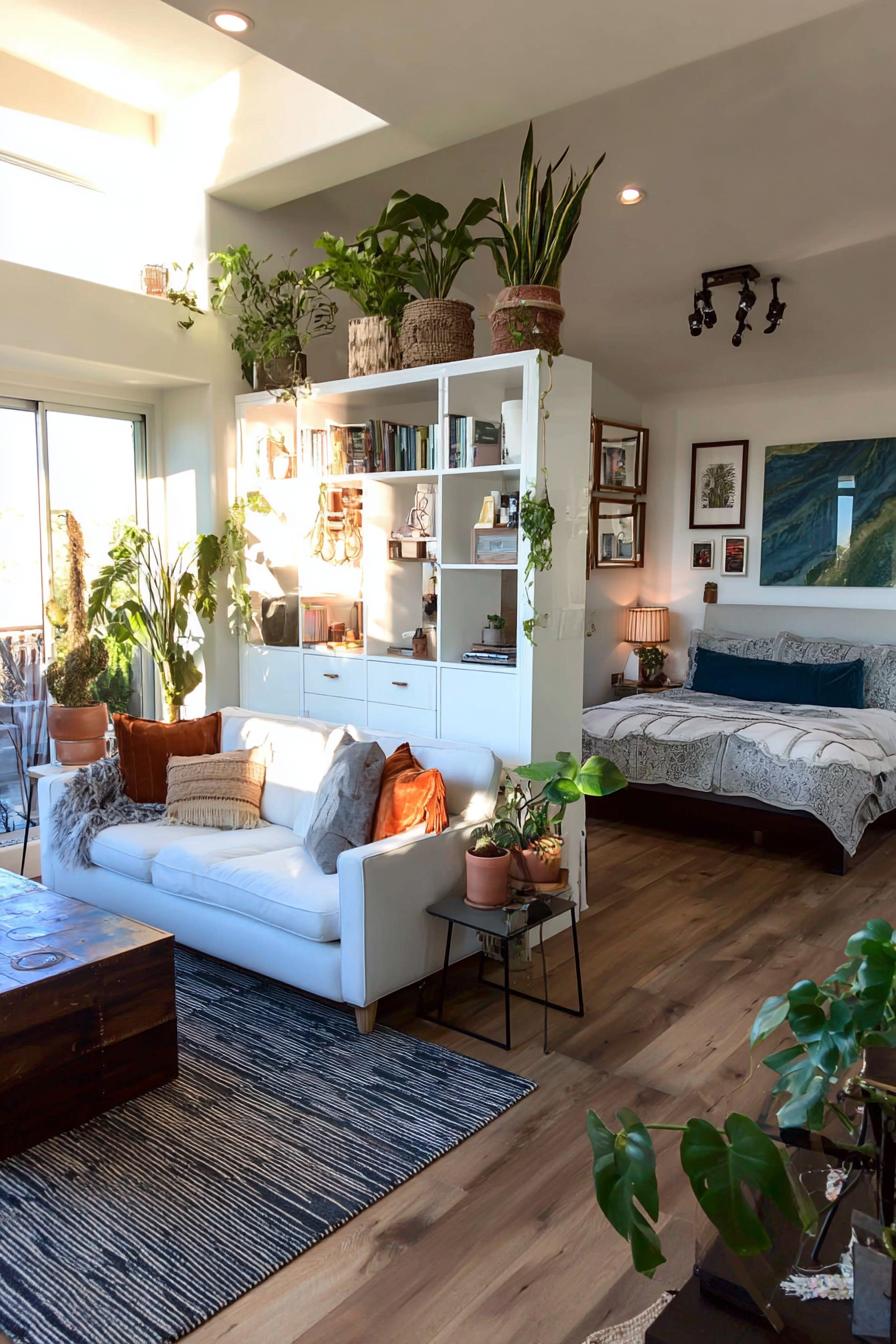
Interestingly, studies show that certain indoor plants can remove up to 87% of airborne toxins within a day, making them both beautiful and functional additions.
Let trailing pothos spill from upper shelves, cluster succulents at eye level, and anchor the floor with a fiddle leaf fig. The mix of heights and textures blurs the line between indoors and nature, turning your combined space into a verdant oasis.
8. Showcase Exposed Brick for a Warm Industrial Feel
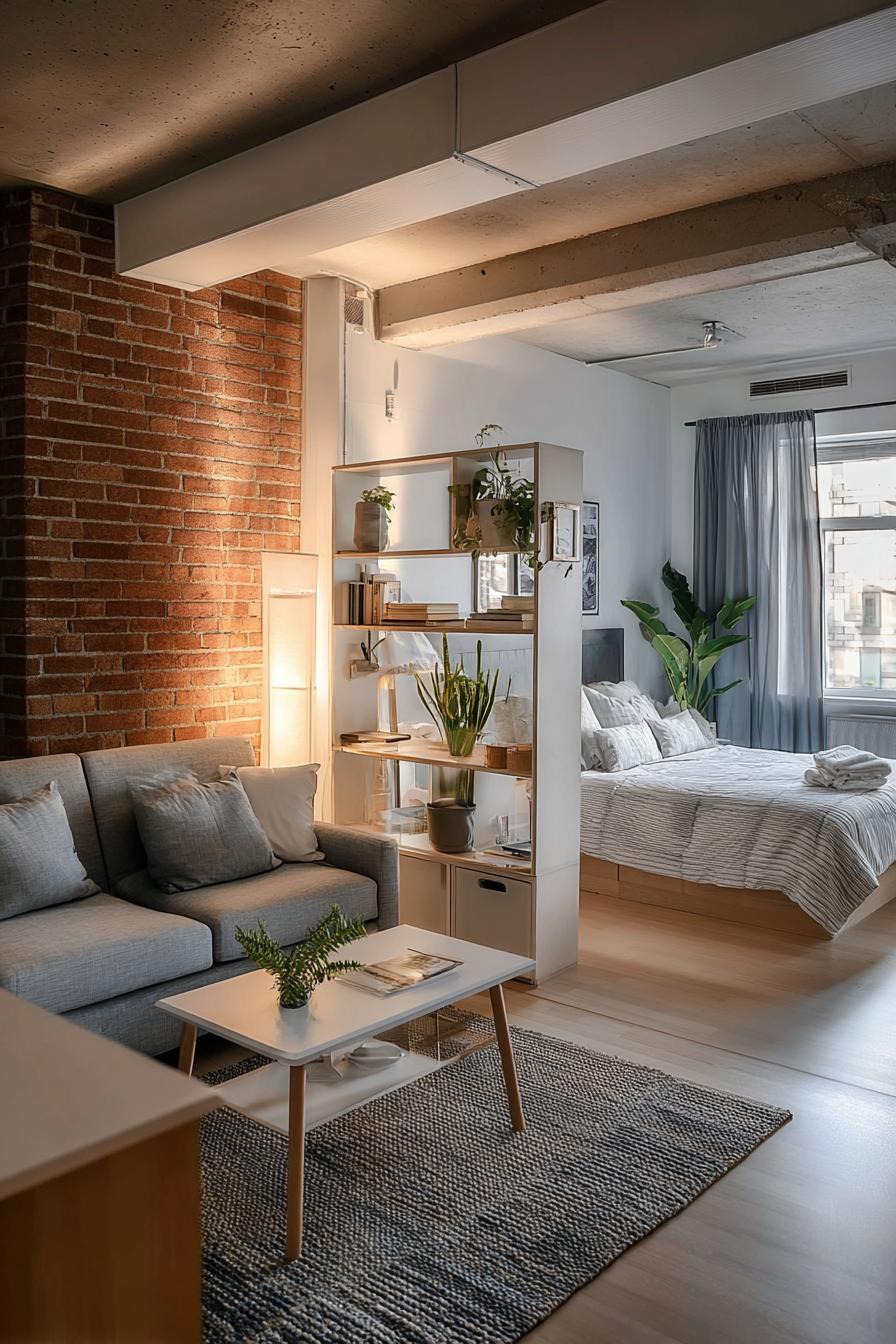
Sometimes, the best design choice is to let the space’s natural features shine. Exposed brick walls add instant character and warmth without extra decoration costs.
Use the brick wall to anchor your sleeping area, creating a cozy, textured backdrop. Paint the other walls in crisp white to enhance contrast and brightness, turning this architectural element into the room’s focal point.
As authentic materials gain popularity, exposed brick remains a timeless design asset.
9. Layer Rugs to Define and Warm Your Space
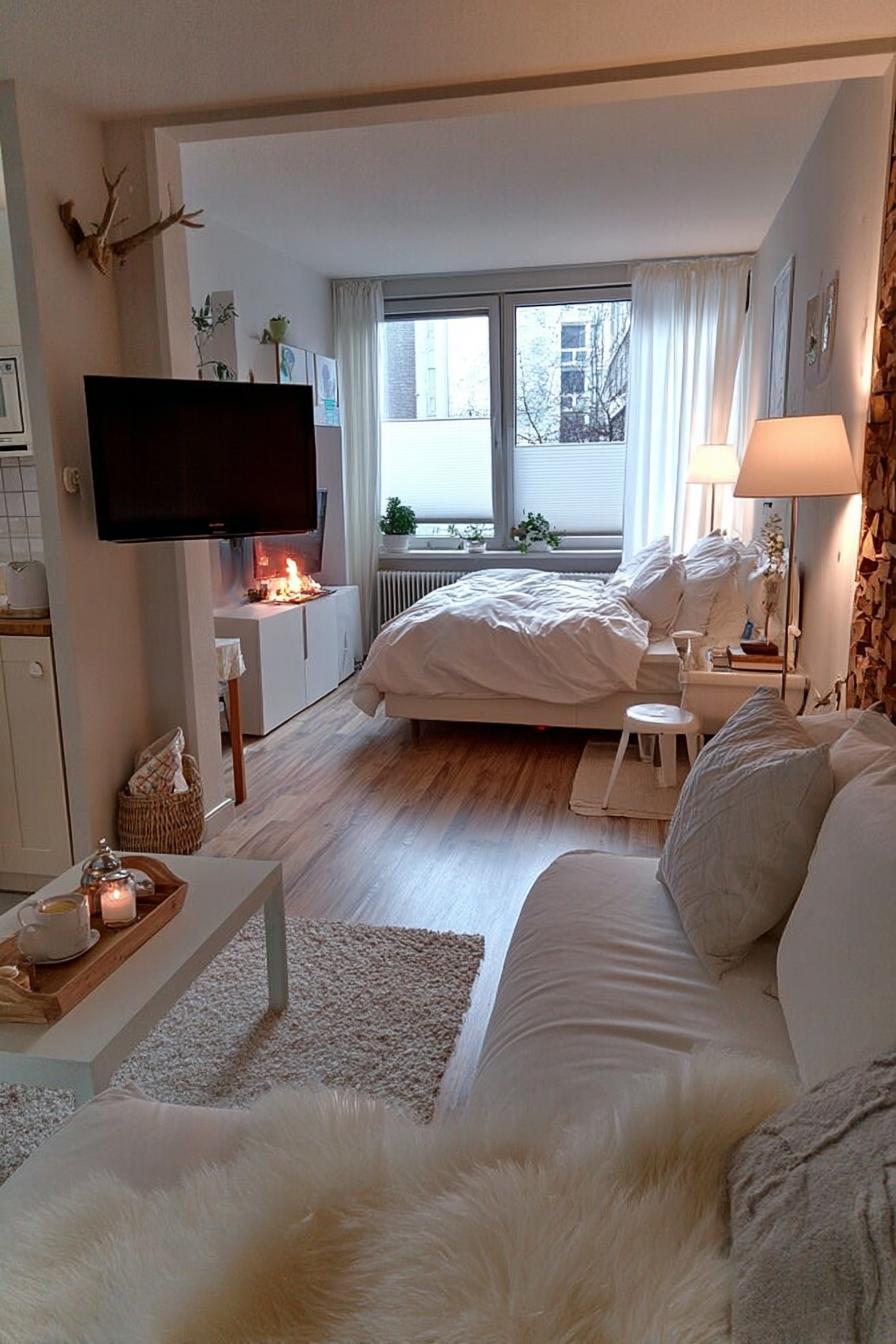
Discard the one-rug-per-room rule and embrace layering for a richer, more inviting floor design.
A large neutral rug can unify the entire area, while smaller, patterned rugs delineate seating or sleeping zones. The overlapping textures add warmth and create natural boundaries that feel organic rather than forced. Vary pile heights for tactile interest that your feet will love.
10. Harness Abundant Natural Light with Expansive Windows
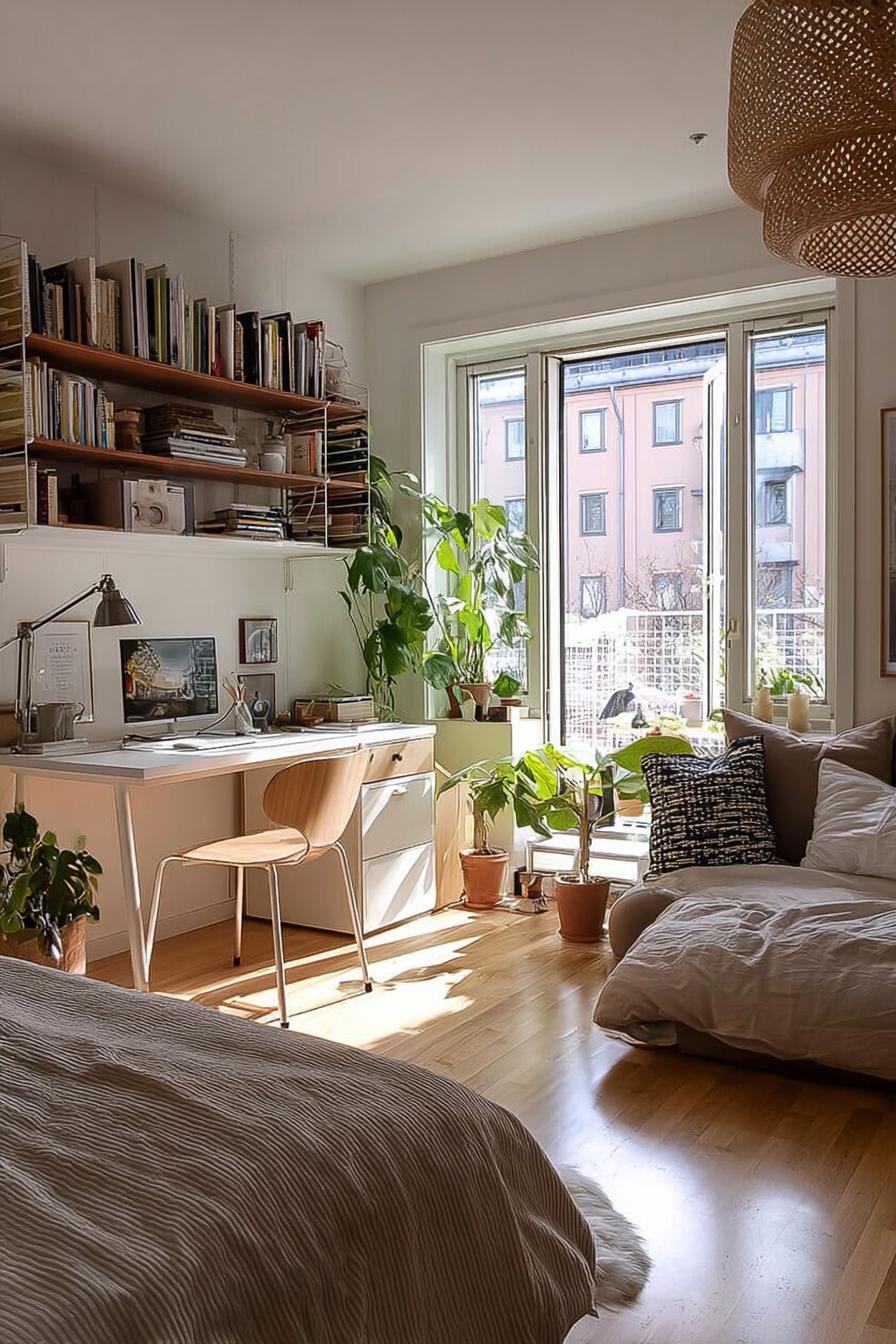
That golden hour glow streaming through your windows can elevate your entire living experience. To maximize this, avoid heavy drapes and instead install curtain rods near the ceiling, extending beyond the window frame to create an illusion of larger windows.
During dimmer days, this natural light boosts mood and energy. Strategically placing mirrors opposite windows can further amplify brightness throughout your space.
11. Introduce Natural Wood Elements for Inviting Warmth
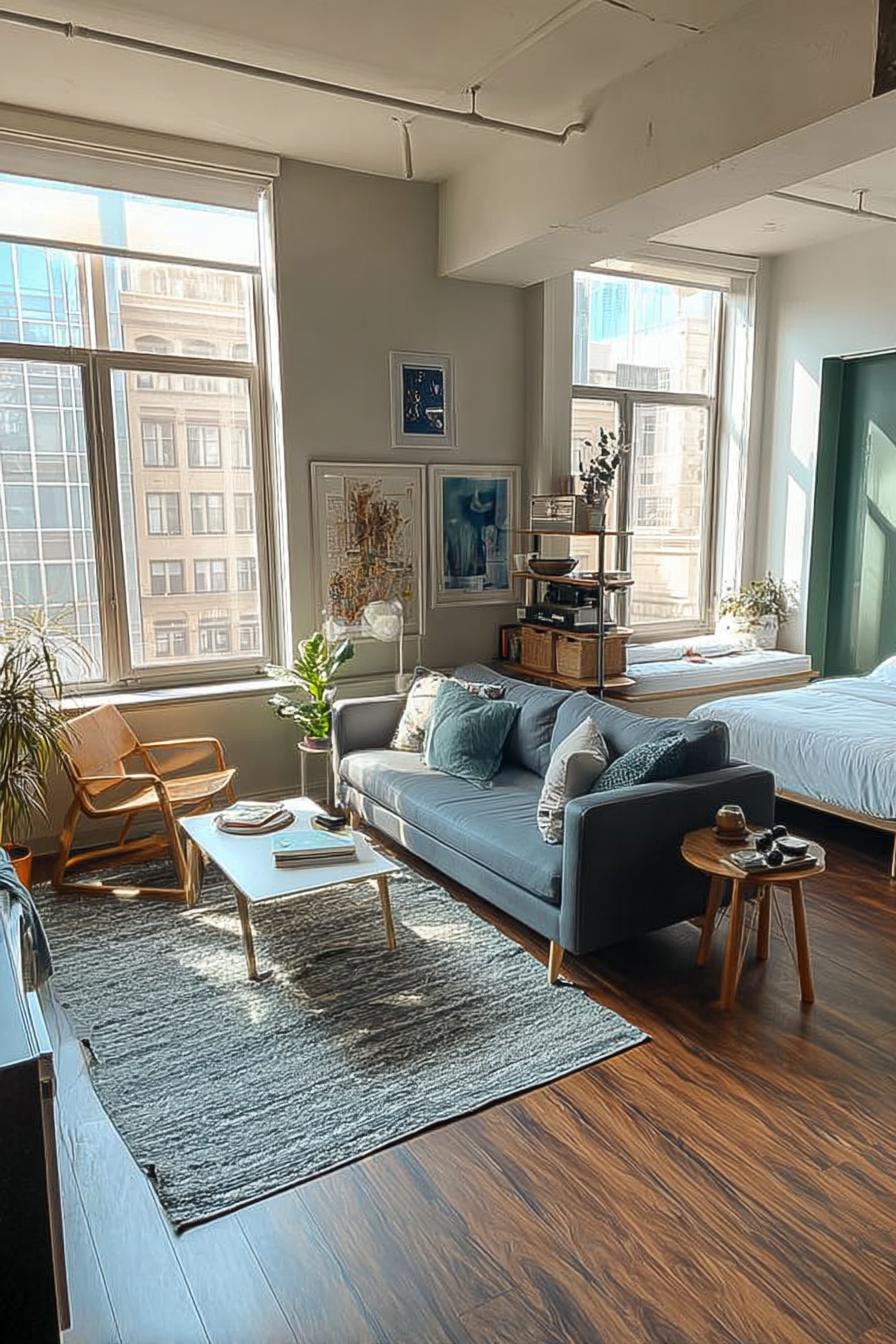
Wood’s innate warmth and texture make it a perfect material to soften the divide between living and sleeping areas, even in urban environments.
Consider live-edge coffee tables, floating oak shelves, or bamboo room dividers to add organic charm. Use lighter woods like pine near windows to enhance brightness, and richer tones like walnut in the bedroom to foster relaxation. This interplay creates a natural rhythm and cohesion throughout your home.
12. Opt for Soft White Curtains to Balance Privacy and Light
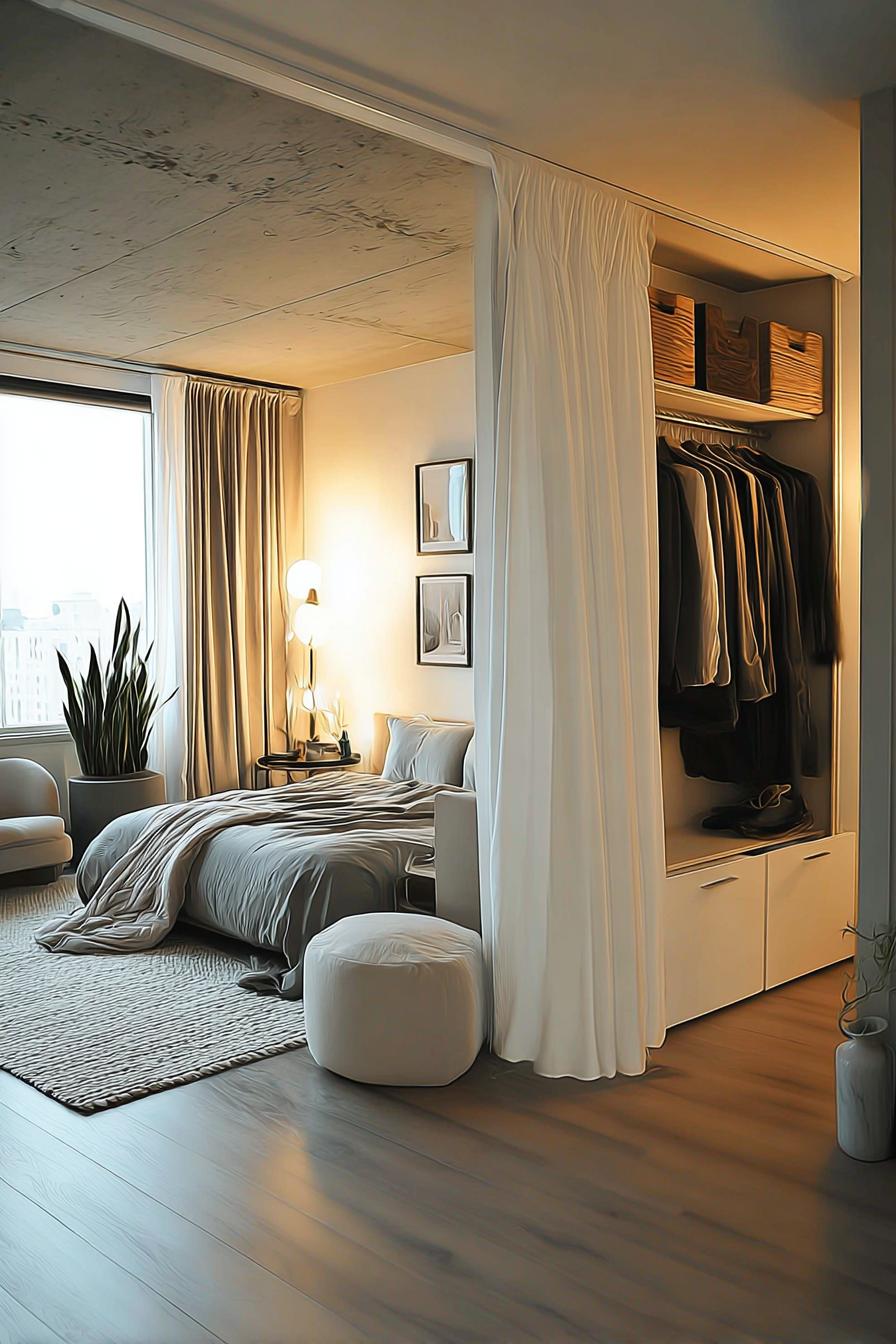
Ceiling-mounted curtains offer unmatched flexibility compared to fixed partitions. White or cream fabrics maintain brightness even when closed, preventing a cave-like atmosphere.
During the day, pull them aside and secure with decorative tie-backs for an elegant architectural touch. At night, close them to create a cozy sleeping nook that also muffles noise from the living area. The gentle movement of fabric adds a dynamic softness that rigid dividers lack.
13. Choose Sliding Glass Doors for Modern Privacy Solutions
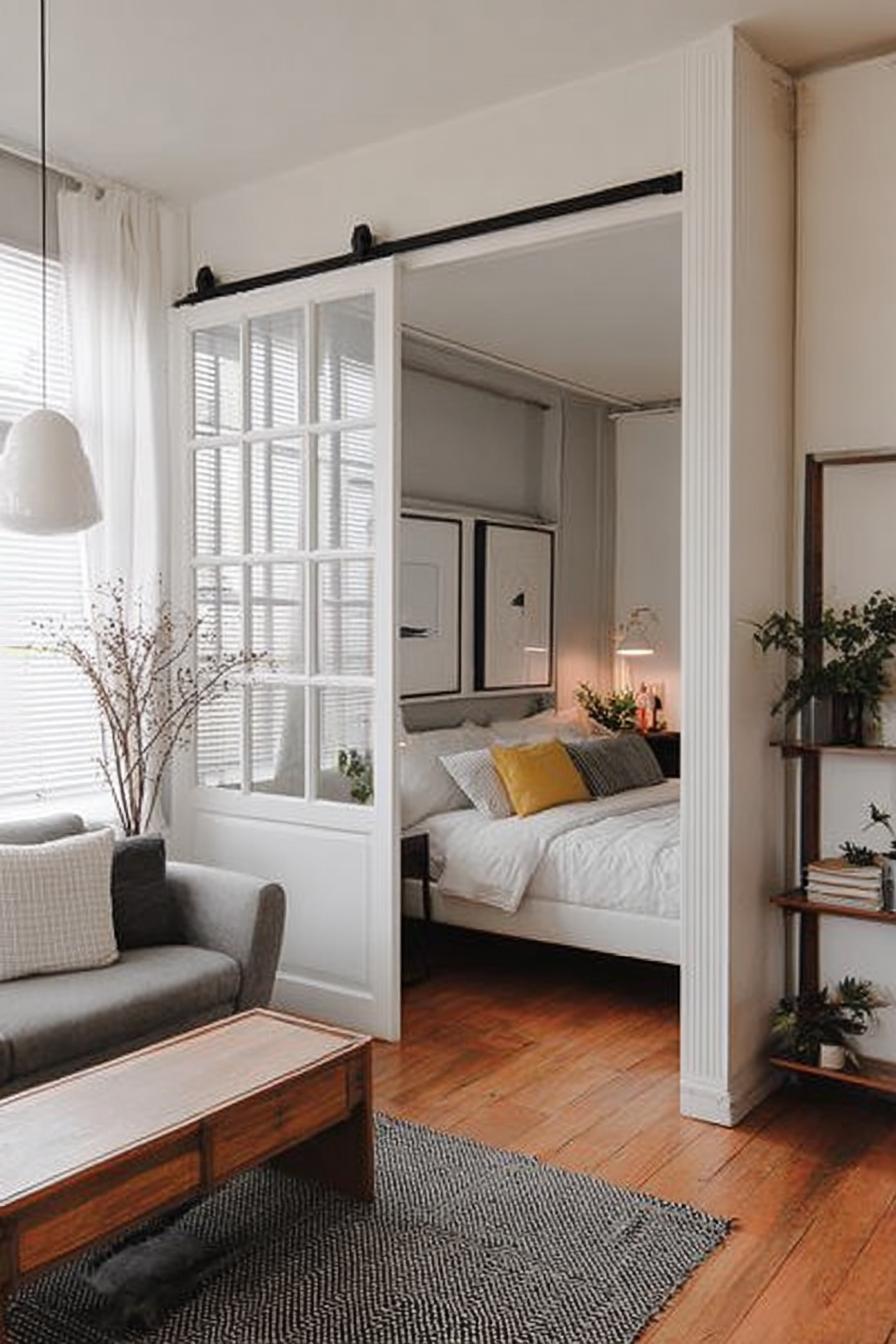
Sliding glass doors mounted on ceiling tracks offer a sleek, contemporary way to separate spaces without sacrificing openness.
These transparent barriers preserve sightlines while providing sound insulation—ideal when one person sleeps and another watches TV. Frosted or textured glass options enhance privacy without blocking light, and some models include built-in blinds for added control.
Investing in quality sliding doors can elevate your combo living space from a necessity to a stylish lifestyle choice.
14. Use Greenery on Open Shelves to Naturally Define Areas
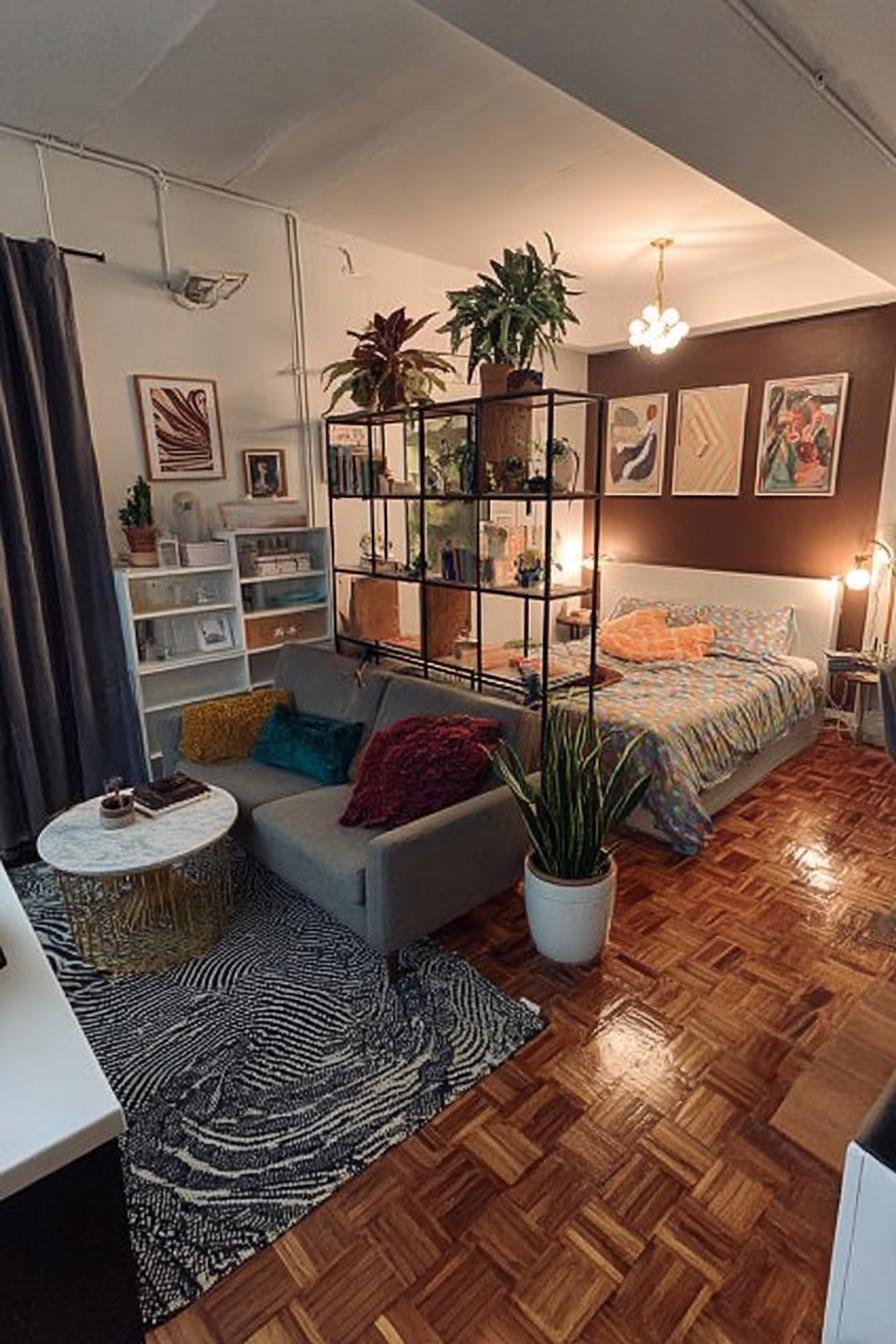
Plants serve as living dividers that not only separate spaces but also purify the air.
Place trailing philodendrons on upper shelves between your bed and living areas to create a soft, natural curtain. Complement with upright plants like snake plants or ZZ plants at varying heights to build a lush green gradient. These organic forms soften furniture lines and breathe life into compact rooms.
Make plant care a weekly ritual—water them while enjoying your morning coffee to deepen your connection with your home.
15. Enhance Privacy with an Open Bookshelf Divider
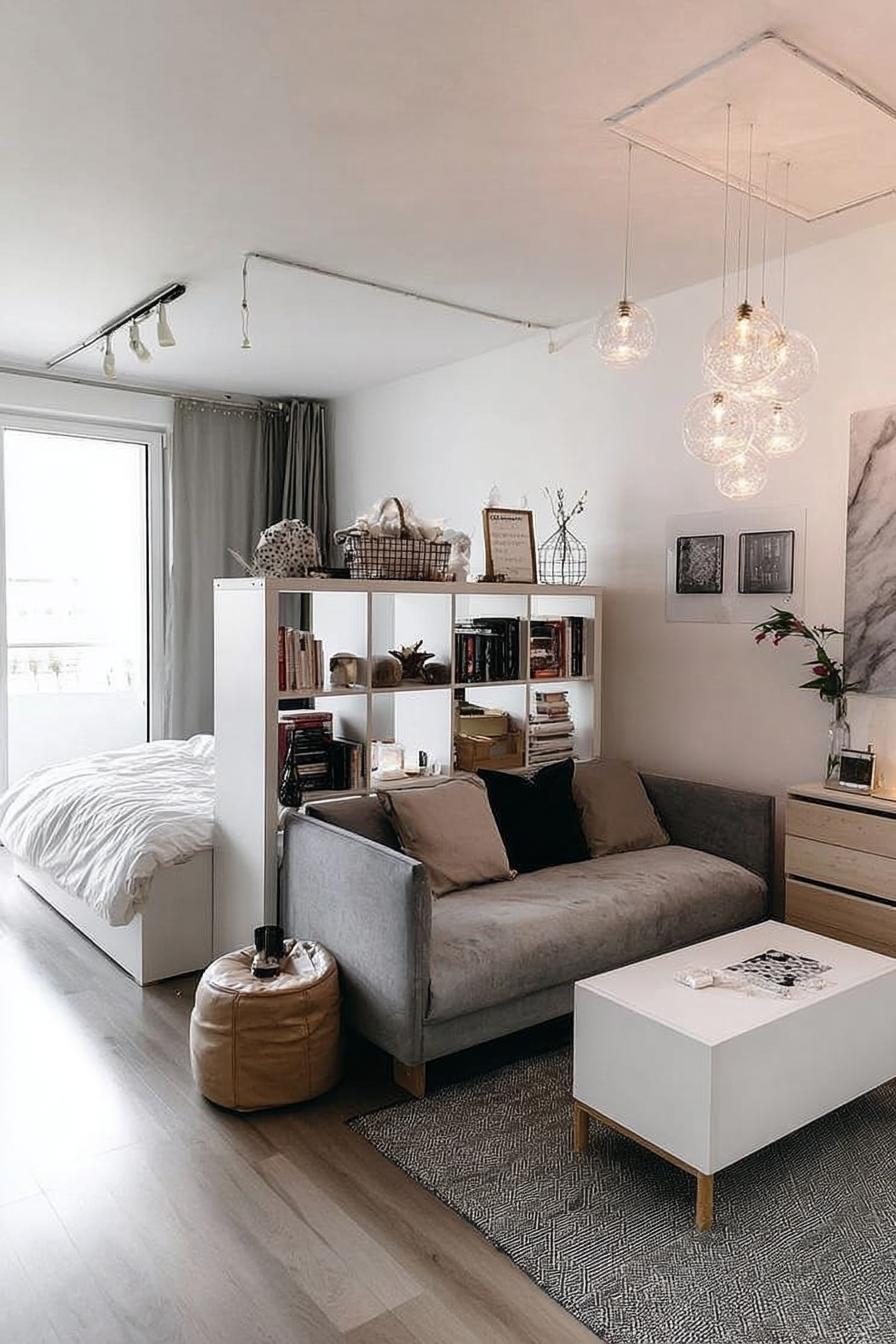
Think of an open bookshelf as a semi-transparent membrane between your public and private zones—it filters rather than blocks.
Beyond storing books, these units showcase your personality: vintage cameras, ceramic art, or trailing plants. Leaving some compartments empty creates visual windows that maintain openness while defining boundaries.
Style the living room side with vibrant books and decor, and the bedroom side with soft textiles, candles, or a reading lamp. Rotate displays seasonally to keep your space fresh without purchasing new furniture.
16. Position the Sofa Facing the Bed for a Cozy Ambiance
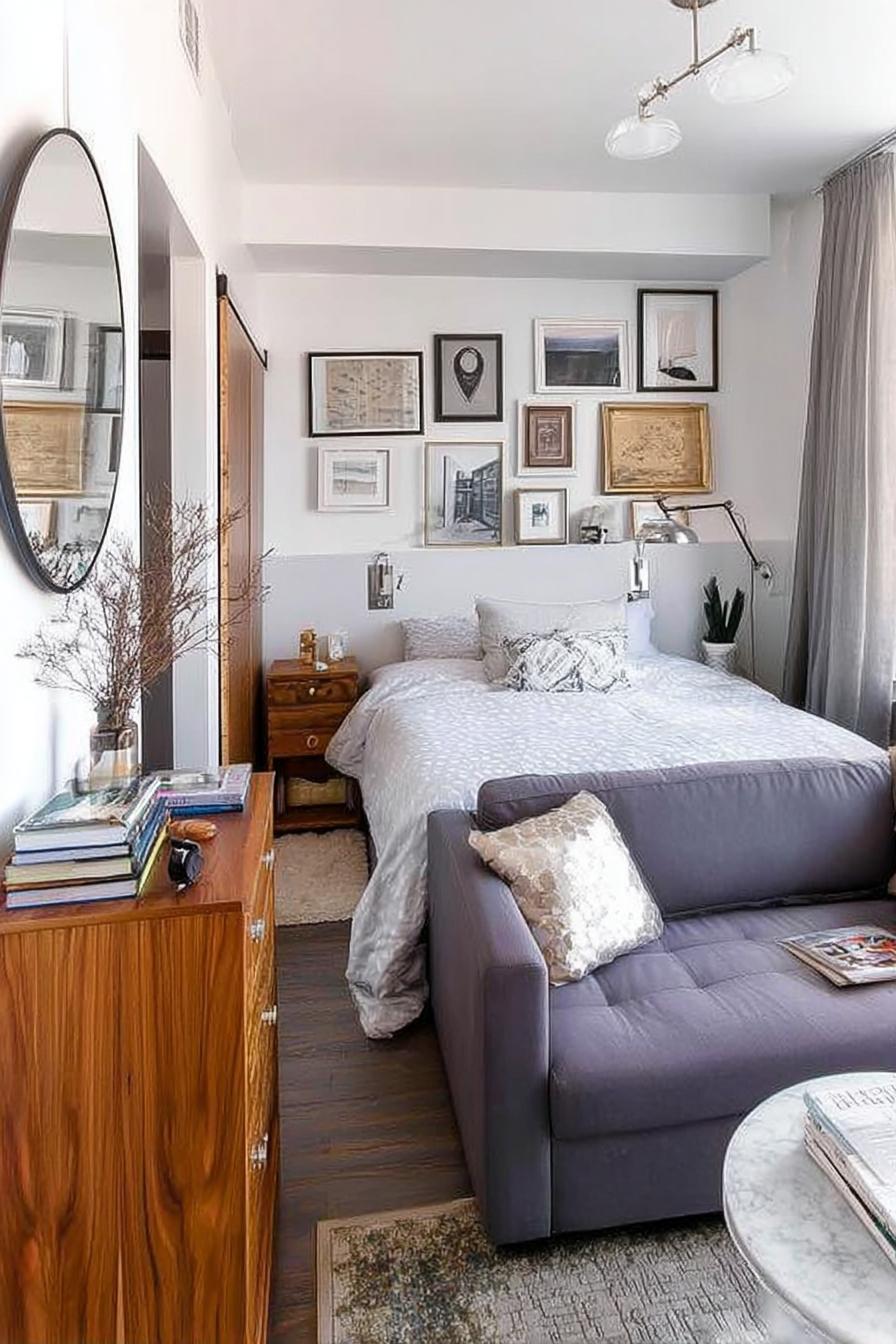
While many place sofas against walls, orienting your sofa to face the bed fosters intimacy and defines zones naturally.
This layout creates a conversational area while the sofa’s back acts as a soft divider. Low-profile furniture—such as mid-century modern or Japanese-inspired pieces—maintains open sightlines and prevents visual clutter.
The space between sofa and bed becomes a natural walkway, avoiding a cramped or maze-like feel.
17. Combine a Deep Blue Sofa with a Crisp White Coffee Table
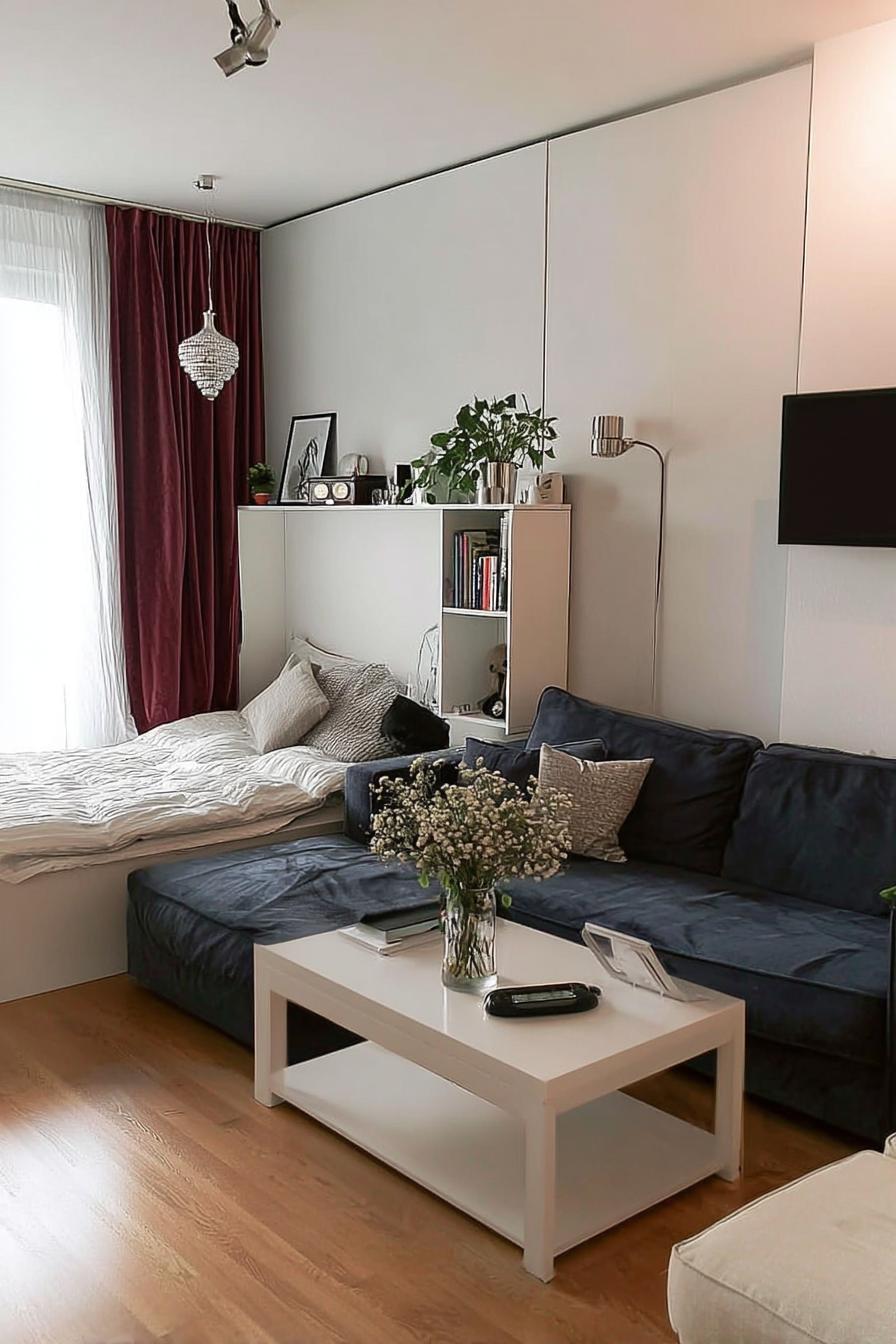
Like the meeting of ocean and shore, a navy sofa paired with a white coffee table exudes elegance in compact spaces.
The rich blue anchors the living area, concealing wear while adding depth, and the white table reflects light, preventing heaviness. Accents in brass—through lamps or frames—introduce warmth and subtle luxury.
Avoid overly matching pieces to keep the space feeling lived-in rather than showroom-perfect.
18. Separate Spaces with a Half Wall Divider
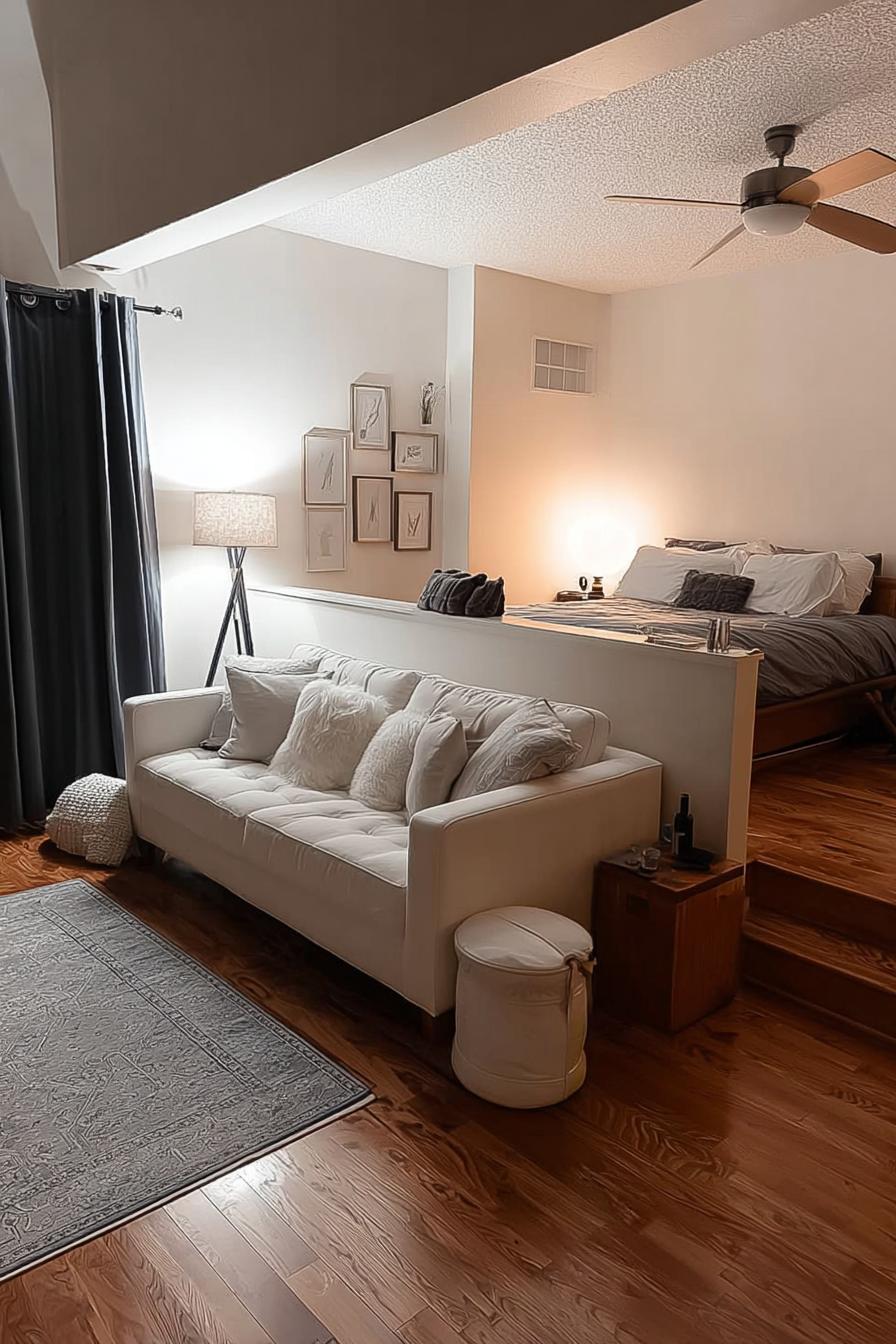
The half wall strikes a balance between full separation and open flow, offering privacy without confinement.
Constructed at seated eye level (around 42 inches), it blocks views when seated but allows light and air to circulate above. The top surface doubles as a shelf for plants, books, or collectibles.
Some designs integrate electrical outlets on both sides, turning the divider into a practical charging station.
This architectural feature defines zones while keeping your space airy and flexible.
19. Anchor Your Room with a Large, Plush Area Rug
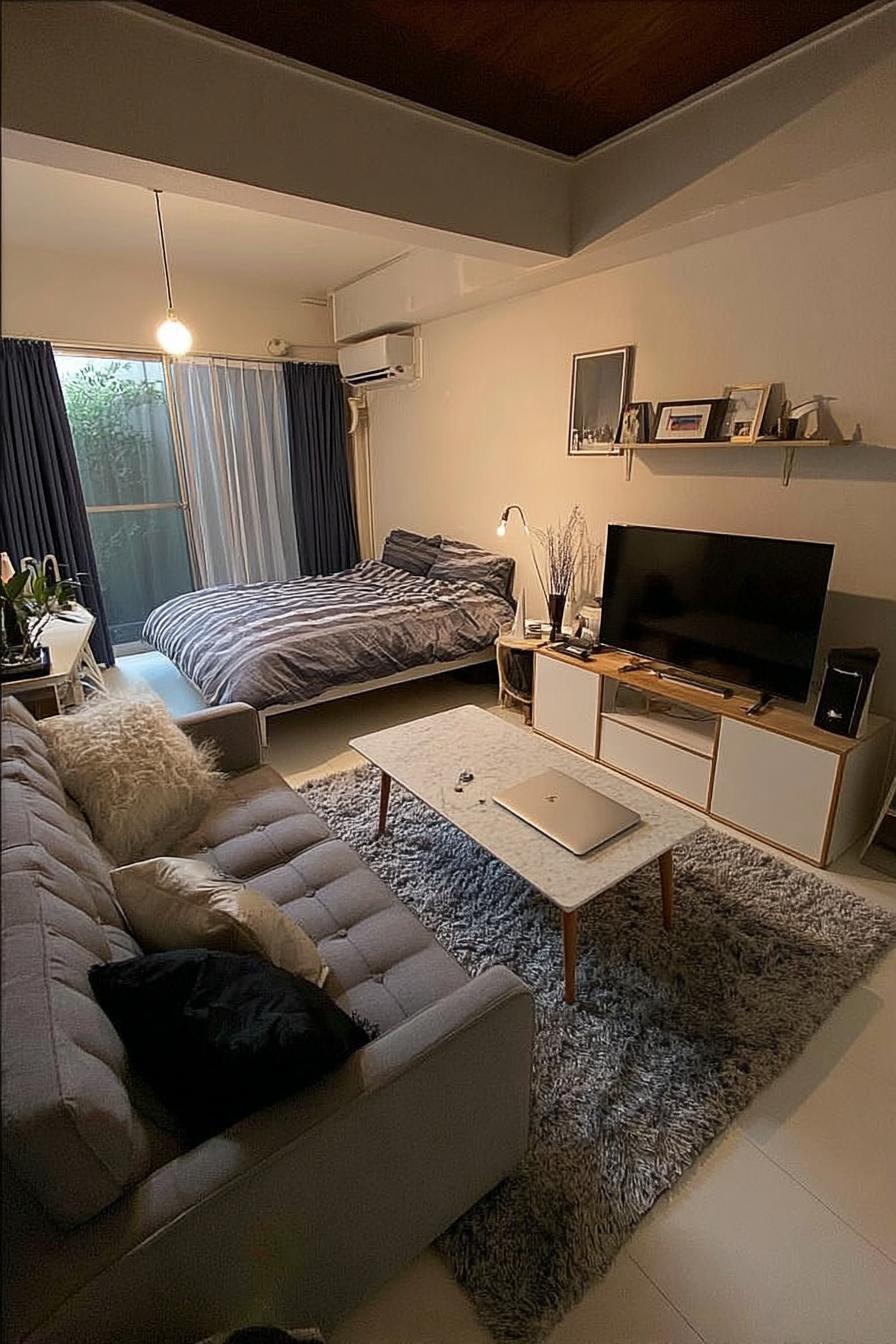
Select a rug large enough to accommodate both your bed and sofa legs, unifying the space and making it feel intentional rather than fragmented.
The plush texture invites barefoot comfort, essential when your living and sleeping areas share the same floor. A thick pile also absorbs sound, reducing echoes in hard-floored rooms.
Choose a rug slightly larger than you anticipate to create soft, expansive boundaries that feel welcoming rather than restrictive.
These principles apply equally well to multifunctional spaces like bedroom-office combos or living-dining areas, as well as dorm rooms and small apartments.
Final Thoughts
Combining your living room and bedroom doesn’t have to feel like a compromise—it can be an exciting design opportunity. Begin with one idea that suits your lifestyle, such as floating shelves or a platform bed.
As you witness the transformation, you’ll gain confidence to layer in additional elements. The most successful combined spaces tell a unified story, balancing rest and activity through thoughtful furniture, lighting, and spatial division—your personal narrative brought to life.